


Costimulatory and Coinhibitory Receptor Pathways in Infectious Disease
- PMID: 27192569
- PMCID: PMC4873956
- DOI: 10.1016/j.immuni.2016.04.022
Costimulatory and Coinhibitory Receptor Pathways in Infectious Disease
Abstract
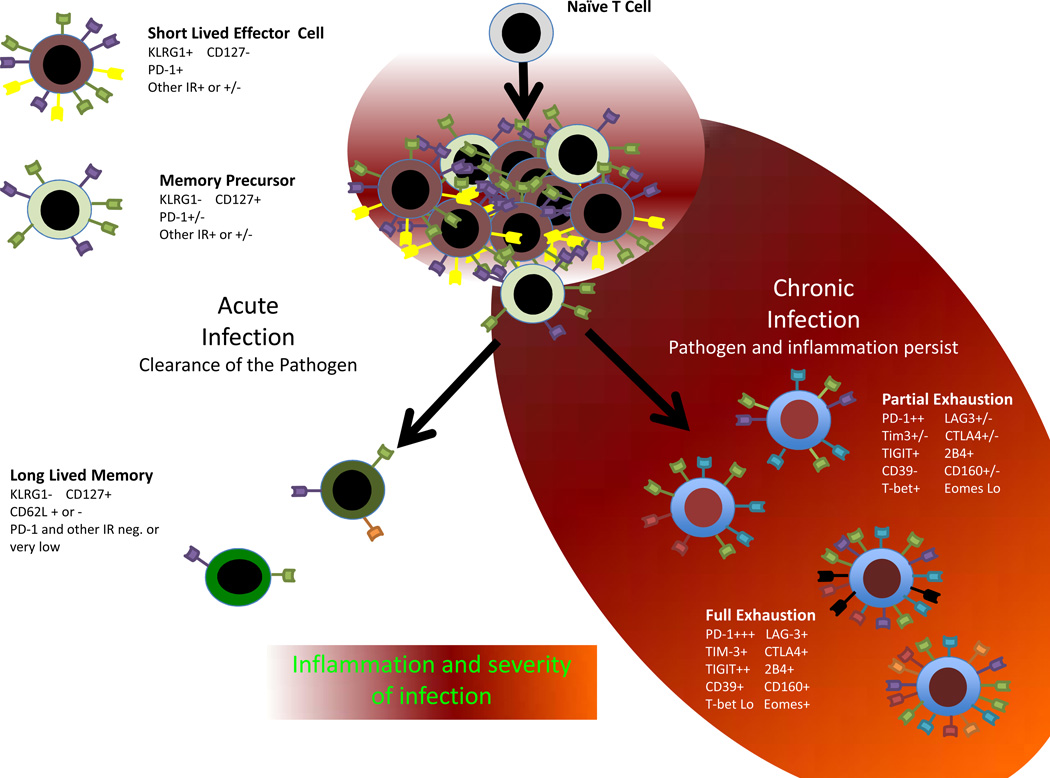
Costimulatory and inhibitory receptors play a key role in regulating immune responses to infections. Recent translation of knowledge about inhibitory receptors such as CTLA-4 and PD-1 into the cancer clinic highlights the opportunities to manipulate these pathways to treat human disease. Studies in infectious disease have provided key insights into the specific roles of these pathways and the effects of their manipulation. Here, recent studies are discussed that have addressed how major inhibitory and costimulatory pathways play a role in regulating immune responses during acute and chronic infections. Mechanistic insights from studies of infectious disease provide opportunities to further expand our toolkit to treat cancer and chronic infections in the clinic.
Copyright © 2016 Elsevier Inc. All rights reserved.
Conflict of interest statement
The authors declare no additional conflicts of interest.
Figures
References
-
- Andreasen SO, Christensen JE, Marker O, Thomsen AR. Role of CD40 ligand and CD28 in induction and maintenance of antiviral CD8+ effector T cell responses. J Immunol. 2000;164:3689–3697. - PubMed
Publication types
MeSH terms
Substances
Grants and funding
LinkOut - more resources
Full Text Sources
Other Literature Sources
