


Time to wake up: reactive countermeasures to sleep inertia
- PMID: 27193071
- PMCID: PMC5136610
- DOI: 10.2486/indhealth.2015-0236
Time to wake up: reactive countermeasures to sleep inertia
Abstract
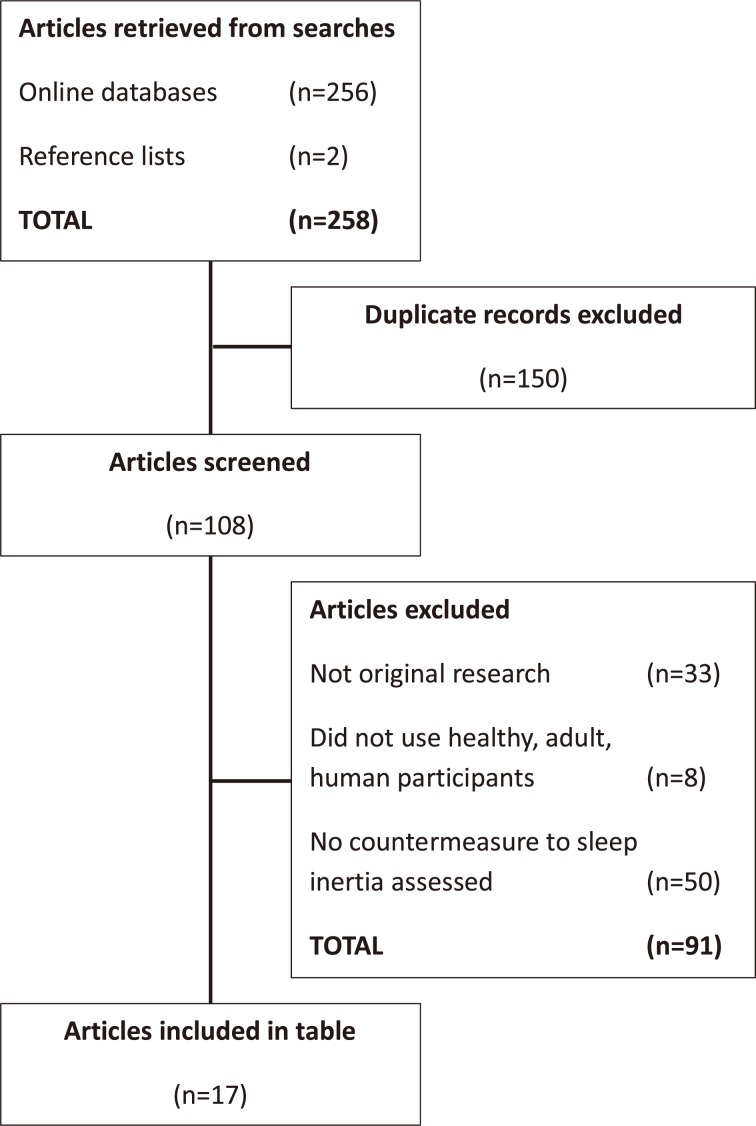
Sleep inertia is the period of impaired performance and grogginess experienced after waking. This period of impairment is of concern to workers who are on-call, or nap during work hours, and need to perform safety-critical tasks soon after waking. While several studies have investigated the best sleep timing and length to minimise sleep inertia effects, few have focused on countermeasures -especially those that can be implemented after waking (i.e. reactive countermeasures). This structured review summarises current literature on reactive countermeasures to sleep inertia such as caffeine, light, and temperature and discusses evidence for the effectiveness and operational viability of each approach. Current literature does not provide a convincing evidence-base for a reactive countermeasure. Caffeine is perhaps the best option, although it is most effective when administered prior to sleep and is therefore not strictly reactive. Investigations into light and temperature have found promising results for improving subjective alertness; further research is needed to determine whether these countermeasures can also attenuate performance impairment. Future research in this area would benefit from study design features highlighted in this review. In the meantime, it is recommended that proactive sleep inertia countermeasures are used, and that safety-critical tasks are avoided immediately after waking.
Figures
References
-
- Lubin A, Hord DJ, Tracy ML, Johnson LC (1976) Effects of exercise, bedrest and napping on performance decrement during 40 hours. Psychophysiology 13, 334–9. - PubMed
-
- Tassi P, Muzet A (2000) Sleep inertia. Sleep Med Rev 4, 341–53. - PubMed
-
- Jewett ME, Wyatt JK, Ritz-De Cecco A, Khalsa SB, Dijk DJ, Czeisler CA (1999) Time course of sleep inertia dissipation in human performance and alertness. J Sleep Res 8, 1–8. - PubMed
-
- Tietzel AJ, Lack LC (2001) The short-term benefits of brief and long naps following nocturnal sleep restriction. Sleep 24, 293–300. - PubMed
Publication types
MeSH terms
Substances
LinkOut - more resources
Full Text Sources
Other Literature Sources
Research Materials
Miscellaneous
