


Medication Adherence and Blood Pressure Control Among Hypertensive Patients With Coexisting Long-Term Conditions in Primary Care Settings: A Cross-Sectional Analysis
- PMID: 27196458
- PMCID: PMC4902400
- DOI: 10.1097/MD.0000000000003572
Medication Adherence and Blood Pressure Control Among Hypertensive Patients With Coexisting Long-Term Conditions in Primary Care Settings: A Cross-Sectional Analysis
Erratum in
-
Erratum: Medication Adherence and Blood Pressure Control Among Hypertensive Patients With Coexisting Long-Term Conditions in Primary Care Settings: A Cross-Sectional Analysis: Erratum.Medicine (Baltimore). 2017 Aug 11;96(32):e7831. doi: 10.1097/MD.0000000000007831. eCollection 2017 Aug. Medicine (Baltimore). 2017. PMID: 31305708 Free PMC article.
Abstract
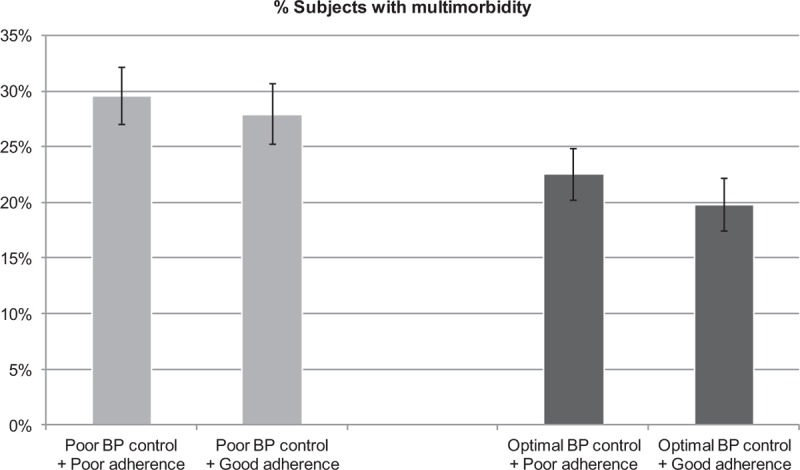
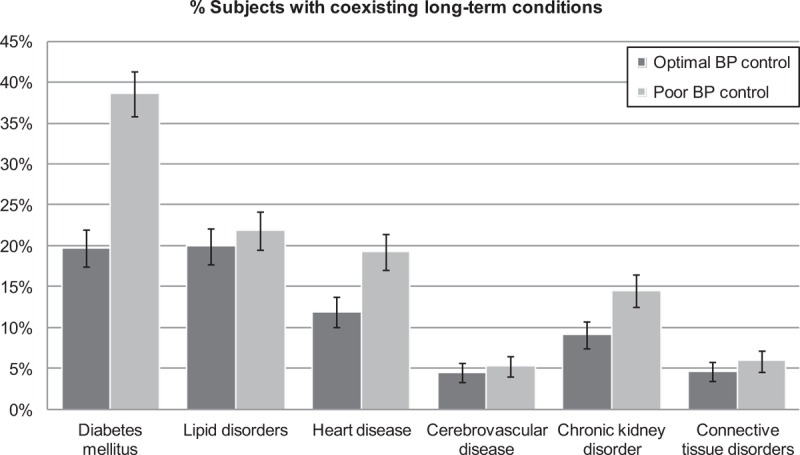
Hypertension is a typical example of long-term disease posing formidable challenges to health care. One goal of antihypertensive therapy is to achieve optimal blood pressure (BP) control and reduce co-occurring chronic conditions (multimorbidity). This study aimed to assess the influence of multimorbidity on medication adherence, and to explore the association between poor BP control and multimorbidity, with implications for hypertension management.A cross-sectional design with multistage sampling was adopted to recruit Chinese hypertensive patients attending general out-patient clinics from 3 geographic regions in Hong Kong. A modified systemic sampling methodology with 1 patient as a sampling unit was used to recruit consecutive samples in each general out-patient clinic. Data were collected by face-to-face interviews using a standardized protocol. Poor BP control was defined as having systolic BP/diastolic BP ≥130/80 mm Hg for those with diabetes or chronic kidney disease; and ≥140/90 mm Hg for others. Medication adherence was assessed by a validated Chinese version of the Morisky Medication Adherence Scale. A simple unweighted enumeration was adopted to measure the combinations of coexisting long-term conditions. Binary logistic regression analysis was conducted with medication adherence and multimorbidity as outcome variables, respectively, after controlling for effects of patient-level covariates.The prevalence of multimorbidity was 47.4% (95% confidence interval [CI] 45.4%-49.4%) among a total of 2445 hypertensive patients. The proportion of subjects having 0, 1, and ≥2 additional long-term conditions was 52.6%, 29.1%, and 18.3%, respectively. The overall rate of poor adherence to medication was 46.6%, whereas the rate of suboptimal BP control was 48.7%. Albeit the influence of multimorbidity on medication adherence was not found to be statistically significant, patients with poorly controlled BP were more likely to have multimorbidity (adjusted odds ratio 2.07, 95% CI 1.70-2.53, P < 0.001). Diabetes was the most prevalent concomitant long-term condition among hypertensive patients with poor BP control (38.6%, 95% CI 35.8-41.4 vs 19.7%, 95% CI 17.5-21.9 for patients with good BP control, P < 0.001).Multimorbidity was common among hypertensive patients, and was associated with poor BP control. Subjects with coexisting diabetes, heart disease, or chronic kidney disorder should receive more clinical attention to achieve better clinical outcomes.
Conflict of interest statement
The authors have no conflicts of interest to disclose.
Figures
References
-
- Lawes CMM, Vander Hoorn S, Rodgers A, et al. Global burden of blood-pressure-related disease, 2001. Lancet 2008; 371:1513–1518. - PubMed
-
- Ohta Y, Tsuchihashi T, Onaka U, et al. Clustering of cardiovascular risk factors and blood pressure control status in hypertensive patients. Intern Med 2010; 49:1483–1487. - PubMed
-
- Wong MCS, Wang HHX, Cheung CSK, et al. Factors associated with multimorbidity and its link with poor blood pressure control among 223,286 hypertensive patients. Int J Cardiol 2014; 177:202–208. - PubMed
-
- Ogden LG, He JA, Lydick E, et al. Long-term absolute benefit of lowering blood pressure in hypertensive patients according to the JNC VI risk stratification. Hypertension 2000; 35:539–543. - PubMed
MeSH terms
Substances
LinkOut - more resources
Full Text Sources
Other Literature Sources
Medical
