


The Effect of Gabapentin on Acute Postoperative Pain in Patients Undergoing Total Knee Arthroplasty: A Meta-Analysis
- PMID: 27196473
- PMCID: PMC4902415
- DOI: 10.1097/MD.0000000000003673
The Effect of Gabapentin on Acute Postoperative Pain in Patients Undergoing Total Knee Arthroplasty: A Meta-Analysis
Abstract
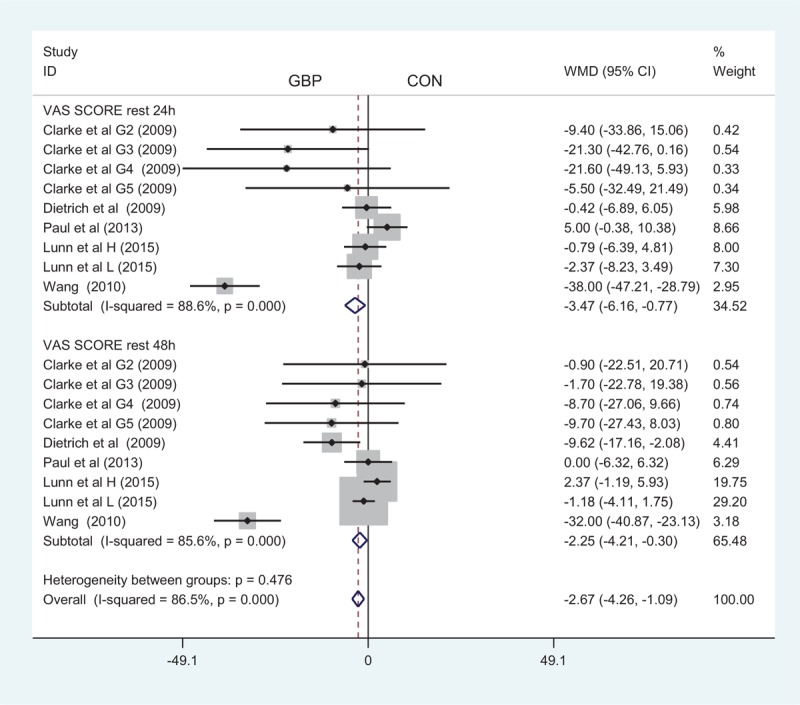
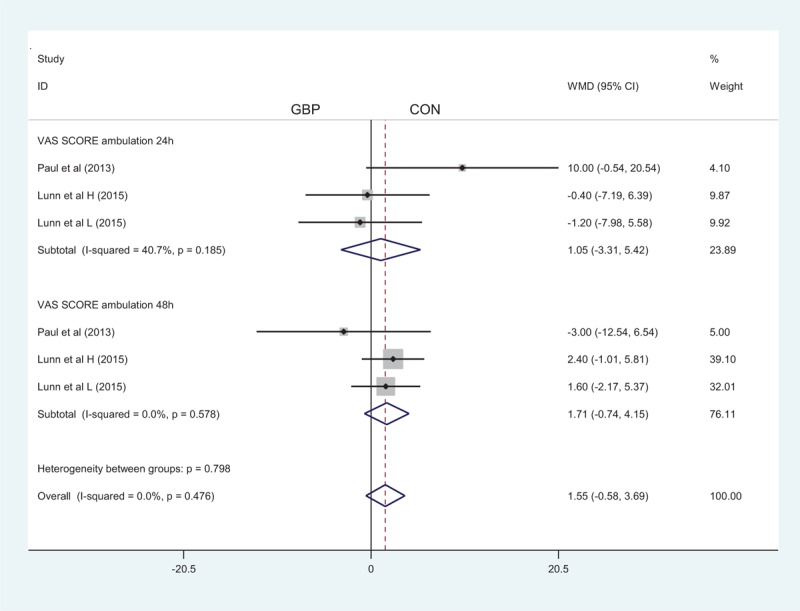
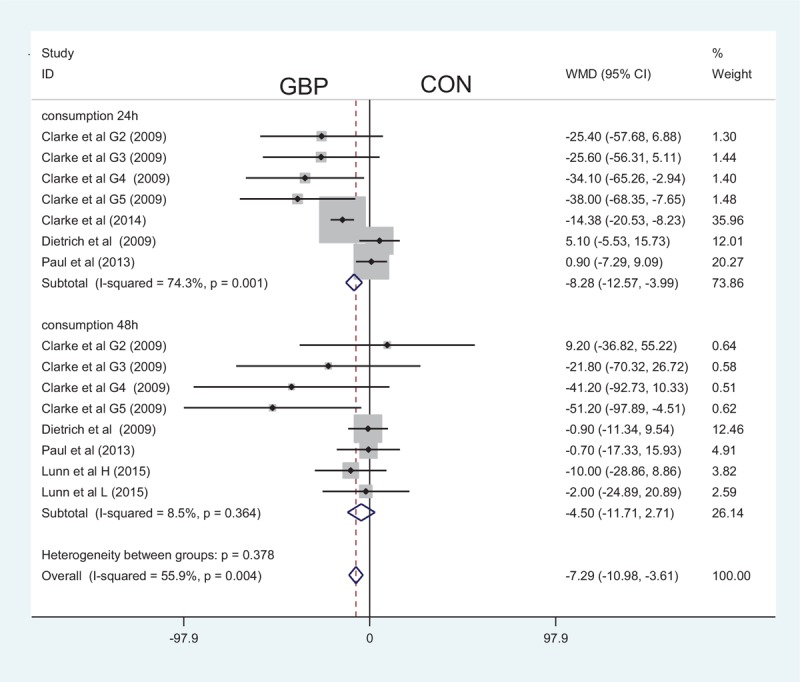
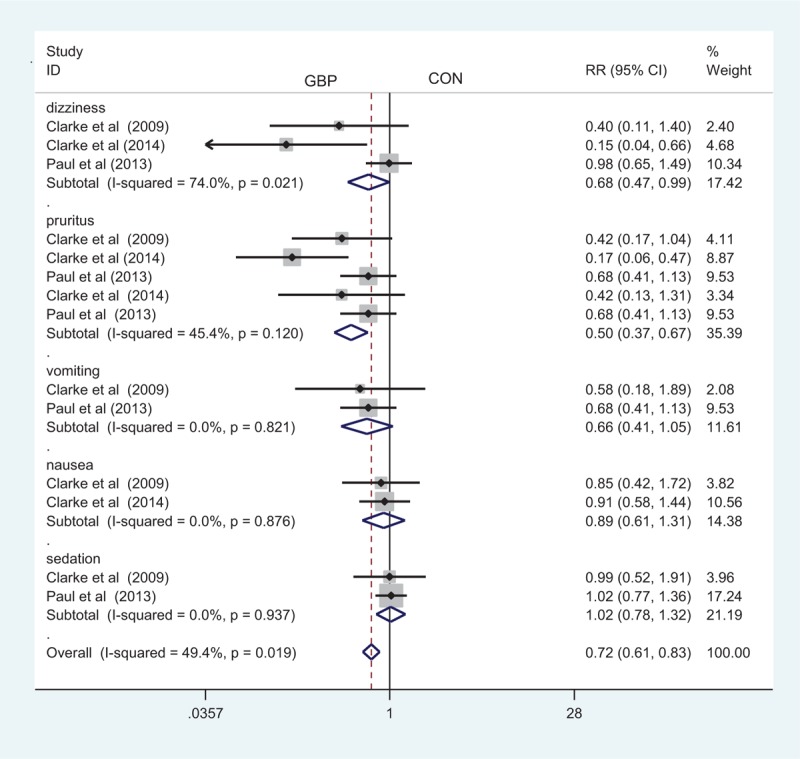
The purpose of this systematic review and meta-analysis of randomized controlled trials (RCTs) and non-RCTs was to evaluate the efficacy and safety of gabapentin versus placebo for pain control after total knee arthroplasty (TKA).In December 2015, a systematic computer-based search was conducted in the Medline, Embase, PubMed, Cochrane Controlled Trials Register (CENTRAL), Web of Science, Google, and Chinese Wanfang databases. This systematic review and meta-analysis were performed according to the preferred reporting items for systematic reviews and meta-analyses (PRISMA) statement criteria. The primary endpoint was the visual analogue scale (VAS) score after TKA with rest or mobilization at 24 and 48 hours, representing the efficacy of pain control after TKA. Cumulative morphine consumption via patient controlled anesthesia (PCA) was also assessed to determine the morphine-spare effect. Complications such as dizziness, pruritus, vomiting, nausea, and sedation were also compiled to assess the safety of gabapentin. Stata 12.0 software was used for the meta-analysis. After testing for publication bias and heterogeneity across studies, the data were aggregated for random-effects modeling whenever necessary.Six studies involving 769 patients met the inclusion criteria. Our meta-analysis revealed that gabapentin resulted in superior pain relief compared to the control group in terms of VAS score with rest at 24 hours (mean difference [MD] = -3.47; 95% confidence interval [CI] -6.16 to -0.77; P = 0.012) and at 48 hours postoperatively (MD = -2.25; 95% CI -4.21 to -0.30; P = 0.024). There was no statistically significant difference between the groups with respect to the VAS score at 24 hours postoperatively (MD = 1.05; 95% CI -3.31 to 5.42; P = 0.636) or at 48 hours (MD = 1.71; 95% CI -0.74 to 4.15; P = 0.171). These results indicated that the perioperative administration of gabapentin decreases the cumulative morphine consumption via PCA at 24 hours (MD = -8.28; 95% CI -12.57 to -3.99; P = 0.000) and 48 hours (MD = -4.50; 95% CI -10.98 to -3.61; P = 0.221). Furthermore, gabapentin decreased the rate of postoperative dizziness (relative risk [RR], 0.68; 95% CI 0.47-0.99, P = 0.044) and the occurrence of pruritus (RR, 0.50; 95% CI 0.37-0.67, P = 0.000).Based on the current meta-analysis, gabapentin exerts an analgesic and opioid-sparing effect in acute postoperative pain management without increasing the rate of dizziness and pruritus.
Conflict of interest statement
The authors have no funding and conflicts of interest to disclose.
Figures
References
-
- Osawa A, Yoshida K, Kanazawa H, et al. Efficacy of periarticular multimodal drug injection in total knee arthroplasty for pain management and rehabilitation. Osteoarthritis Cartilage 2014; 22:S415–S416.
-
- Blattler W, Partsch H. Leg compression and ambulation is better than bed rest for the treatment of acute deep venous thrombosis. Int Angiol 2003; 22:393–400. - PubMed
-
- Pang W-W, Hsu T-C, Tung C-C, et al. Is total knee replacement more painful than total hip replacement? Acta Anaesthesiol Sin 2000; 38:143–148. - PubMed
-
- Dighe K, Clarke H, McCartney CJ, et al. Perioperative gabapentin and delirium following total knee arthroplasty: a post-hoc analysis of a double-blind randomized placebo-controlled trial. Can J Anaesth 2014; 61:1136. - PubMed
Publication types
MeSH terms
Substances
LinkOut - more resources
Full Text Sources
Other Literature Sources
Medical
Miscellaneous
