


Finding and Producing Probiotic Glycosylases for the Biocatalysis of Ginsenosides: A Mini Review
- PMID: 27196878
- PMCID: PMC6273753
- DOI: 10.3390/molecules21050645
Finding and Producing Probiotic Glycosylases for the Biocatalysis of Ginsenosides: A Mini Review
Abstract
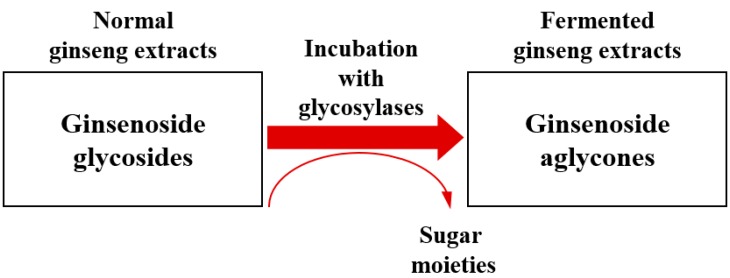
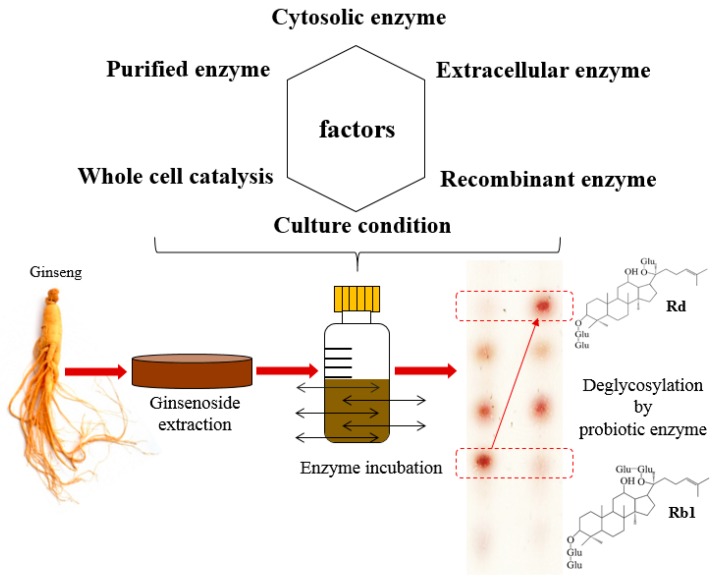
Various microorganisms have been widely applied in nutraceutical industries for the processing of phytochemical conversion. Specifically, in the Asian food industry and academia, notable attention is paid to the biocatalytic process of ginsenosides (ginseng saponins) using probiotic bacteria that produce high levels of glycosyl-hydrolases. Multiple groups have conducted experiments in order to determine the best conditions to produce more active and stable enzymes, which can be applicable to produce diverse types of ginsenosides for commercial applications. In this sense, there are various reviews that cover the biofunctional effects of multiple types of ginsenosides and the pathways of ginsenoside deglycosylation. However, little work has been published on the production methods of probiotic enzymes, which is a critical component of ginsenoside processing. This review aims to investigate current preparation methods, results on the discovery of new glycosylases, the application potential of probiotic enzymes and their use for biocatalysis of ginsenosides in the nutraceutical industry.
Keywords: biocatalysis; enzyme conversion; enzyme preparation; ginsenoside; probiotics; whole cell conversion.
Conflict of interest statement
The author declares no conflict of interest.
Figures
References
Publication types
MeSH terms
Substances
LinkOut - more resources
Full Text Sources
Other Literature Sources
