


Impact of the X Chromosome and sex on regulatory variation
- PMID: 27197214
- PMCID: PMC4889977
- DOI: 10.1101/gr.197897.115
Impact of the X Chromosome and sex on regulatory variation
Abstract
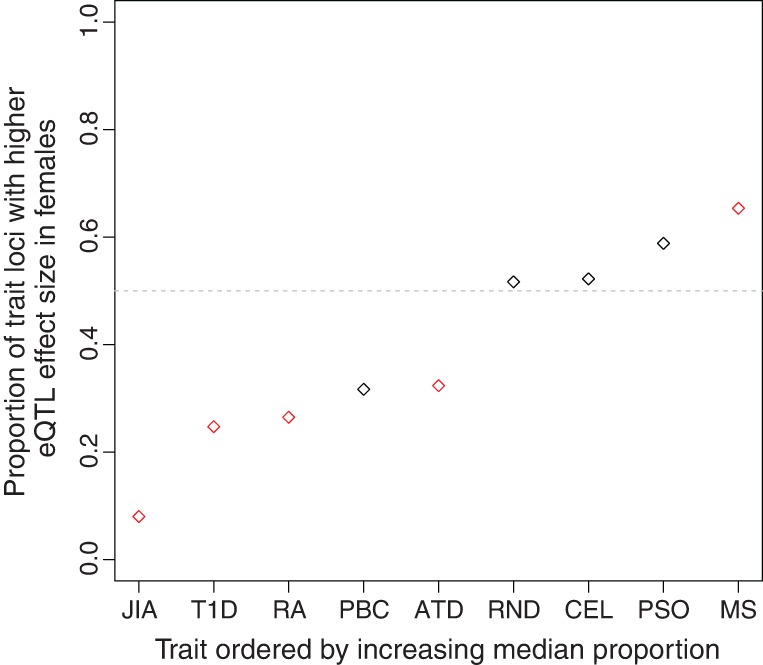
The X Chromosome, with its unique mode of inheritance, contributes to differences between the sexes at a molecular level, including sex-specific gene expression and sex-specific impact of genetic variation. Improving our understanding of these differences offers to elucidate the molecular mechanisms underlying sex-specific traits and diseases. However, to date, most studies have either ignored the X Chromosome or had insufficient power to test for the sex-specific impact of genetic variation. By analyzing whole blood transcriptomes of 922 individuals, we have conducted the first large-scale, genome-wide analysis of the impact of both sex and genetic variation on patterns of gene expression, including comparison between the X Chromosome and autosomes. We identified a depletion of expression quantitative trait loci (eQTL) on the X Chromosome, especially among genes under high selective constraint. In contrast, we discovered an enrichment of sex-specific regulatory variants on the X Chromosome. To resolve the molecular mechanisms underlying such effects, we generated chromatin accessibility data through ATAC-sequencing to connect sex-specific chromatin accessibility to sex-specific patterns of expression and regulatory variation. As sex-specific regulatory variants discovered in our study can inform sex differences in heritable disease prevalence, we integrated our data with genome-wide association study data for multiple immune traits identifying several traits with significant sex biases in genetic susceptibilities. Together, our study provides genome-wide insight into how genetic variation, the X Chromosome, and sex shape human gene regulation and disease.
© 2016 Kukurba et al.; Published by Cold Spring Harbor Laboratory Press.
Figures
References
-
- Andolfatto P. 2001. Contrasting patterns of X-linked and autosomal nucleotide variation in Drosophila melanogaster and Drosophila simulans. Mol Biol Evol 18: 279–290. - PubMed
-
- Awadalla P, Boileau C, Payette Y, Idaghdour Y, Goulet JP, Knoppers B, Hamet P, Laberge C; CARTaGENE Project. 2013. Cohort profile of the CARTaGENE study: Quebec's population-based biobank for public health and personalized genomics. Int J Epidemiol 42: 1285–1299. - PubMed
-
- Benjamini Y, Hochberg Y. 1995. Controlling the false discovery rate: a practical and powerful approach to multiple testing. J R Stat Soc B Methodol 57: 289–300.
Publication types
MeSH terms
Grants and funding
LinkOut - more resources
Full Text Sources
Other Literature Sources
Molecular Biology Databases
Research Materials
