


Antimicrobial Consumption in Medicated Feeds in Vietnamese Pig and Poultry Production
- PMID: 27198232
- PMCID: PMC5063901
- DOI: 10.1007/s10393-016-1130-z
Antimicrobial Consumption in Medicated Feeds in Vietnamese Pig and Poultry Production
Abstract
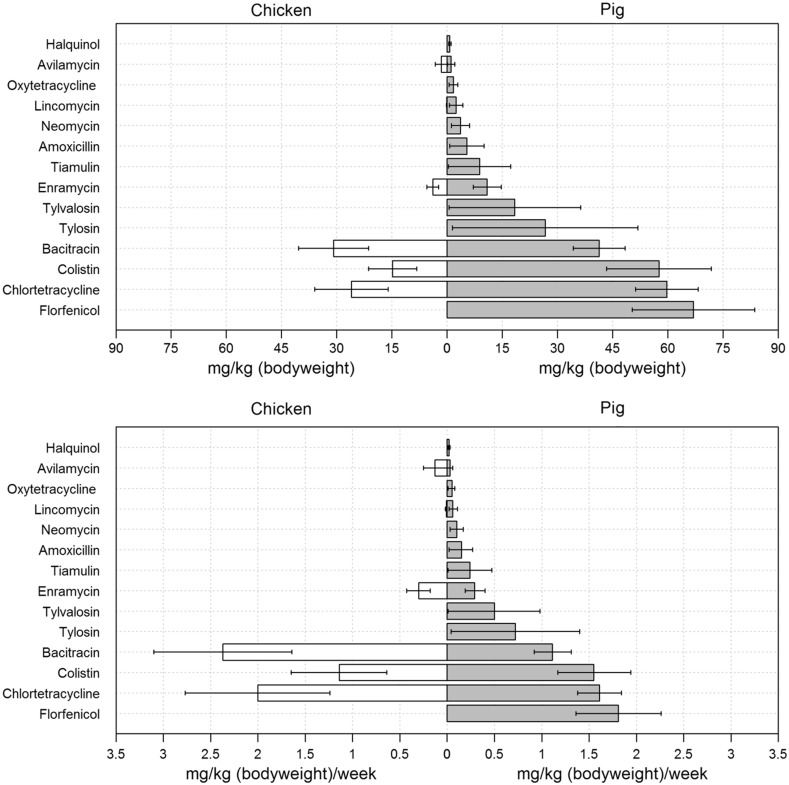
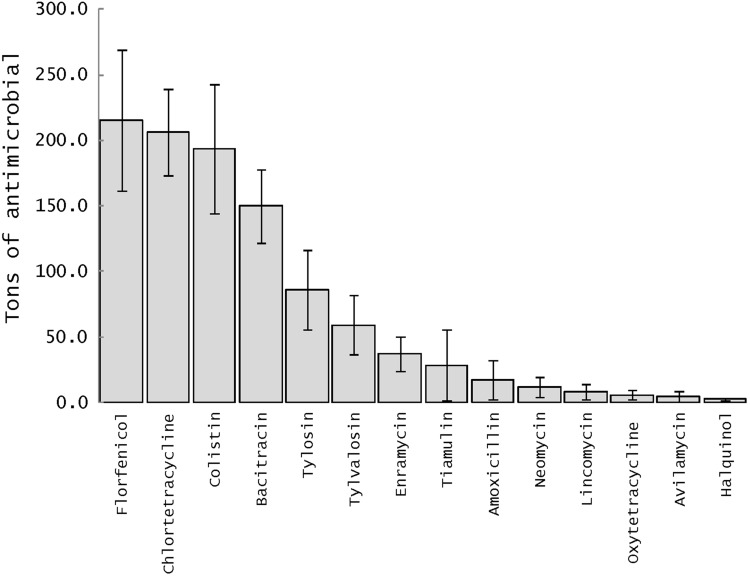
Antimicrobials are extensively used as growth promoters in animal feeds worldwide, but reliable estimates are lacking. We conducted an internet-based survey of commercial chicken and pig feed products officially approved for sale in Vietnam over the period March-June 2015. Information on the antimicrobial contents in feed products, alongside animal production data, was used to estimate in-feed antimicrobial consumption to produce one kilogram of live animal (chicken, pig), as well as to estimate country-wide antimicrobial consumption through animal feeds. A total of 1462 commercial feed formulations were examined. The survey-adjusted estimated antimicrobial contents were 25.7 and 62.3 mg/kg in chicken and pig feeds, respectively. Overall, it was estimated that 77.4 mg [95% CI 48.1-106.8] and 286.6 mg [95% CI 191.6-418.3] of in-feed antimicrobials were used to raise 1 kg of live chicken and pig, respectively. Bacitracin (15.5% feeds), chlortetracycline (11.4%), and enramycin (10.8%) were the most common antimicrobials present in chicken feed formulations, whereas bacitracin (24.8%), chlortetracycline (23.9%), and florfenicol (17.4%) were the most common in pig feed formulations. Overall, 57% of the total quantitative usage consisted of antimicrobials regarded by WHO of importance for human medicine, including amoxicillin, colistin, tetracyclines, neomycin, lincomycin, and bacitracin. These figures confirm a very high magnitude of in-feed consumption of antimicrobials, especially in pig production. Results from this study should encourage further monitoring of antimicrobials used in animal production, and foster discussion about existing policies on inclusion of antimicrobials in animal feed rations.
Keywords: Vietnam; animal production; antimicrobial; antimicrobial drug resistance.
Conflict of interest statement
The authors declare that they have no conflict of interest.
Figures
References
-
- Alexander TW, Yanke LJ, Topp E, Olson ME, Read RR, Morck DW, et al. Effect of subtherapeutic administration of antibiotics on the prevalence of antibiotic-resistant Escherichia coli bacteria in feedlot cattle. Applied and Environmental Microbiology. 2008;74:4405–4416. doi: 10.1128/AEM.00489-08. - DOI - PMC - PubMed
-
- Callaway TR, Edrington TS, Rychlik JL, Genovese KJ, Poole TL, Jung YS, et al. Ionophores: their use as ruminant growth promotants and impact on food safety. Current Issues in Intestinal Microbiology. 2013;4:43–51. - PubMed
-
- Carrique-Mas J, Trung NV, Hoa NT, Mai HH, Thanh TT, Campbell J, et al. Antimicrobial usage in chicken production in the Mekong delta of Vietnam. Zoonoses Public Health. 2014;61(Suppl. 2):1–9. - PubMed
MeSH terms
Substances
Grants and funding
LinkOut - more resources
Full Text Sources
Other Literature Sources
Medical
