


Gender, Sexual Orientation, and Workplace Incivility: Who Is Most Targeted and Who Is Most Harmed?
- PMID: 27199804
- PMCID: PMC4851979
- DOI: 10.3389/fpsyg.2016.00565
Gender, Sexual Orientation, and Workplace Incivility: Who Is Most Targeted and Who Is Most Harmed?
Abstract
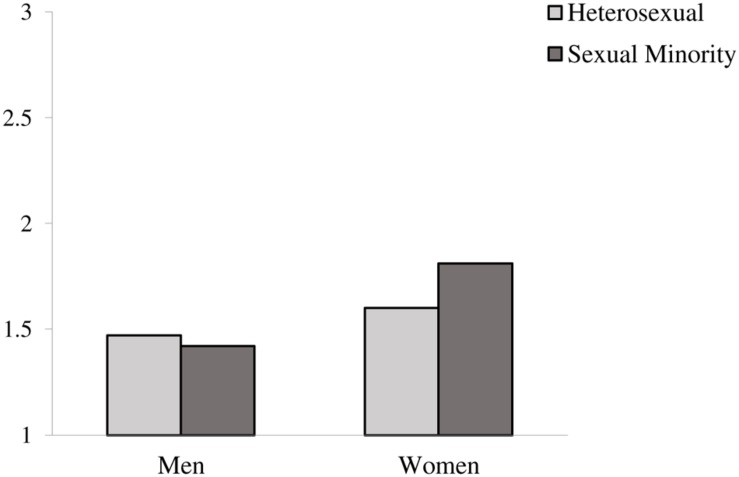
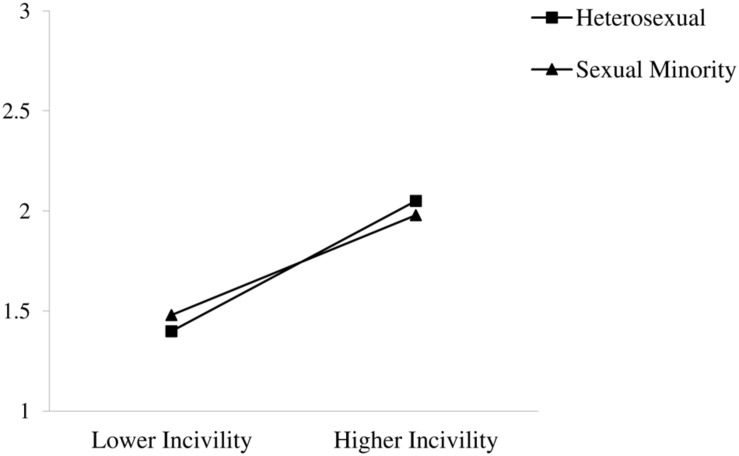
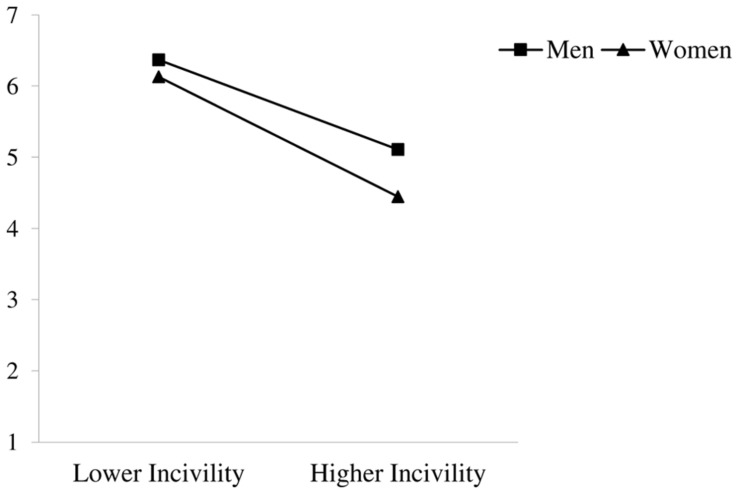
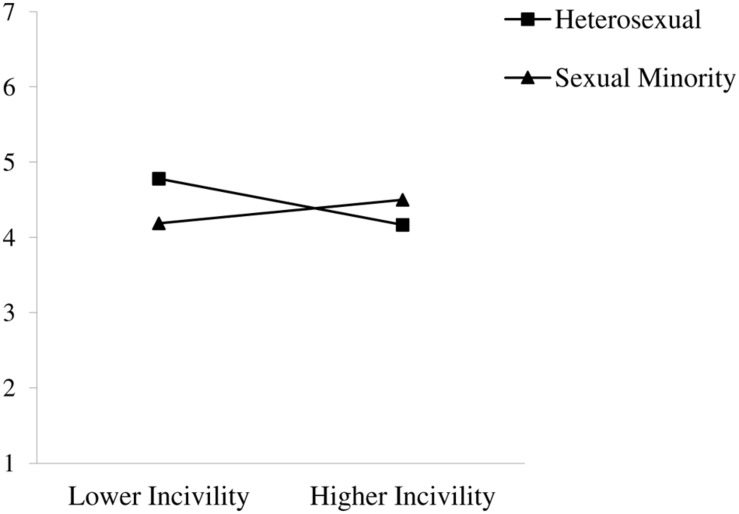
Scholars have proposed that interpersonal workplace discrimination toward members of oppressed social groups has become covert and subtle rather than overt and explicit and that such experiences lead to negative outcomes for targets. The present study examined this proposition by examining experiences and consequences of workplace incivility-a seemingly harmless form of interpersonal maltreatment-based on gender, sexual orientation, and their intersection. A sample of 1,300 academic faculty (52% male, 86% White) participated in an online survey study assessing their experiences of workplace incivility, job stress, job satisfaction, job identity centrality, and demographics. Results showed that sexual minority women reported the highest levels of workplace incivility. Findings also revealed that women reported lower job satisfaction than men and that heterosexuals reported higher job stress and lower job identity centrality than sexual minorities with higher levels of incivility. Thus, sexual minority status buffered the negative effects of incivility for sexual minorities. These findings point to the resiliency of sexual minorities in the face of interpersonal stressors at work.
Keywords: gender; intersectionality; minority stress; occupational well-being; sexual orientation; workplace incivilty.
Figures
References
-
- Acker J. (2006). Inequality regimes: gender, class, and race in organizations. Gender Soc. 20 441–464. 10.1177/0891243206289499 - DOI
-
- Andersson L. M., Pearson C. M. (1999). Tit for tat? The spiraling effect of incivility in the workplace. Acad. Manag. Rev. 24 452–471. 10.2307/259136 - DOI
-
- Bowling N. A., Hammond G. D. (2008). A meta-analytic examination of the construct validity of the michigan organizational assessment questionnaire job satisfaction subscale. J. Vocat. Behav. 73 63–77. 10.1016/j.jvb.2008.01.004 - DOI
LinkOut - more resources
Full Text Sources
Other Literature Sources
