


Immune effects and antiacetylcholinesterase activity of Polygonum hydropiper L
- PMID: 27200260
- PMCID: PMC4858880
- DOI: 10.12938/bmfh.2015-016
Immune effects and antiacetylcholinesterase activity of Polygonum hydropiper L
Abstract
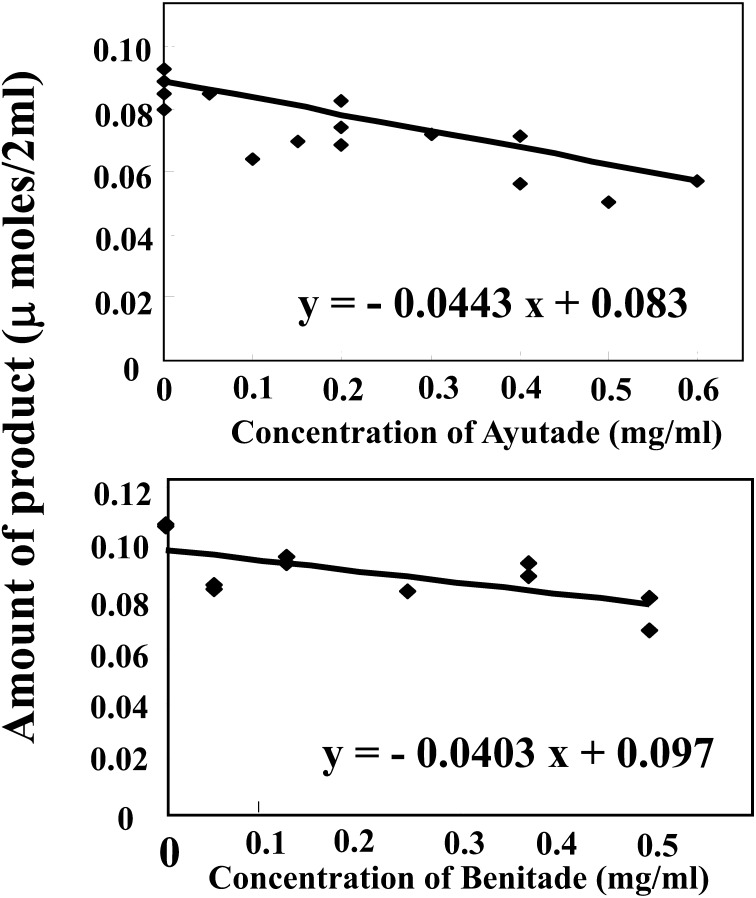
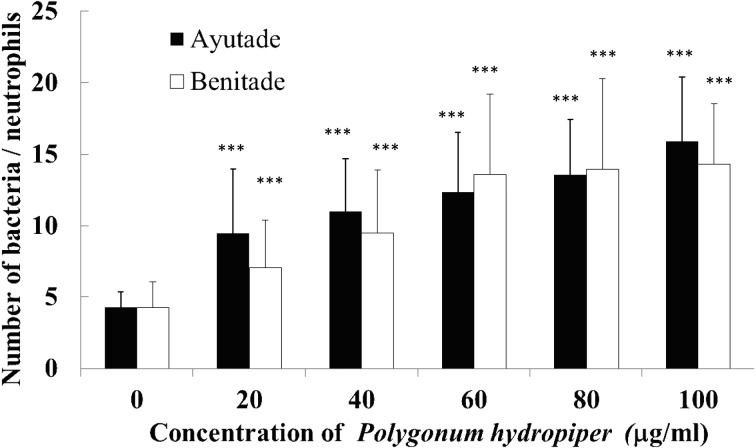
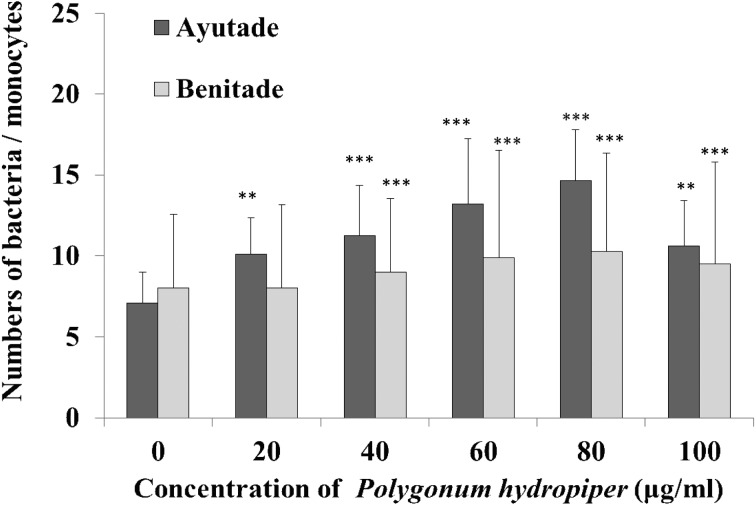
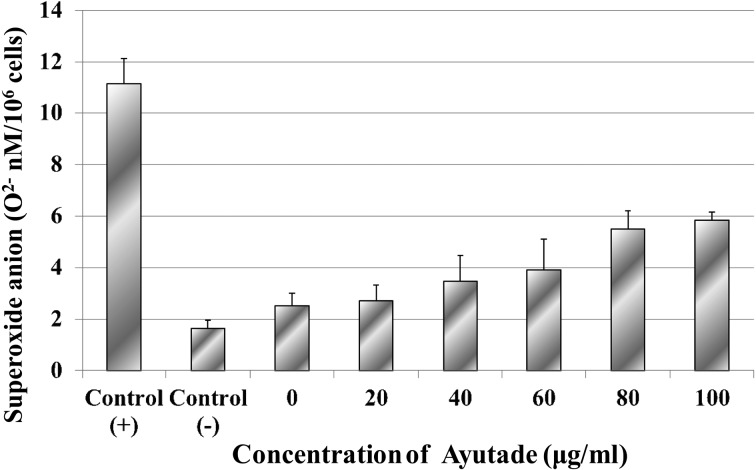
To determine the potential utility of Polygonum hydropiper (tade) as an anti-dementia functional food, the present study assessed the acetylcholinesterase inhibitory and anti-inflammatory activities of tade crude extracts in human cells. Crude extracts of tade were obtained by homogenizing tade in distilled water and then heating the resulting crude extracts. The hot aqueous extracts were purified by centrifugation and freeze-dried. The inhibition of acetylcholinesterase (AChE) by tade was investigated quantitatively by Ellman's method. Furthermore, the in vitro effects on human leukocytes (phagocytic activity, phagosome-lysosome fusion, and superoxide anion release) of coating inactive Staphylococcus aureus cells with tade crude extracts were studied. The tade crude extracts inhibited AChE activity. Furthermore, they increased phagocytic activity and phagosome-lysosome fusion in human neutrophils and monocytes in a nominally dose-dependent manner. However, the tade crude extracts did not alter superoxide anion release (O2 (-)) from neutrophils. Our results confirmed that crude extracts of P. hydropiper exhibit antiacetylcholinesterase and immunostimulation activities in vitro. P. hydropiper thus is a candidate functional food for the prevention of dementia.
Keywords: Polygonum hydropiper; anti-acetylcholinesterase; functional food; phagocytosis; phagosome-lysosome fusion; superoxide anion release.
Figures

References
-
- Population Division of the Department of Economic and Social Affairs of the United Nations Secretariat. 2013. World Population Prospects: The 2012 Revision: 31 New York. http://esa.un.org/wpp/documentation/pdf/wpp2012_highlights.pdf (accessed 2015-07-11)
-
- American Psychiatric Association. 2013. Diagnostic and Statistical Manual of Mental Disorders, Fifth edition-5 (DSM-5), Nurocognitive disorders 591–644. http://www.terapiacognitiva.eu/dwl/dsm5/DSM-5.pdf (accessed 2015-07-29)
-
- Cutler NR, Sramek JJ. 1998. The role of bridging studies in the development of cholinesterase inhibitors for Alzheimer’s disease. CNS Drugs 10: 355–364.
LinkOut - more resources
Full Text Sources
Other Literature Sources