


A comparative study of bifidobacteria in human babies and adults
- PMID: 27200263
- PMCID: PMC4858883
- DOI: 10.12938/bmfh.2015-006
A comparative study of bifidobacteria in human babies and adults
Abstract
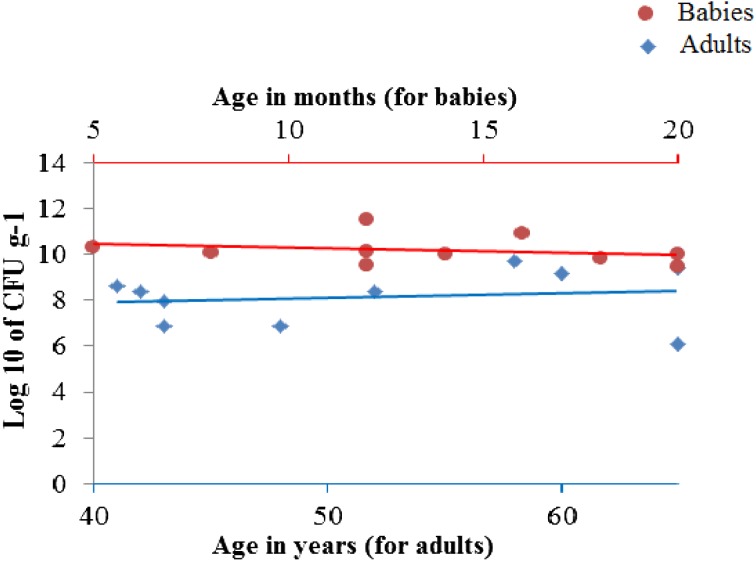
The composition and diversity of the gut microbiota are known to be different between babies and adults. The aim of this project was to compare the level of bifidobacteria between babies and adults and to investigate the influence of lifestyle factors on the level of this bacterium in the gut. During this study, the levels of bifidobacteria in 10 human babies below 2 years of age were compared with that of 10 human adults above 40 years. The level of bifidobacteria proved to be significantly higher in babies in comparison with adults. This investigation concluded that a combination of several factors, such as age, diet, and BMI, has an important effect on the level of bifidobacteria in adults, while in babies, a combination of diet and age may influence the level of intestinal bifidobacteria.
Keywords: age; bifidobacteria; gut microbiota.
Figures
References
-
- Adlerberth I, Wold AE. 2009. Establishment of the gut microbiota in Western infants. Acta Paediatr 98: 229–238. - PubMed
-
- Vael C, Desager K. 2009. The importance of the development of the intestinal microbiota in infancy. Curr Opin Pediatr 21: 794–800. - PubMed
-
- Sjöberg F, Nowrouzian F, Rangel I, Hannoun C, Moore E, Adlerberth I, Wold AE. 2013. Comparison between terminal-restriction fragment length polymorphism (T-RFLP) and quantitative culture for analysis of infants’ gut microbiota. J Microbiol Methods 94: 37–46. - PubMed
LinkOut - more resources
Full Text Sources
Other Literature Sources