


Estimating Causal Effects of Local Air Pollution on Daily Deaths: Effect of Low Levels
- PMID: 27203595
- PMCID: PMC5226700
- DOI: 10.1289/EHP232
Estimating Causal Effects of Local Air Pollution on Daily Deaths: Effect of Low Levels
Abstract
Background: Although many time-series studies have established associations of daily pollution variations with daily deaths, there are fewer at low concentrations, or focused on locally generated pollution, which is becoming more important as regulations reduce regional transport. Causal modeling approaches are also lacking.
Objective: We used causal modeling to estimate the impact of local air pollution on mortality at low concentrations.
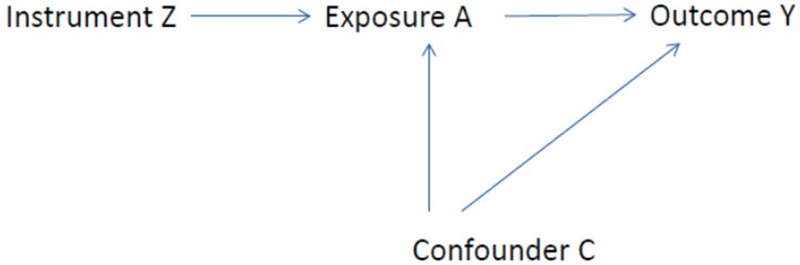
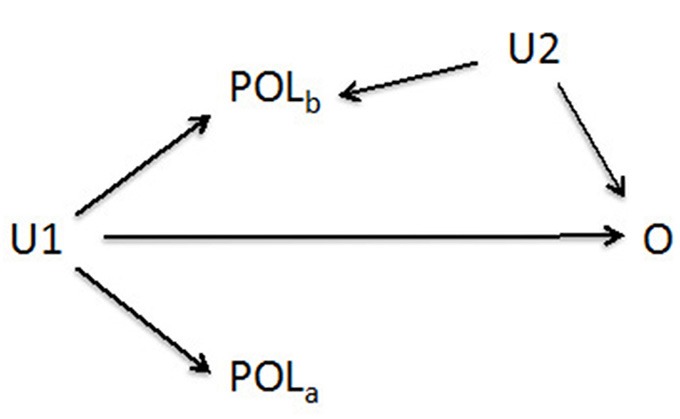
Methods: Using an instrumental variable approach, we developed an instrument for variations in local pollution concentrations that is unlikely to be correlated with other causes of death, and examined its association with daily deaths in the Boston, Massachusetts, area. We combined height of the planetary boundary layer and wind speed, which affect concentrations of local emissions, to develop the instrument for particulate matter ≤ 2.5 μm (PM2.5), black carbon (BC), or nitrogen dioxide (NO2) variations that were independent of year, month, and temperature. We also used Granger causality to assess whether omitted variable confounding existed.
Results: We estimated that an interquartile range increase in the instrument for local PM2.5 was associated with a 0.90% increase in daily deaths (95% CI: 0.25, 1.56). A similar result was found for BC, and a weaker association with NO2. The Granger test found no evidence of omitted variable confounding for the instrument. A separate test confirmed the instrument was not associated with mortality independent of pollution. Furthermore, the association remained when all days with PM2.5 concentrations > 30 μg/m3 were excluded from the analysis (0.84% increase in daily deaths; 95% CI: 0.19, 1.50).
Conclusions: We conclude that there is a causal association of local air pollution with daily deaths at concentrations below U.S. EPA standards. The estimated attributable risk in Boston exceeded 1,800 deaths during the study period, indicating that important public health benefits can follow from further control efforts. Citation: Schwartz J, Bind MA, Koutrakis P. 2017. Estimating causal effects of local air pollution on daily deaths: effect of low levels. Environ Health Perspect 125:23-29; http://dx.doi.org/10.1289/EHP232.
Conflict of interest statement
The contents of this publication are solely the responsibility of the grantee and do not necessarily represent the official views of the U.S. EPA. The authors declare they have no actual or potential competing financial interests.
Figures
References
-
- Adar SD, Gold DR, Coull BA, Schwartz J, Stone PH, Suh H. Focused exposures to airborne traffic particles and heart rate variability in the elderly. Epidemiology. 2007b;18:95–103. - PubMed
-
- Adar SD, Klein R, Klein BE, Szpiro AA, Cotch MF, Wong TY, et al. 2010. Air pollution and the microvasculature: a cross-sectional assessment of in vivo retinal images in the population-based multi-ethnic study of atherosclerosis (MESA). PLoS Med 7 e1000372, doi: 10.1371/journal.pmed.1000372 - DOI - PMC - PubMed
Publication types
MeSH terms
Substances
Grants and funding
LinkOut - more resources
Full Text Sources
Other Literature Sources
Medical
Research Materials