


The comparisons of phenotype and genotype between CADASIL and CADASIL-like patients and population-specific evaluation of CADASIL scale in China
- PMID: 27206574
- PMCID: PMC4875019
- DOI: 10.1186/s10194-016-0646-5
The comparisons of phenotype and genotype between CADASIL and CADASIL-like patients and population-specific evaluation of CADASIL scale in China
Abstract
Background: Cerebral autosomal dominant arteriopathy with subcortical infarcts and leukoencephalopathy (CADASIL) is the most common form of hereditary stroke disorder caused by mutations in the NOTCH3 gene. Although CADASIL scale is a widely used tool to screen clinically suspected CADASIL patients, the differential effects of this scale in various populations remain unknown.
Methods: 92 CADASIL-like patients and 24 CADASIL patients were selected based on CADASIL scale and gene tests. The clinical, genetic and radiological characteristics were analyzed.
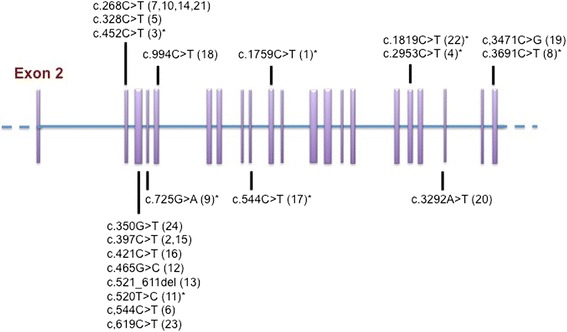
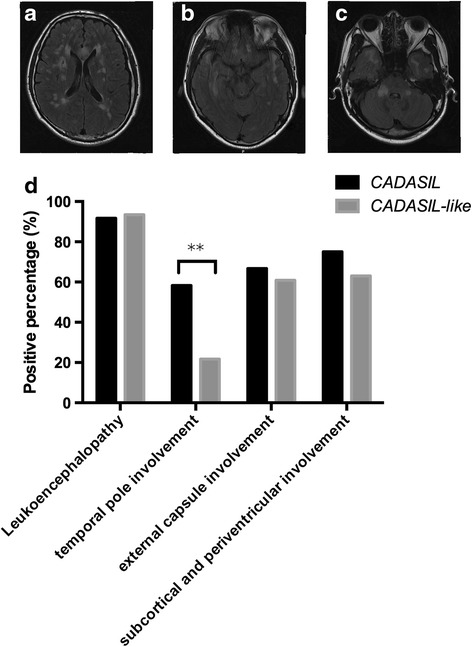
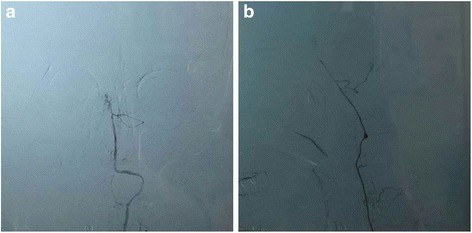
Results: Based on the CADASIL scale, we first screened 116 suspected CADASIL patients, and detected 20 mutations in 24 CADASIL-patients (Specificity: 20.69 %). Surprisingly, we found that transient ischemic attack/stroke, migraine, cognitive decline, psychiatric disturbances and early onset age in CADASIL scale showed no differences between the CADASIL and the CADASIL-like patients (p > 0.05). Instead, recurrent cerebral ischemic events (58.33 %, p = 0.028) and positive family histories (p < 0.05) were more frequently observed in CADASIL patients. Moreover, compared with CADASIL-like patients (21.74 %), CADASIL patients demonstrated higher percentage of temporal pole involvements (58.33 %, p = 0.001), but not the external capsule involvements (66.67 %, p = 0.602), in MRI imaging. Further, we found that vascular risk factors could occur in both CADASIL patients and CADASIL-like patients, and therefore could not be used as the markers to differentiate the two groups in our study (p > 0.05). By performing DSA analysis, we for the first time identified dysplasia of cerebral blood vessels in CADASIL patients, which were detected more frequently in CADASIL patients (41.67 %) in comparison with CADASIL-like patients (8.69 %, p <0.01).
Conclusion: Our data suggested that the efficacy of CADASIL scale to diagnose the disease varied with specific populations. Recurrent cerebral ischemic events, temporal pole involvements (but not the external capsule) in MRI imaging and dysplasia of cerebral blood vessels in DSA may be the new potential risk factors of the CADASIL scale suitable for Chinese patients. Gene testing by encephalopathy gene panel is expected to improve the accuracy of CADASIL differential diagnosis and increase the understanding of this disease in the future.
Keywords: CADASIL; CADASIL scale; Genotype; Phenotype; Small vessel disease.
Figures
References
Publication types
MeSH terms
Substances
LinkOut - more resources
Full Text Sources
Other Literature Sources
Medical
Miscellaneous
