


A workflow task force affects emergency physician compliance for point-of-care ultrasound documentation and billing
- PMID: 27207087
- PMCID: PMC4875042
- DOI: 10.1186/s13089-016-0041-0
A workflow task force affects emergency physician compliance for point-of-care ultrasound documentation and billing
Abstract
Background: Emergency point-of-care ultrasound (POC u/s) is an example of a health information technology that improves patient care and time to correct diagnosis. POC u/s examinations should be documented, as they comprise an integral component of physician decision making. Incomplete documentation prevents coding, billing and physician group compensation for ultrasound-guided procedures and patient care. We aimed to assess the effect of directed education and personal feedback through a task force driven initiative to increase the number of POC u/s examinations documented and transferred to medical coders by emergency medicine physicians.
Methods: Three months before a chosen go-live date, departmental leadership, the ultrasound division, and residents formed a task force. Barriers to documentation were identified through brain storming and email solicitation. The total number and application-specific POC u/s examinations performed and transferred to the healthcare record and medical coders were compared for the pre- and post-task force intervention periods. Chi square analysis was used to determine the difference between the number of POC u/s examinations reported before and after the intervention.
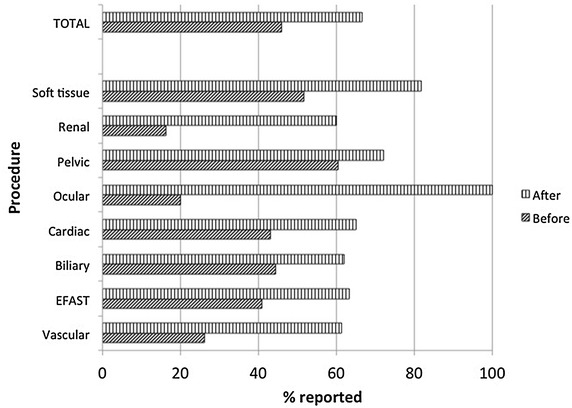
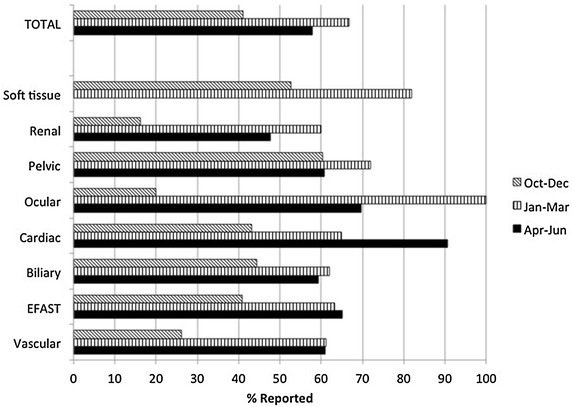
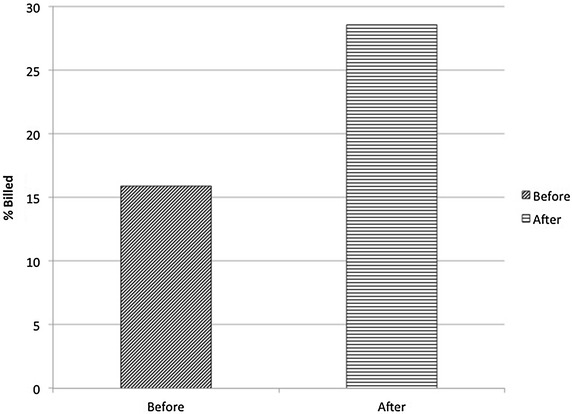
Results: A total of 1652 POC u/s examinations were reported during the study period. Successful reporting to the patient care chart and medical coders increased from 41 % pre-task force intervention to 63 % post-intervention (p value 0.000). The number of scans performed during the 3-month periods (pre-intervetion, post-intervention 0-3 months, post-intervention 3-6 months) was similar (521, 594 and 537). When analyzed by specific application, the majority showed a statistically significant increase in the percentage of examinations reported, including those most critical for patient care decision making: (EFAST (41 vs. 64 %), vascular access (26 vs. 61 %), and cardiac (43 vs. 72 %); and those most commonly performed: biliary (44 vs. 61 %) and pelvic (60 vs. 66 %). Of the POC u/s studies coded and reported for reimbursement, 15.9 % were billed before intervention and 32 % were billed after intervention (p value: 0.000).
Conclusions: The formation of a workflow solution task force positively affected emergency physician compliance with POC u/s documentation for coding and billing over a 6-month period. Further investigation should assess the long-term effect of the intervention and whether this translates into increased revenue to the department.
Keywords: Documentation compliance; Point-of-care ultrasound; Ultrasound workflow; Workflow.
Figures
References
-
- Milling TJ, Rose J, Briggs WM, Birkhahn R, Gaeta TJ, Bove JJ, et al. Randomized, controlled clinical trial of point-of-care limited ultrasonography assistance of central venous cannulation: the Third Sonography Outcomes Assessment Program (SOAP-3) Trial. Crit Care Med. 2005;33(8):1764–1769. doi: 10.1097/01.CCM.0000171533.92856.E5. - DOI - PubMed
-
- Melniker LA, Leibner E, McKenney MG, Lopez P, Briggs WM, Mancuso CA. Randomized controlled clinical trial of point-of-care, limited ultrasonography for trauma in the emergency department: the first sonography outcomes assessment program trial. Ann Emerg Med. 2006;48(3):227–235. doi: 10.1016/j.annemergmed.2006.01.008. - DOI - PubMed
-
- Resnick J, Hoffenberg S, Tayal V, Dickman E. Ultrasound coding and reimbursement document 2009. ACEP
LinkOut - more resources
Full Text Sources
Other Literature Sources
