Review
. 2016 Jul;208(1):41-8.
doi: 10.1016/j.molbiopara.2016.05.005. Epub 2016 May 18.

Bacterial tweets and podcasts #signaling#eavesdropping#microbialfightclub

Affiliations
Review

Bacterial tweets and podcasts #signaling#eavesdropping#microbialfightclub

Kelly L Michie et al. Mol Biochem Parasitol. 2016 Jul.

Abstract

Once thought to live independently, bacteria are now known to be highly social organisms. Their behaviors ranges from cooperatively forming complex multispecies communities to fiercely competing for resources. Work over the past fifty years has shown that bacteria communicate through diverse mechanisms, such as exchanging diffusible molecules, exporting molecules in membrane vesicles, and interacting through direct cell-cell contact. These methods allow bacteria to sense and respond to other cells around them and coordinate group behavior. In this review, we share the discoveries and lessons learned in the field of bacterial communication with the aim of providing insights to parasitologists and other researchers working on related questions.

Keywords: Bacterial communication; Bacterial cooperation; Quorum sensing; Sociomicrobiology.


Figures

Figure 1
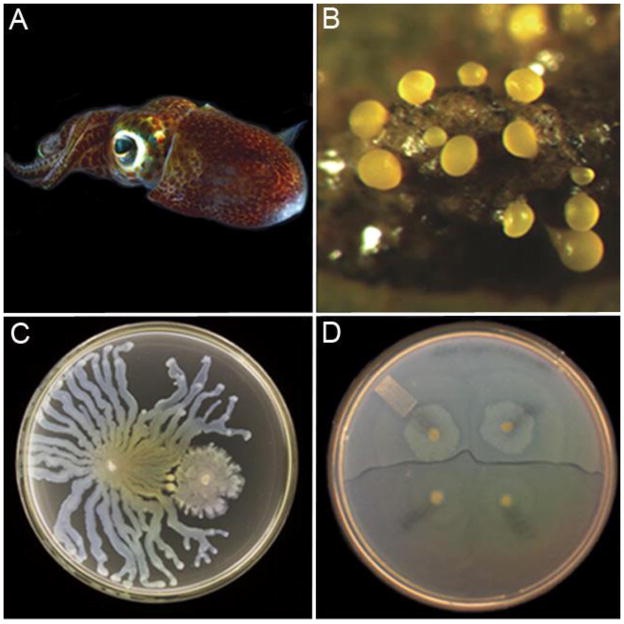
Figure 1. Examples of bacterial communication
A) Bioluminescent Vibrio fischeri in symbiosis with the Hawaiian Bobtail Squid. V. fischeri controls its bioluminescence through Quorum Sensing (QS), a process involving the exchange of diffusible, density-dependent signal molecules. The squid uses bioluminescence as a camouflaging mechanism. (Photograph courtesy Margaret McFall-Ngai) B) Fruiting body of Myxococcus xanthus. Communities of M. xanthus use a membrane-bound, contact-dependent signal to aggregate and coordinate the formation of a structure called a fruiting body. Cells in the center differentiate into environmentally resistant, metabolically inert spores and are released to germinate at a future time when environmental conditions are more favorable. (Photograph courtesy Michiel Vos) C) Wild-type Pseudomonas aeruginosa on the left regulates genes required for swarming behavior via QS. QS-deficient mutants on the right are unable to communicate and activate QS-controlled genes including those important for swarming (Photograph by Steve Diggle and Edgar Lis-sel). D) Swarms of Proteus mirabilis use a contact-dependent system to differentiate between members of their own strain and a competing strain. Approaching swarms merge with other members of a genetically identical clonal population but distance themselves from members of a competing strain, forming a visible boundary (Photographs courtesy of Margaret McFall-Ngai, Michiel Vos, Steve Diggle and Edgar Lissel, and Karine Gibbs, respectively)
Figure 2
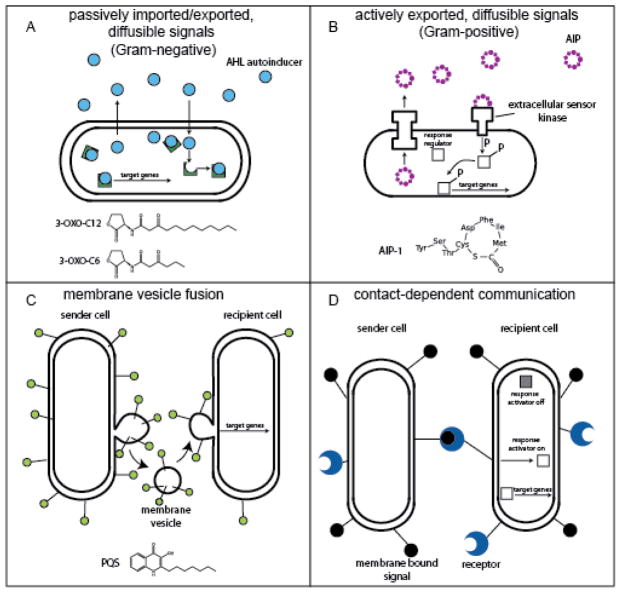
Figure 2. Methods of bacterial communication
A) Quorum sensing (QS) in Gram-negative bacteria. Acyl-homoserine lactone (AHL) autoinducers freely diffuse out of cells and activate target gene transcription after reaching a critical cytoplasmic concentration. 3-OXO-C12 and 3-OXO-C6 are examples of two AHL autoinducers. B) QS in Gram-positive bacteria. Autoinducing-peptides (AIPs) are exported from the cell and bind extracellular receptors. After reaching a critical concentration, they also activate transcription of target genes. AIP-1 is an example of an AIP. C) Transport of molecules using outer membrane vesicles (OMVs). The outer membrane of Gram-negative bacteria containing hydrophobic signals (green lollipops) blebs off of a producing cell to fuse with a recipient cell to activate transcription of target genes. The PQS autoinducer is transported via OMVs D) Contact-dependent signal transmission. Membrane-bound signaling proteins bind to their cognate membrane-bound receptor in a neighboring cell, triggering changes in response regulators that alter transcription of target genes.

References

    1. Bainton NJ, Bycroft BW, Chhabra SR, Stead P, Gledhill L, Hill PJ, Rees CE, Winson MK, Salmond GP, Stewart GS, et al. A general role for the lux autoinducer in bacterial cell signalling: control of antibiotic biosynthesis in Erwinia. Gene. 1992;116(1):87–91. - PubMed
    1. Basler M, Ho Brian T, Mekalanos John J. Tit-for-Tat: Type VI Secretion System Counterattack during Bacterial Cell-Cell Interactions. Cell. 152(4):884–894. - PMC - PubMed
    1. Bassler BL, Greenberg EP, Stevens AM. Cross-species induction of luminescence in the quorum-sensing bacterium Vibrio harveyi. J Bacteriol. 1997;179(12):4043–4045. - PMC - PubMed
    1. Bassler BL, Wright M, Showalter RE, Silverman MR. Intercellular signalling in Vibrio harveyi: sequence and function of genes regulating expression of luminescence. Mol Microbiol. 1993;9(4):773–786. - PubMed
    1. Blango MG, Mulvey MA. Bacterial landlines: contact-dependent signaling in bacterial populations. Curr Opin Microbiol. 2009;12(2):177–181. - PMC - PubMed

Publication types

MeSH terms

LinkOut - more resources