


Increased functional connectivity between cortical hand areas and praxis network associated with training-related improvements in non-dominant hand precision drawing
- PMID: 27212059
- PMCID: PMC4903896
- DOI: 10.1016/j.neuropsychologia.2016.05.016
Increased functional connectivity between cortical hand areas and praxis network associated with training-related improvements in non-dominant hand precision drawing
Abstract
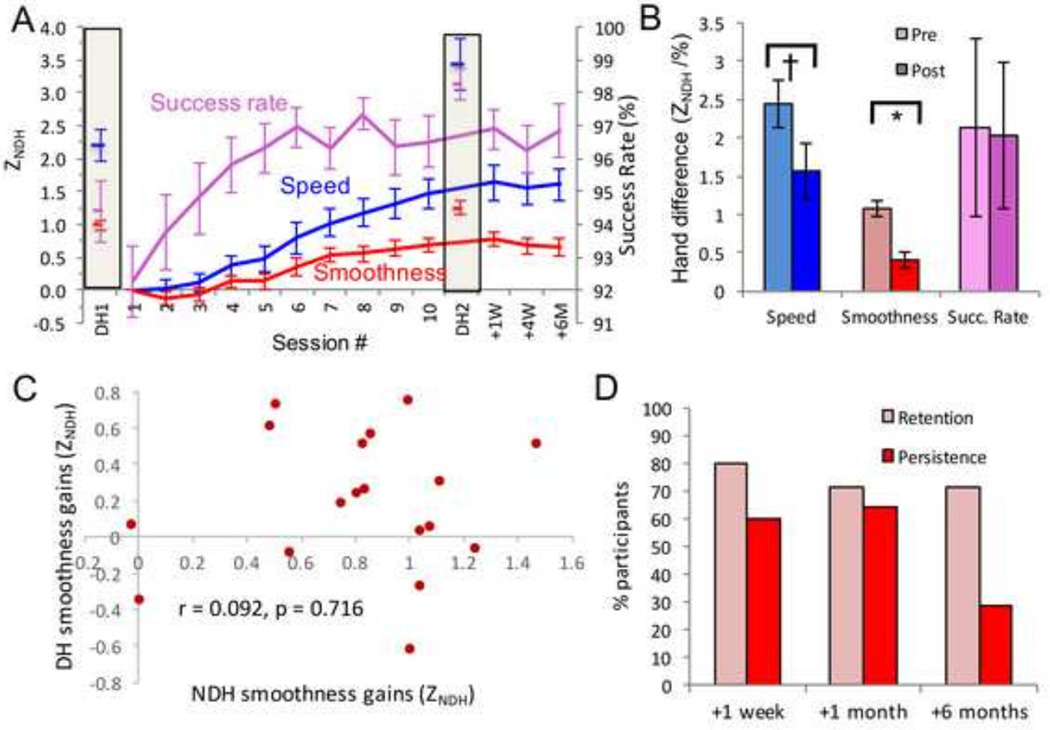
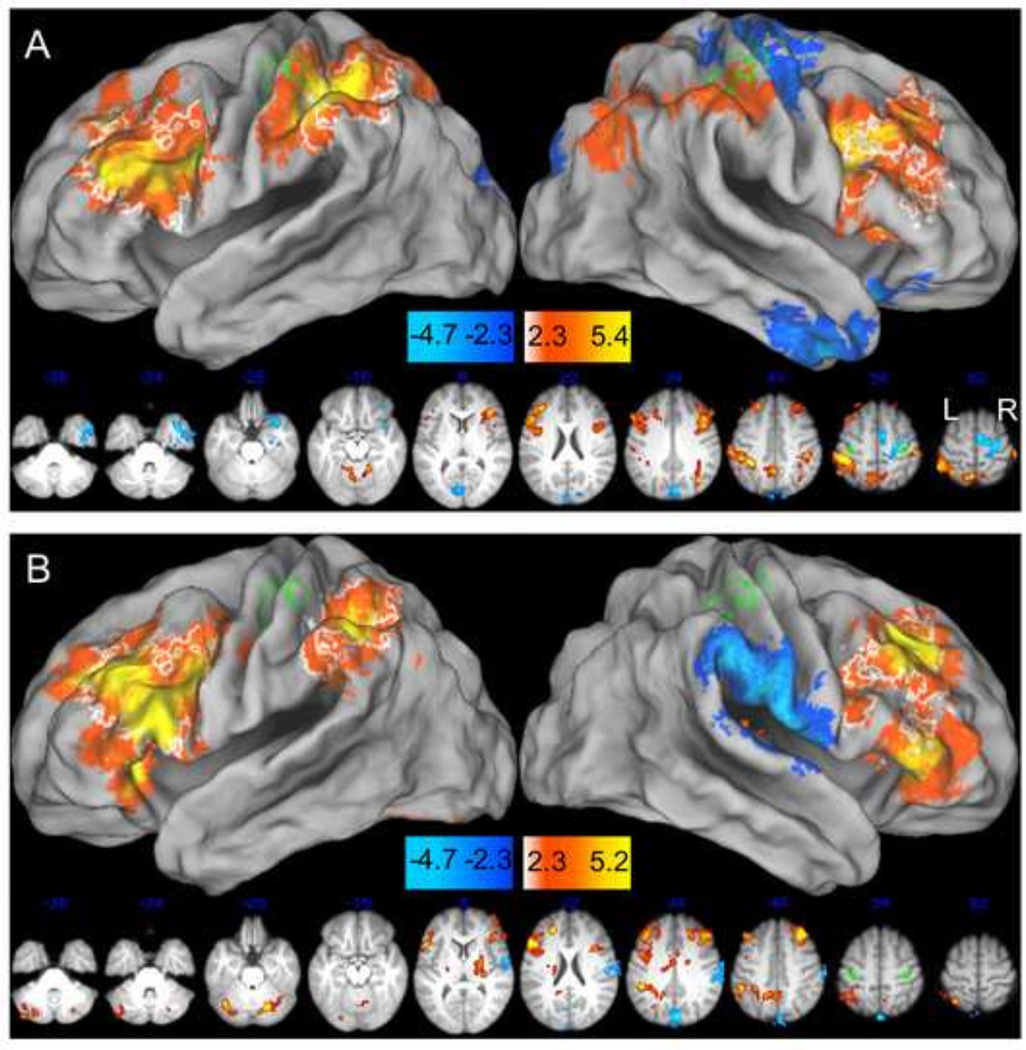
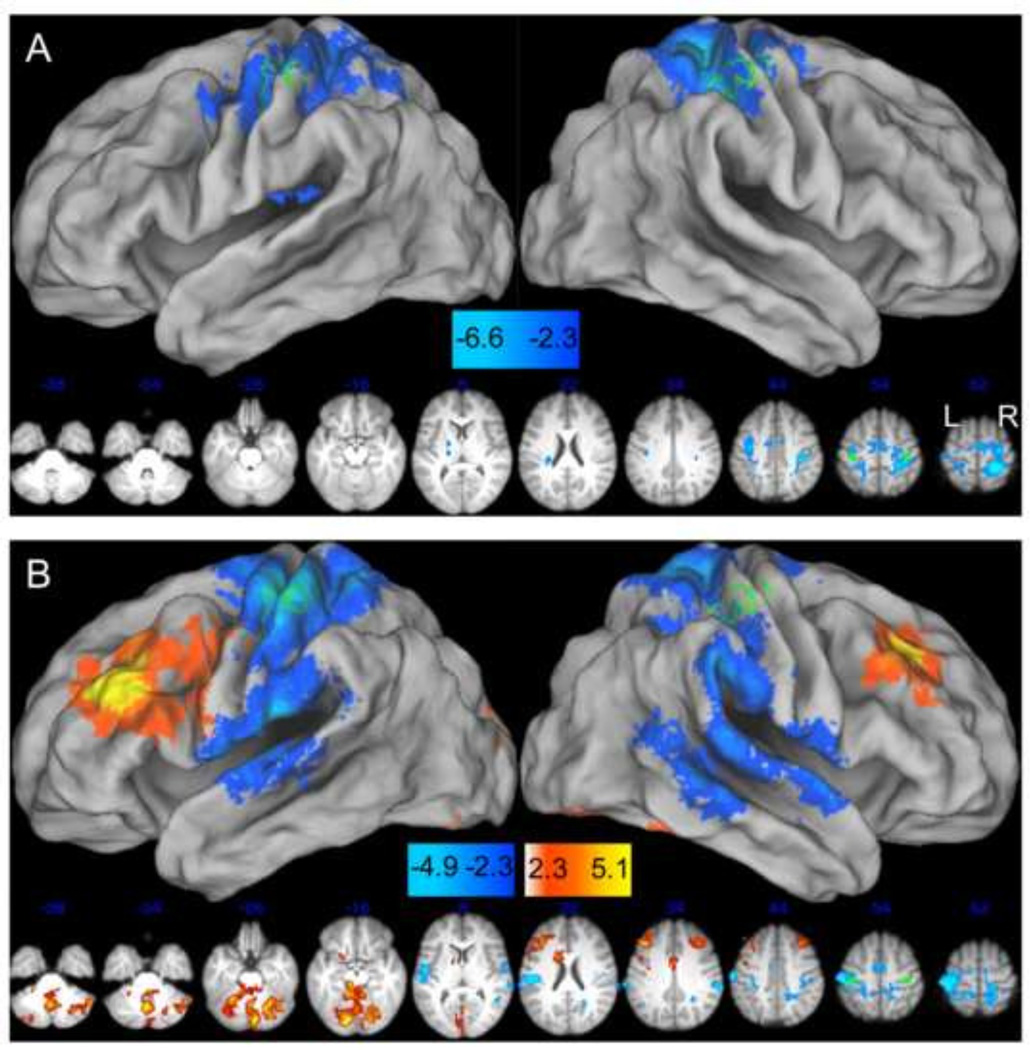
Chronic forced use of the non-dominant left hand yields substantial improvements in the precision and quality of writing and drawing. These changes may arise from increased access by the non-dominant (right) hemisphere to dominant (left) hemisphere mechanisms specialized for end-point precision control. To evaluate this prediction, 22 healthy right-handed adults underwent resting state functional connectivity (FC) MRI scans before and after 10 days of training on a left hand precision drawing task. 89% of participants significantly improved left hand speed, accuracy, and smoothness. Smoothness gains were specific to the trained left hand and persistent: 6 months after training, 71% of participants exhibited above-baseline movement smoothness. Contrary to expectations, we found no evidence of increased FC between right and left hemisphere hand areas. Instead, training-related improvements in left hand movement smoothness were associated with increased FC between both sensorimotor hand areas and a left-lateralized parieto-prefrontal network implicated in manual praxis. By contrast, skill retention at 6 months was predicted by changes including decreased FC between the representation of the trained left hand and bilateral sensorimotor, parietal, and premotor cortices, possibly reflecting consolidation and a disengagement of early learning processes. These data indicate that modest amounts of training (<200min total) can induce substantial, persistent improvements the precision and quality of non-dominant hand control in healthy adults, supported by strengthened connectivity between bilateral sensorimotor hand areas and a left-lateralized parieto-prefrontal praxis network.
Keywords: FMRI; Humans; Laterality of motor control; Learning; Movement; Training.
Copyright © 2016 Elsevier Ltd. All rights reserved.
Figures
References
-
- Andersson J, Jenkinson M, Smith S. Non-linear registration, aka Spatial normalisation FMRIB technical report TR07JA2. FMRIB Analysis Group of the University of Oxford. 2007
-
- Beery K, Beery N. The Beery-Buktenica developmental test of visual-motor integration. 5. Minneapolis: NCS Pearson Inc.; 2004.
-
- Bogdanov S, Smith J, Frey SH. Former Hand Territory Activity Increases After Amputation During Intact Hand Movements, but Is Unaffected by Illusory Visual Feedback. Neurorehabilitation and Neural Repair. 2012;26:604–615. - PubMed
-
- Calford M, Tweedale R. Interhemispheric transfer of plasticity in the cerebral cortex. Science. 1990;249:805–807. - PubMed
Publication types
MeSH terms
Substances
Grants and funding
LinkOut - more resources
Full Text Sources
Other Literature Sources
