


The microbiomes and metagenomes of forest biochars
- PMID: 27212657
- PMCID: PMC4876420
- DOI: 10.1038/srep26425
The microbiomes and metagenomes of forest biochars
Abstract
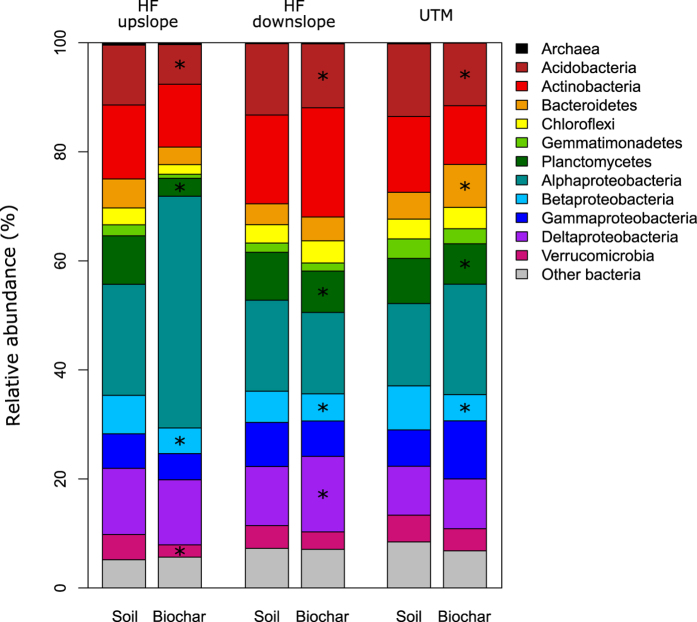
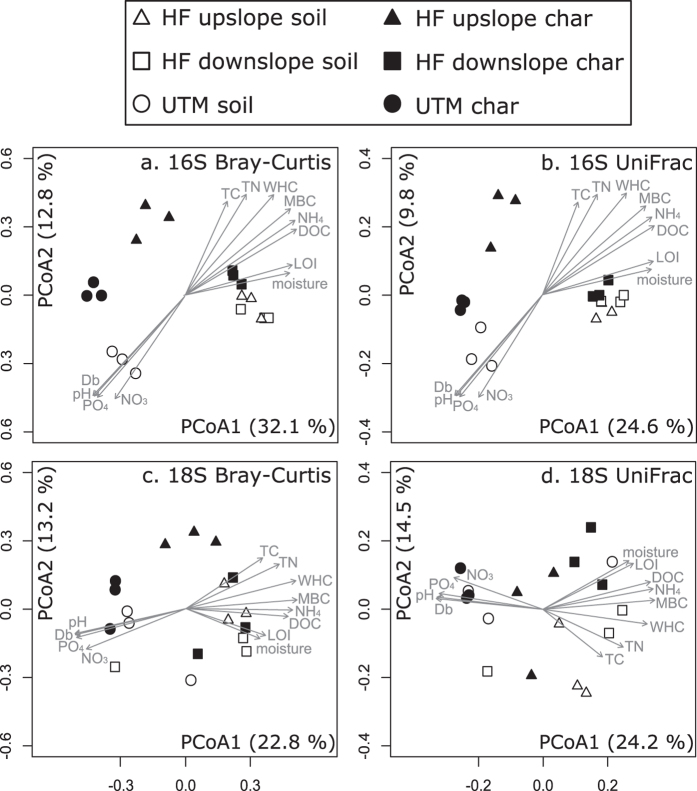
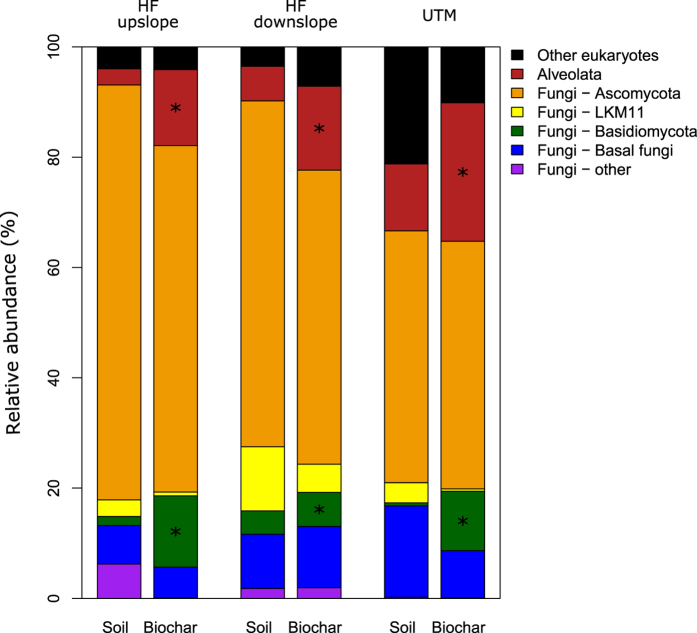
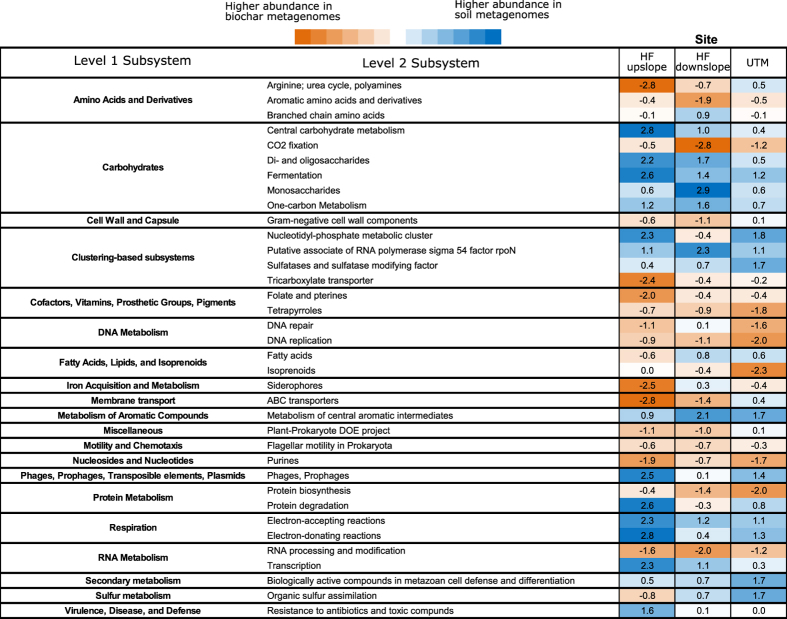
Biochar particles have been hypothesized to provide unique microhabitats for a portion of the soil microbial community, but few studies have systematically compared biochar communities to bulk soil communities. Here, we used a combination of sequencing techniques to assess the taxonomic and functional characteristics of microbial communities in four-year-old biochar particles and in adjacent soils across three forest environments. Though effects varied between sites, the microbial community living in and around the biochar particles had significantly lower prokaryotic diversity and higher eukaryotic diversity than the surrounding soil. In particular, the biochar bacterial community had proportionally lower abundance of Acidobacteria, Planctomycetes, and β-Proteobacteria taxa, compared to the soil, while the eukaryotic biochar community had an 11% higher contribution of protists belonging to the Aveolata superphylum. Additionally, we were unable to detect a consistent biochar effect on the genetic functional potential of these microbial communities for the subset of the genetic data for which we were able to assign functions through MG-RAST. Overall, these results show that while biochar particles did select for a unique subset of the biota found in adjacent soils, effects on the microbial genetic functional potential appeared to be specific to contrasting forest soil environments.
Figures
References
-
- Ameloot N. et al. C mineralization and microbial activity in four biochar field experiments several years after incorporation. Soil Biol. Biochem. 78, 195–203 (2014).
-
- Domene X., Mattana S., Hanley K., Enders A. & Lehmann J. Medium-term effects of corn biochar addition on soil biota activities and functions in a temperate soil cropped to corn. Soil Biol. Biochem. 72, 152–162 (2014).
-
- Nielsen S. et al. Comparative analysis of the microbial communities in agricultural soil amended with enhanced biochars or traditional fertilisers. Agric. Ecosyst. Environ. 191, 73–82 (2014).
-
- Schmidt H.-P. et al. Biochar and biochar-compost as soil amendments to a vineyard soil: Influences on plant growth, nutrient uptake, plant health and grape quality. Agric. Ecosyst. Environ. 191, 117–123 (2014).
Publication types
MeSH terms
Substances
LinkOut - more resources
Full Text Sources
Other Literature Sources
