. 2016 May 19;17(5):713.
doi: 10.3390/ijms17050713.

Antibacterial Activity of Ciprofloxacin-Encapsulated Cockle Shells Calcium Carbonate (Aragonite) Nanoparticles and Its Biocompatability in Macrophage J774A.1

Affiliations

Antibacterial Activity of Ciprofloxacin-Encapsulated Cockle Shells Calcium Carbonate (Aragonite) Nanoparticles and Its Biocompatability in Macrophage J774A.1

Tijani Isa et al. Int J Mol Sci. .

Abstract

The use of nanoparticle delivery systems to enhance intracellular penetration of antibiotics and their retention time is becoming popular. The challenge, however, is that the interaction of nanoparticles with biological systems at the cellular level must be established prior to biomedical applications. Ciprofloxacin-cockle shells-derived calcium carbonate (aragonite) nanoparticles (C-CSCCAN) were developed and characterized. Antibacterial activity was determined using a modified disc diffusion protocol on Salmonella Typhimurium (S. Typhimurium). Biocompatibilittes with macrophage were evaluated using the 3-(4,5-Dimethylthiazol-2-yl)-2,5-diphenyltetrazolium bromide (MTT) and 5-Bromo-2'-deoxyuridine (BrdU) assays. Transcriptional regulation of interleukin 1 beta (IL-1β) was determined using reverse transcriptase-polymerase chain reaction (RT-PCR). C-CSCCAN were spherical in shape, with particle sizes ranging from 11.93 to 22.12 nm. Encapsulation efficiency (EE) and loading content (LC) were 99.5% and 5.9%, respectively, with negative ζ potential. X-ray diffraction patterns revealed strong crystallizations and purity in the formulations. The mean diameter of inhibition zone was 18.6 ± 0.5 mm, which was better than ciprofloxacin alone (11.7 ± 0.9 mm). Study of biocompatability established the cytocompatability of the delivery system without upregulation of IL-1β. The results indicated that ciprofloxacin-nanoparticles enhanced the antibacterial efficacy of the antibiotic, and could act as a suitable delivery system against intracellular infections.

Keywords: antimicrobial resistance; calcium carbonate (aragonite) nanoparticles; ciprofloxacin; intracellular infection; proinflammatory cytokine.


Figures
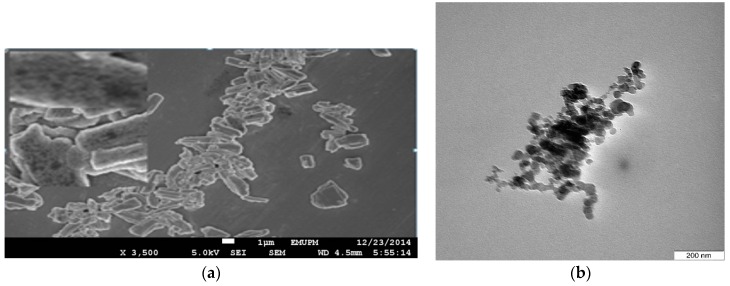
Figure 1
Figure 1
Field Emission Scanning Electron Microscope (FESEM) micrograph showing the pore structure of the micron-size cockle shells calcium carbonate powder, scale bar = 1 µm (a); and Transmission Electron Microscopy (TEM) micrographs showing nanoscale spherical-shaped cockle shells calcium carbonate (aragonite) nanoparticles (b).
Figure 2
Figure 2
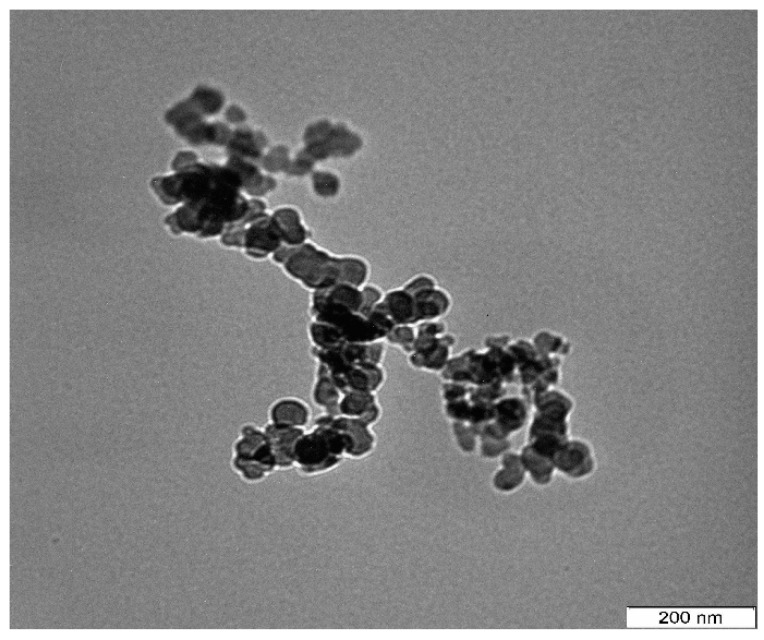
TEM micrograph of spherical shaped ciprofloxacin-encapsulated cockle shells calcium carbonate (aragonite) nanoparticles.
Figure 3
Figure 3
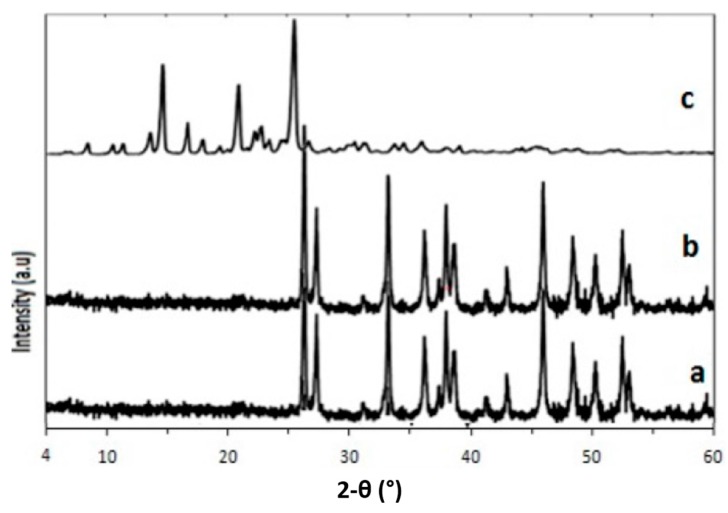
X-ray Powder Diffraction (XRD) spectra of cockle shells calcium carbonate (aragonite) nanoparticles (a); ciprofloxacin-encapsulated cockle shells calcium carbonate (aragonite) nanoparticles (b); and free ciprofloxacin (c) showing crystalline phases and purity.
Figure 4
Figure 4
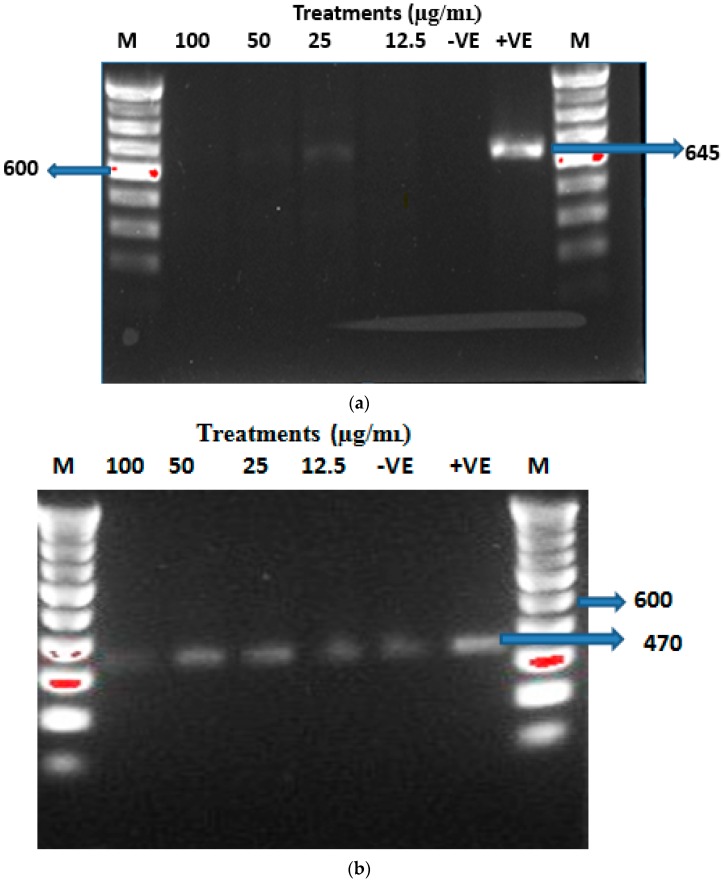
RT-PCR data showing IL-1β (a) and β-actin (loading control) (b), mRNA expressions after 3 h of CSCCAN treatment. −VE, negative control or untreated cells; +VE, positive control (Treated with Bacterial lipopolysaccharides); M, molecular weight markers (100 bp); DNA ladder MW, 600; IL-1β product size, 645; β-actin product size, 470.
Figure 5
Figure 5
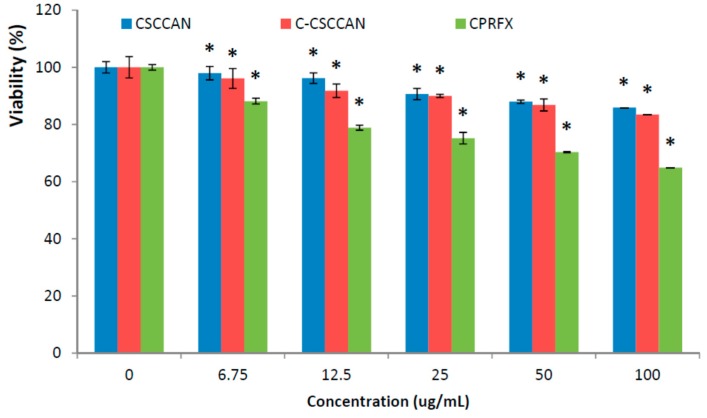
The MTT percentage viability of proliferating cells. The values represent mean ± standard deviation (=3); * (p < 0.05) compared with ciprofloxacin (CPRFX).
Figure 6
Figure 6
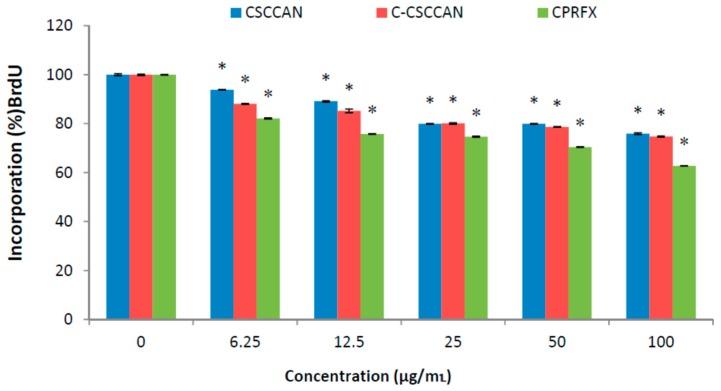
The percentage of BrdU incorporation into the DNA of proliferating cells. The values represent mean ± standard deviation (n = 3); * (p < 0.05) compared with ciprofloxacin.
Figure 7
Figure 7
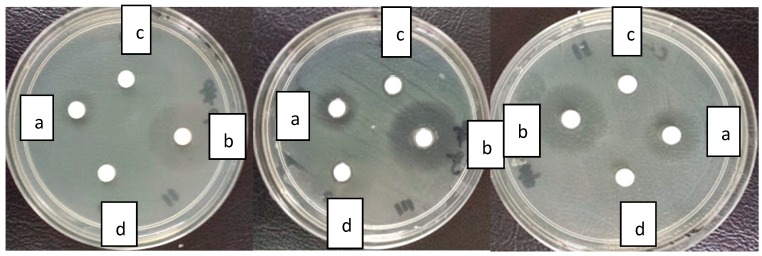
Disk diffusion assay displaying zone of inhibition diameter of ciprofloxacin (a); ciprofloxacin–cockle shells calcium carbonate aragonite nanoparticles (b); cockle shells calcium carbonate aragonite nanoparticles (c); and dimethylsulfoxide (d).

References

    1. Hajipour M.J., Fromm K.M., Ashkarran A.A., Jimenez de Aberasturi D., de Larramendi I.R., Rojo T. Antibacterial properties of nanoparticles. Trends Biotechnol. 2012;30:499–511. doi: 10.1016/j.tibtech.2012.06.004. - DOI - PubMed
    1. Pinto-Alphandary H., Andremont A., Couvreur P. Targeted delivery of antibiotics using liposomes and nanoparticles: Research and applications. Int. J. Antimicrob. Agents. 2000;13:155–168. doi: 10.1016/S0924-8579(99)00121-1. - DOI - PubMed
    1. Pestova E., Millichap J.J., Noskin G.A., Peterson L.R. Intracellular targets of moxifloxacin: A comparison with other fluoroquinolones. J. Antimicrob. Chemother. 2000;45:583–590. doi: 10.1093/jac/45.5.583. - DOI - PubMed
    1. Bambeke F.V., Balzi E., Tulkens M. Antibiotic efflux pumps franc. Biochem. Pharmacol. 2000;60:457–470. doi: 10.1016/S0006-2952(00)00291-4. - DOI - PubMed
    1. Singh M., Jadaun G.P.S., Ramdas S.K., Chauhan V., Mishra R. Effect of efflux pump inhibitors on drug susceptibility of ofloxacin resistant Mycobacterium tuberculosis isolates. Indian J. Med. Res. 2011;133:535–540. - PMC - PubMed

LinkOut - more resources