


Mechanisms linking electrical alternans and clinical ventricular arrhythmia in human heart failure
- PMID: 27215536
- PMCID: PMC4996715
- DOI: 10.1016/j.hrthm.2016.05.017
Mechanisms linking electrical alternans and clinical ventricular arrhythmia in human heart failure
Abstract
Background: Mechanisms of ventricular tachycardia (VT) and ventricular fibrillation (VF) in patients with heart failure (HF) are undefined.
Objective: The purpose of this study was to elucidate VT/VF mechanisms in HF by using a computational-clinical approach.
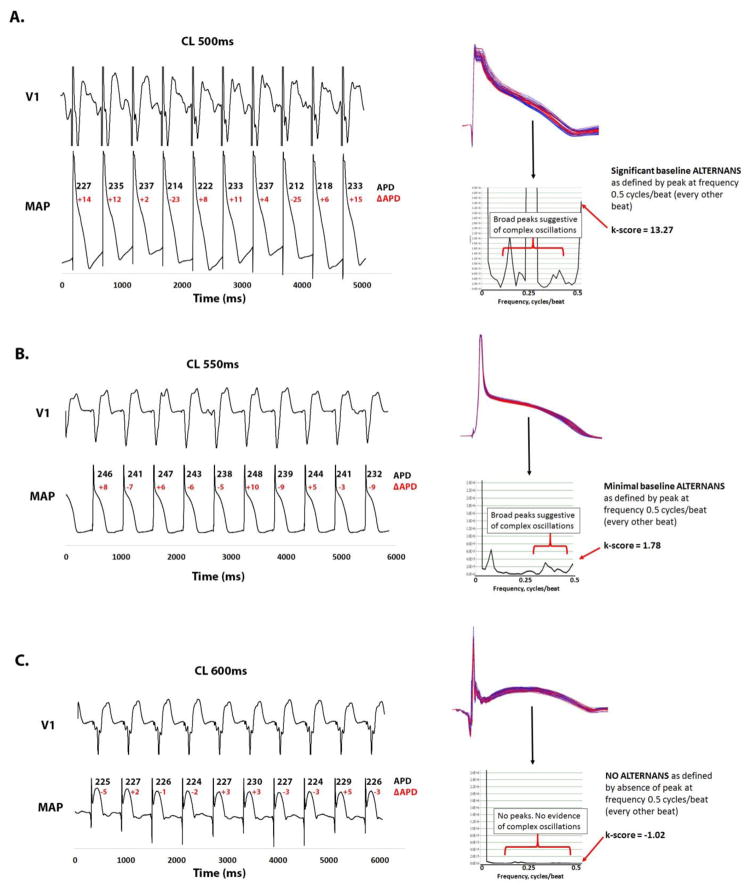
Methods: In 53 patients with HF and 18 control patients, we established the relationship between low-amplitude action potential voltage alternans (APV-ALT) during ventricular pacing at near-resting heart rates and VT/VF on long-term follow-up. Mechanisms underlying the transition of APV-ALT to VT/VF, which cannot be ascertained in patients, were dissected with multiscale human ventricular models based on human electrophysiological and magnetic resonance imaging data (control and HF).
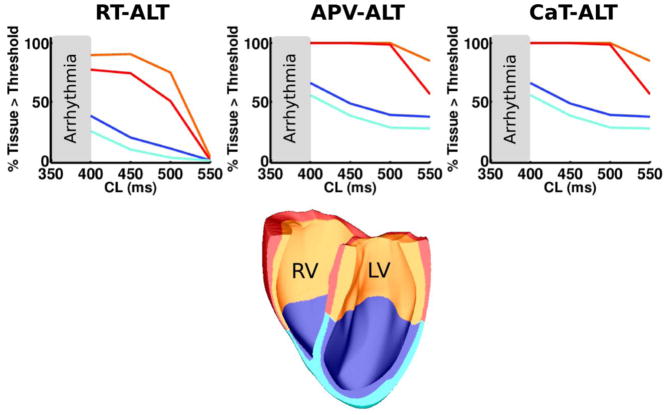
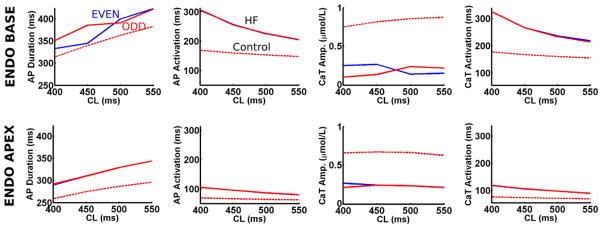
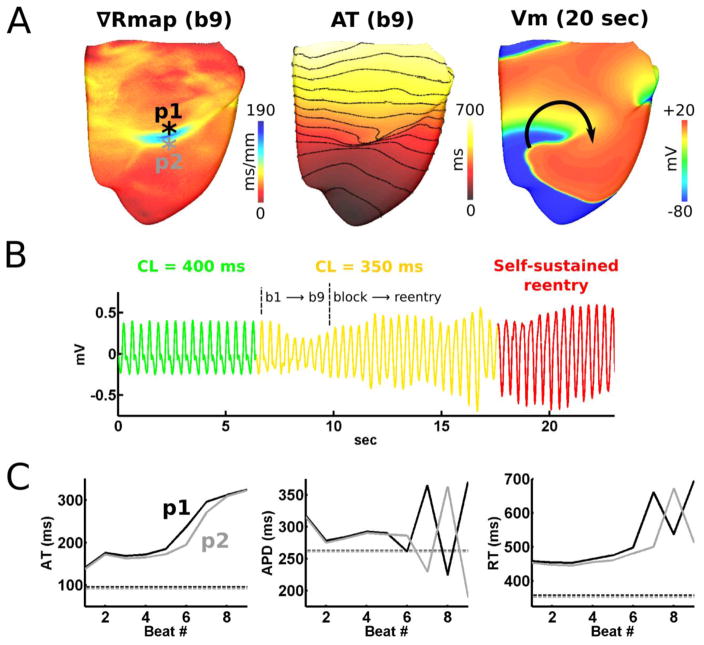
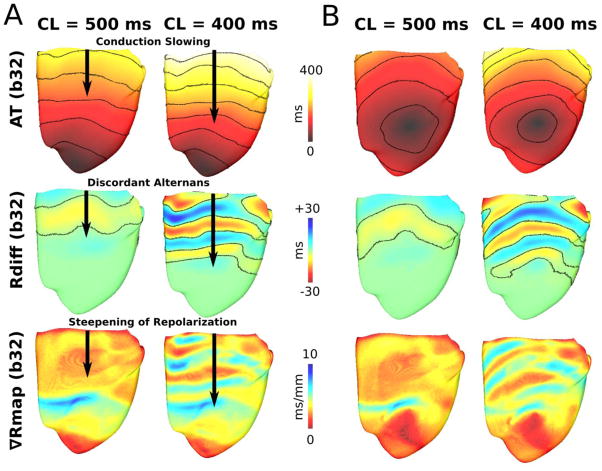
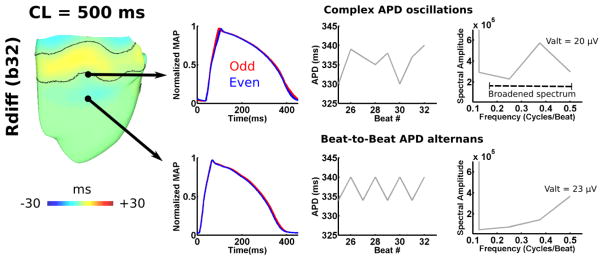
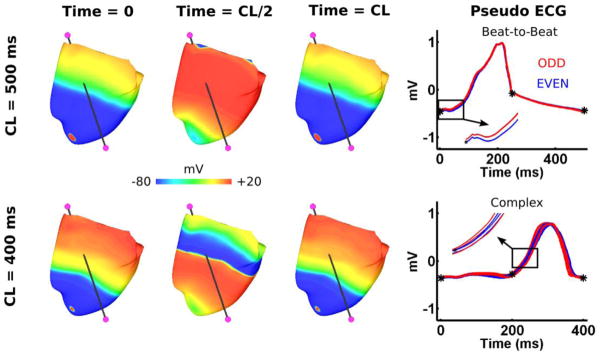
Results: For patients with APV-ALT k-score >1.7, complex action potential duration (APD) oscillations (≥2.3% of mean APD), rather than APD alternans, most accurately predicted VT/VF during long-term follow-up (+82%; -90% predictive values). In the failing human ventricular models, abnormal sarcoplasmic reticulum (SR) calcium handling caused APV-ALT (>1 mV) during pacing with a cycle length of 550 ms, which transitioned into large magnitude (>100 ms) discordant repolarization time alternans (RT-ALT) at faster rates. This initiated VT/VF (cycle length <400 ms) by steepening apicobasal repolarization (189 ms/mm) until unidirectional conduction block and reentry. Complex APD oscillations resulted from nonstationary discordant RT-ALT. Restoring SR calcium to control levels was antiarrhythmic by terminating electrical alternans.
Conclusion: APV-ALT and complex APD oscillations at near-resting heart rates in patients with HF are linked to arrhythmogenic discordant RT-ALT. This may enable novel physiologically tailored, bioengineered indices to improve VT/VF risk stratification, where SR calcium handling and spatial apicobasal repolarization are potential therapeutic targets.
Keywords: Alternans; Arrhythmia; Computational modeling; Heart failure; Simulation.
Copyright © 2016 Heart Rhythm Society. Published by Elsevier Inc. All rights reserved.
Figures
References
-
- Pastore JM, Girouard SD, Laurita KR, Akar FG, Rosenbaum DS. Mechanism linking T-wave alternans to the genesis of cardiac fibrillation. Circulation. 1999;99:1385–1394. - PubMed
-
- Watanabe MA, Fenton FH, Evans SJ, Hastings HM, Karma A. Mechanisms for discordant alternans. J Cardiovasc Electr. 2001;12:196–206. - PubMed
Publication types
MeSH terms
Substances
Grants and funding
LinkOut - more resources
Full Text Sources
Other Literature Sources
Medical
Research Materials
Miscellaneous
