


Frequent PD-L1 expression in primary and metastatic penile squamous cell carcinoma: potential opportunities for immunotherapeutic approaches
- PMID: 27217541
- PMCID: PMC4999561
- DOI: 10.1093/annonc/mdw216
Frequent PD-L1 expression in primary and metastatic penile squamous cell carcinoma: potential opportunities for immunotherapeutic approaches
Abstract
Background: Despite aggressive multimodal therapy, locally advanced and/or metastatic penile squamous cell carcinoma (SqCC) is associated with significant morbidity and mortality, indicating a need for new therapeutic options. Given the emerging clinical utility of immunotherapeutics, we sought to assess the incidence and potential clinical significance of PD-L1 expression in penile SqCC.
Patients and methods: Using an anti-PD-L1 primary antibody (clone 5H1), immunohistochemistry was carried out on whole tumor sections from 37 patients with penile SqCC treated at our institution between 2005 and 2013. PD-L1-positive tumors were defined as those with membranous staining in ≥5% of tumor cells. Association between PD-L1 expression and clinicopathologic parameters was examined using Fisher's exact test. Correlation between PD-L1 expression in primary tumors and matched metastases was assessed using the Spearman rank correlation coefficient (ρ). The difference in cancer-specific mortality between PD-L1-positive and -negative groups was examined using the log-rank test.
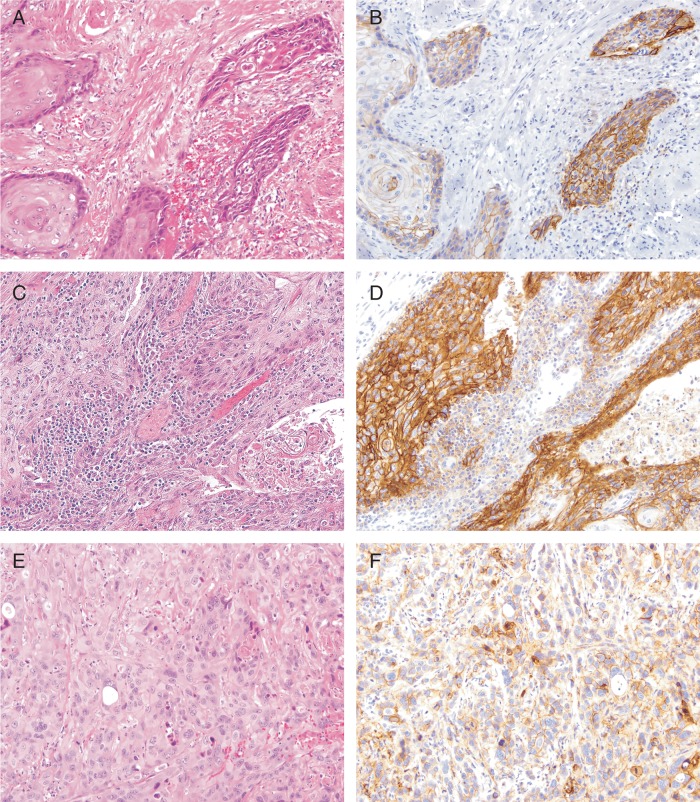
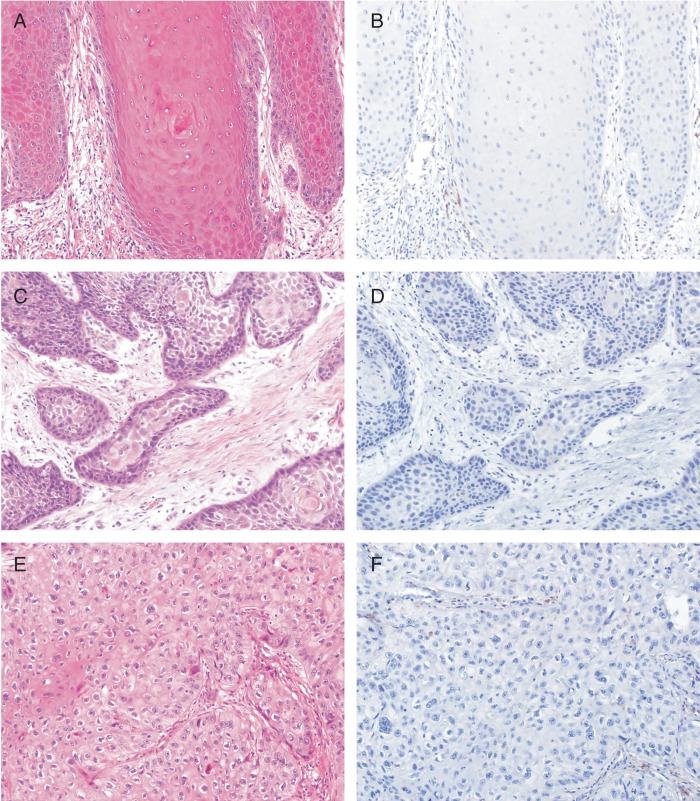
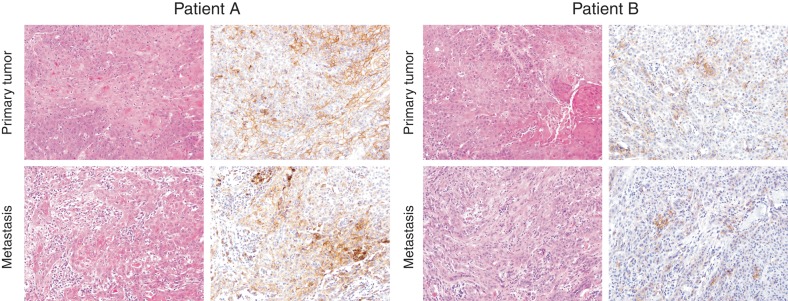
Results: Twenty-three (62.2%) of 37 primary tumors were positive for PD-L1 expression, and there was strong positive correlation of PD-L1 expression in primary and metastatic samples (ρ = 0.72; 0.032 < P < 0.036). Primary tumor PD-L1 expression was significantly associated with usual type histology (P = 0.040) and regional lymph node metastasis (P = 0.024), as well as decreased cancer-specific survival (P = 0.011).
Conclusions: The majority of primary penile SqCC tumors express PD-L1, which is associated with high-risk clinicopathologic features and poor clinical outcome. These data provide a rational basis for further investigation of anti-PD-1 and anti-PD-L1 immunotherapeutics in patients with advanced penile SqCC.
Keywords: PD-L1; immunohistochemistry; immunotherapy; penile cancer; squamous cell carcinoma.
© The Author 2016. Published by Oxford University Press on behalf of the European Society for Medical Oncology. All rights reserved. For permissions, please email: journals.permissions@oup.com.
Figures
Comment in
-
PD-L1 expression in penile cancer: a new frontier for immune checkpoint inhibitors?Ann Oncol. 2016 Sep;27(9):1658-9. doi: 10.1093/annonc/mdw268. Epub 2016 Jul 19. Ann Oncol. 2016. PMID: 27436847 No abstract available.
-
Re: Frequent PD-L1 Expression in Primary and Metastatic Penile Squamous Cell Carcinoma: Potential Opportunities for Immunotherapeutic Approaches.J Urol. 2018 Nov;200(5):943-944. doi: 10.1016/j.juro.2018.08.005. Epub 2018 Aug 10. J Urol. 2018. PMID: 30360340 No abstract available.
References
-
- Barnholtz-Sloan JS, Maldonado JL, Pow-sang J, Giuliano AR. Incidence trends in primary malignant penile cancer. Urol Oncol 2007; 25: 361–367. - PubMed
-
- Hakenberg OW, Comperat EM, Minhas S et al. EAU guidelines on penile cancer: 2014 update. Eur Urol 2015; 67: 142–150. - PubMed
-
- Bordon Y. Immunotherapy: checkpoint parley. Nat Rev Cancer 2015; 15: 3. - PubMed
-
- Littman DR. Releasing the brakes on cancer immunotherapy. Cell 2015; 162: 1186–1190. - PubMed
Publication types
MeSH terms
Substances
Grants and funding
LinkOut - more resources
Full Text Sources
Other Literature Sources
Research Materials
