Versatile Nanosystem-Based Cancer Theranostics: Design Inspiration and Predetermined Routing
- PMID: 27217832
- PMCID: PMC4876623
- DOI: 10.7150/thno.14860
Versatile Nanosystem-Based Cancer Theranostics: Design Inspiration and Predetermined Routing
Abstract
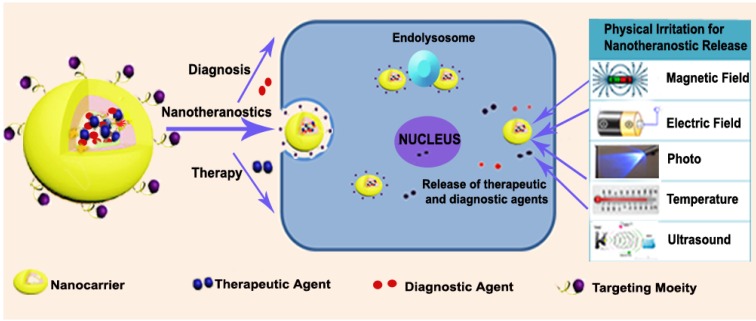
The relevance of personalized medicine, aimed at a more individualized drug therapy, has inspired research into nano-based concerted diagnosis and therapeutics (theranostics). As the intention is to "kill two birds with one stone", scientists have already described the emerging concept as a treasured tailor for the future of cancer therapy, wherein the main idea is to design "smart" nanosystems to concurrently discharge both therapeutic and diagnostic roles. These nanosystems are expected to offer a relatively clearer view of the ingenious cellular trafficking pathway, in-situ diagnosis, and therapeutic efficacy. We herein present a detailed review of versatile nanosystems, with prominent examples of recently developed intelligent delivery strategies which have gained attention in the field of theranostics. These nanotheranostics include various mechanisms programmed in novel platforms to enable predetermined delivery of cargo to specific sites, as well as techniques to overcome the notable challenges involved in the efficacy of theranostics.
Keywords: cancer theranostics; personalized medicine; predetermined routing.; versatile nanosystems.
Conflict of interest statement
Competing Interests: The authors declare that there are no competing interests with regard to this paper.
Figures
References
-
- Landais P, Méresse V, Ghislain J-C, the participants in Round Table N°4 GX. Evaluation and Validation of Diagnostic Tests for Guiding Therapeutic Decisions. Thérapie. 2009;64:195–201. - PubMed
-
- Pene F, Courtine E, Cariou A, Mira J-P. Toward theragnostics. Critical Care Medicine. 2009;37:S50–S8. - PubMed
-
- Blanchet KD. Redefining personalized medicine in the postgenomic era: developing bladder cancer therapeutics with proteomics. BJU Int. 2010;105:i–iii. - PubMed
Publication types
MeSH terms
LinkOut - more resources
Full Text Sources
Other Literature Sources
Molecular Biology Databases
Research Materials