


Age-Varying Links Between Violence Exposure and Behavioral, Mental, and Physical Health
- PMID: 27222356
- PMCID: PMC4958611
- DOI: 10.1016/j.jadohealth.2016.03.038
Age-Varying Links Between Violence Exposure and Behavioral, Mental, and Physical Health
Abstract
Purpose: To examine age-varying prevalence rates and health implications of weapon-related violence exposure (WRVE) from adolescence to young adulthood (ages 14-30) using time-varying effect modeling.
Methods: Data were from the Add Health study, a longitudinal study of adolescents in the United States (N = 5,103) followed into young adulthood across four assessment waves from age 14-30.
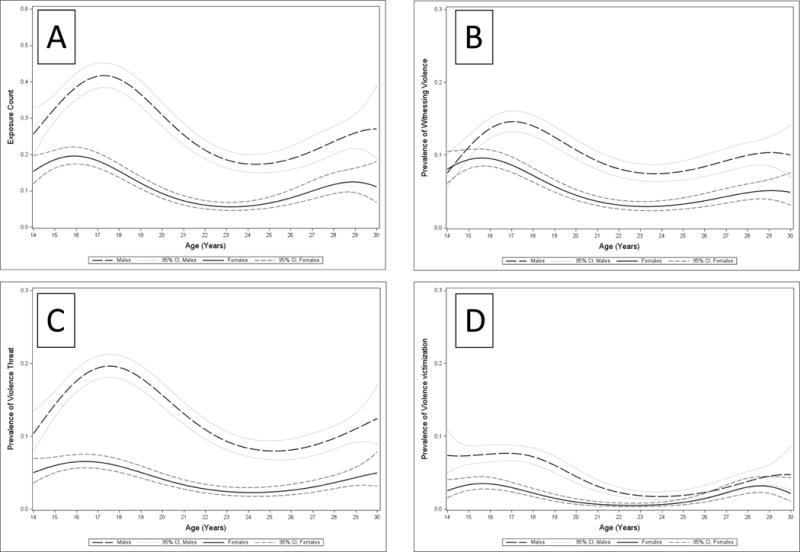
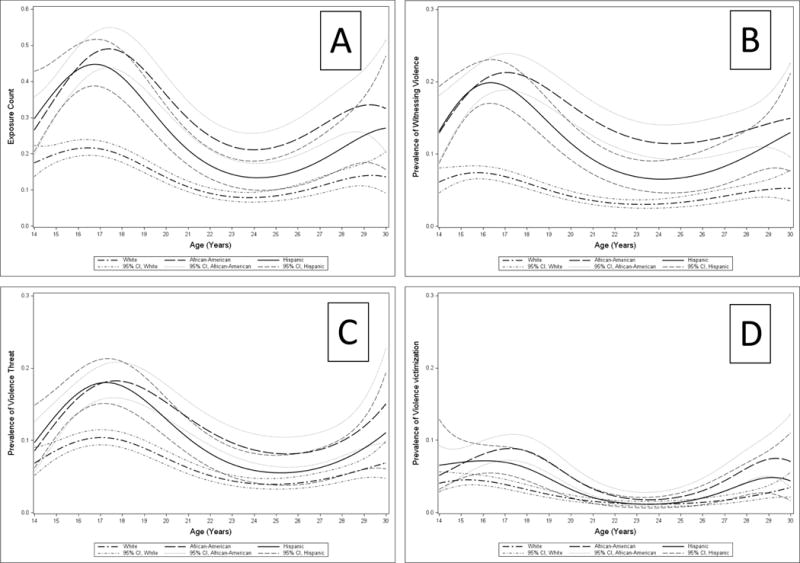
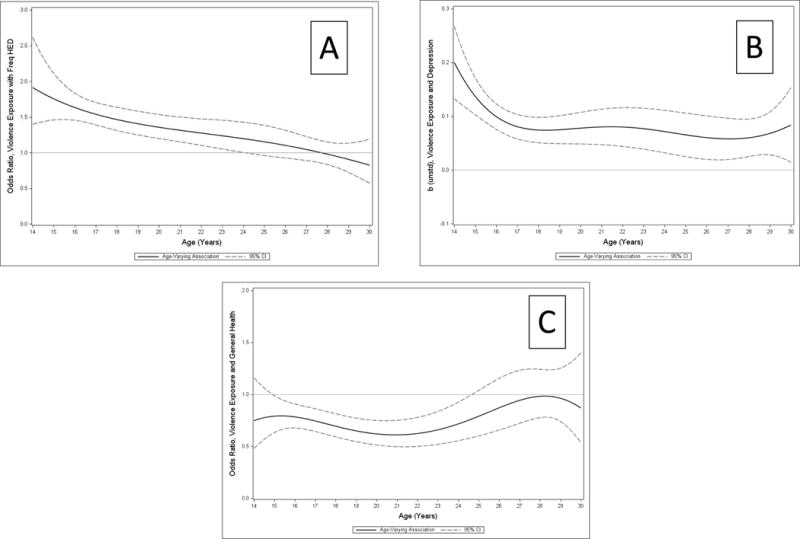
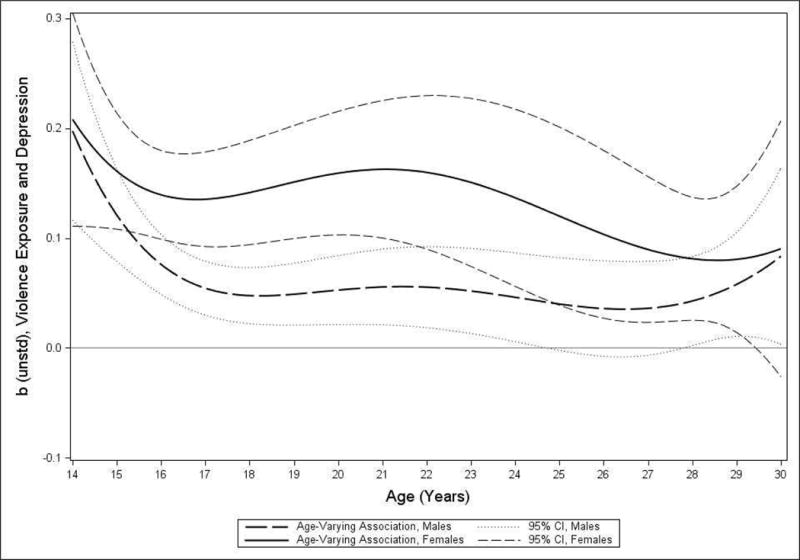
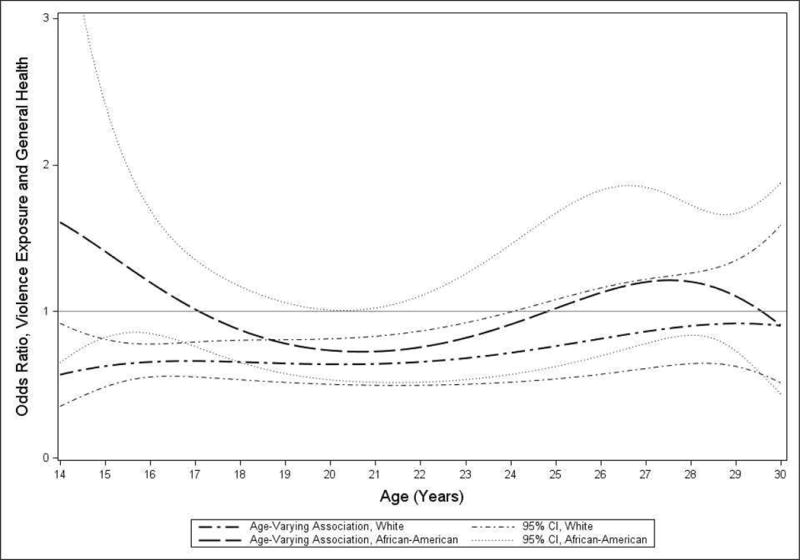
Results: WRVE rates varied with age, peaking during mid-to-late adolescence (ages 16-18). Rates were higher for males (vs. females) and African-American youth (vs. white) across nearly all ages. Rates were higher for Hispanic youth (vs. white) during adolescence. WRVE was positively associated with frequent heavy episodic drinking and negatively associated with self-reported general health; these associations were significant during adolescence and early adulthood (ages 15-24). WRVE was positively associated with depressive symptoms. This association remained stable over age and was stronger for females from ages 16-21. The association between violence exposure and decreased general physical health was stronger for white versus African-American youth from ages 15-17, with no significant association observed for African-American youth at any age.
Conclusions: Despite its severity, WRVE is prevalent among U.S. youth during adolescence and young adulthood, particularly among males and African-Americans during mid-to-late adolescence. The associations between WRVE and health were stronger during adolescence and differed by sex and race/ethnicity. This information may assist in the timing and targeting of intervention efforts aimed at interrupting the effects of violence exposure on youth behavioral, mental, and physical health.
Keywords: Adolescent health; Age-varying associations; Depressive symptoms; Heavy episodic drinking; Weapon-related violence exposure.
Copyright © 2016 Society for Adolescent Health and Medicine. Published by Elsevier Inc. All rights reserved.
Conflict of interest statement
Figures
References
-
- Finkelhor D, Shattuck A, Turner H, et al. A revised inventory of adverse childhood experiences. Child Abuse Neglect. 2015;48:13–21. - PubMed
-
- Mitchell KJ, Hamby SL, Turner HA, et al. Weapon involvement in the victimization of children. Pediatrics. 2015;136:10–17. - PubMed
-
- Kann L, Kinchen S, Shanklin S, et al. Youth risk behavior surveillance — United States, 2013. Morbidity and Mortality Weekly Report. 2014;63 - PubMed
MeSH terms
Grants and funding
LinkOut - more resources
Full Text Sources
Other Literature Sources
Medical
