


Cardiovascular, Metabolic Effects and Dietary Composition of Ad-Libitum Paleolithic vs. Australian Guide to Healthy Eating Diets: A 4-Week Randomised Trial
- PMID: 27223304
- PMCID: PMC4882726
- DOI: 10.3390/nu8050314
Cardiovascular, Metabolic Effects and Dietary Composition of Ad-Libitum Paleolithic vs. Australian Guide to Healthy Eating Diets: A 4-Week Randomised Trial
Abstract
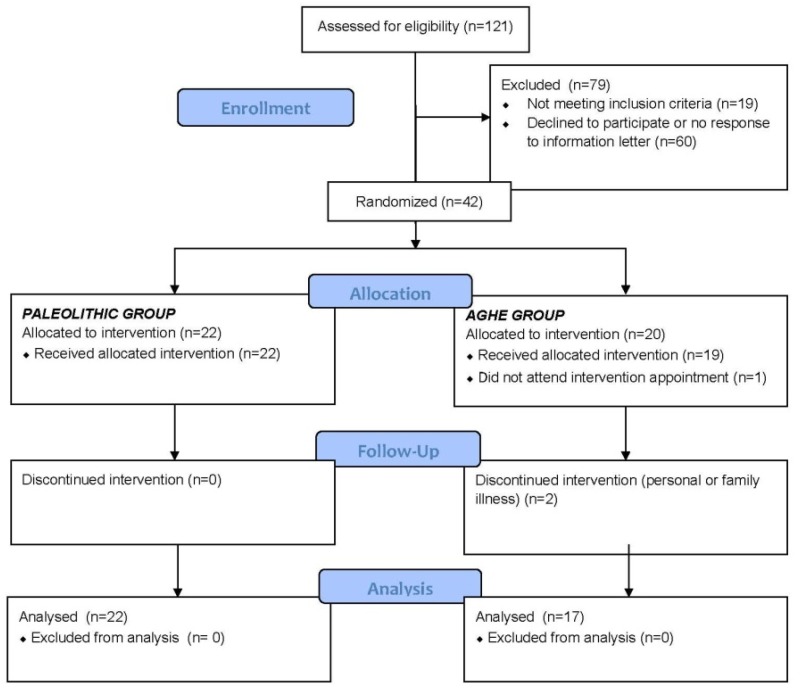
(1) BACKGROUND: The Paleolithic diet is popular in Australia, however, limited literature surrounds the dietary pattern. Our primary aim was to compare the Paleolithic diet with the Australian Guide to Healthy Eating (AGHE) in terms of anthropometric, metabolic and cardiovascular risk factors, with a secondary aim to examine the macro and micronutrient composition of both dietary patterns; (2) METHODS: 39 healthy women (mean ± SD age 47 ± 13 years, BMI 27 ± 4 kg/m²) were randomised to either the Paleolithic (n = 22) or AGHE diet (n = 17) for four weeks. Three-day weighed food records, body composition and biochemistry data were collected pre and post intervention; (3) RESULTS: Significantly greater weight loss occurred in the Paleolithic group (-1.99 kg, 95% CI -2.9, -1.0), p < 0.001). There were no differences in cardiovascular and metabolic markers between groups. The Paleolithic group had lower intakes of carbohydrate (-14.63% of energy (E), 95% CI -19.5, -9.7), sodium (-1055 mg/day, 95% CI -1593, -518), calcium (-292 mg/day 95% CI -486.0, -99.0) and iodine (-47.9 μg/day, 95% CI -79.2, -16.5) and higher intakes of fat (9.39% of E, 95% CI 3.7, 15.1) and β-carotene (6777 μg/day 95% CI 2144, 11410) (all p < 0.01); (4) CONCLUSIONS: The Paleolithic diet induced greater changes in body composition over the short-term intervention, however, larger studies are recommended to assess the impact of the Paleolithic vs. AGHE diets on metabolic and cardiovascular risk factors in healthy populations.
Keywords: AGHE; Paleolithic; cardiovascular; metabolic; obesity.
Figures
References
-
- Cordain L. The Paleo Diet. John Wiley & Sons, Inc.; Hoboken, NJ, USA: 2011.
-
- National Health and Medical Research Council . Australian Dietary Guidelines. National Health and Medical Research Council; Canberra, Australia: 2013.
Publication types
MeSH terms
Substances
LinkOut - more resources
Full Text Sources
Other Literature Sources
Medical
