


Increased expression of SIRT2 is a novel marker of cellular senescence and is dependent on wild type p53 status
- PMID: 27229617
- PMCID: PMC4968900
- DOI: 10.1080/15384101.2016.1189041
Increased expression of SIRT2 is a novel marker of cellular senescence and is dependent on wild type p53 status
Abstract
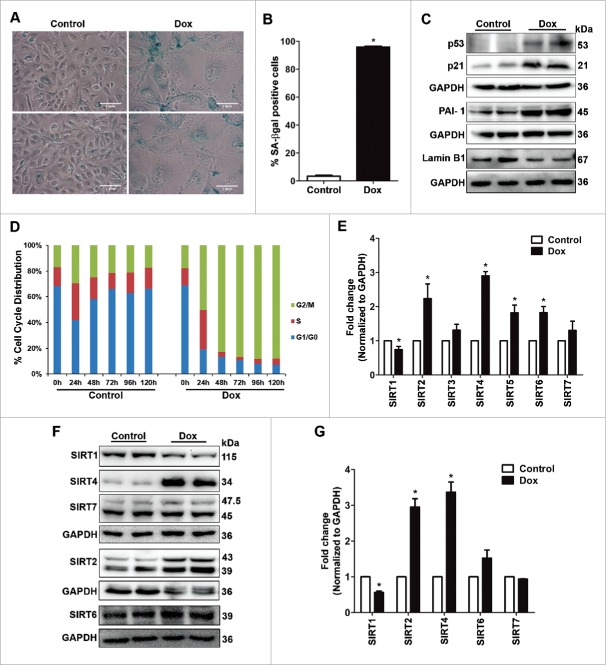
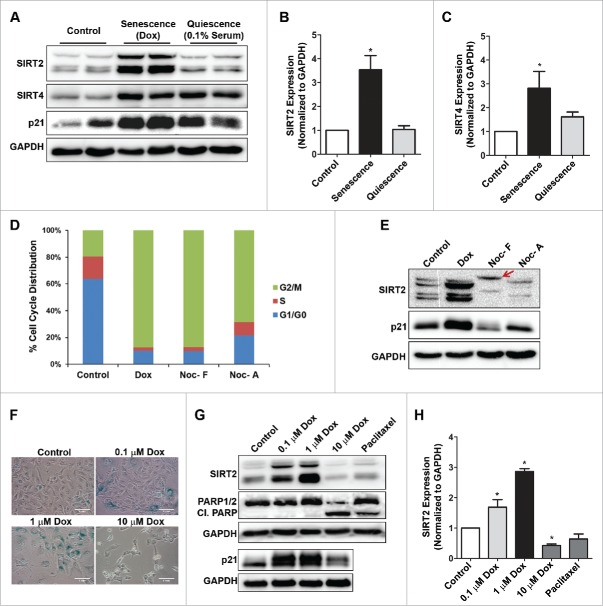
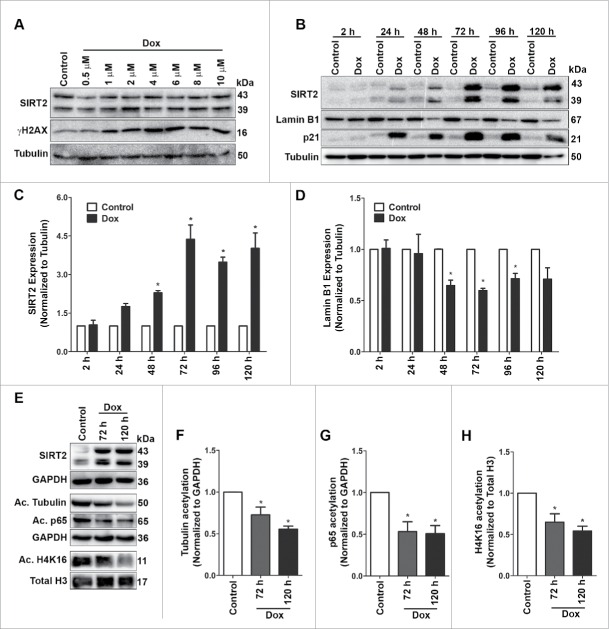
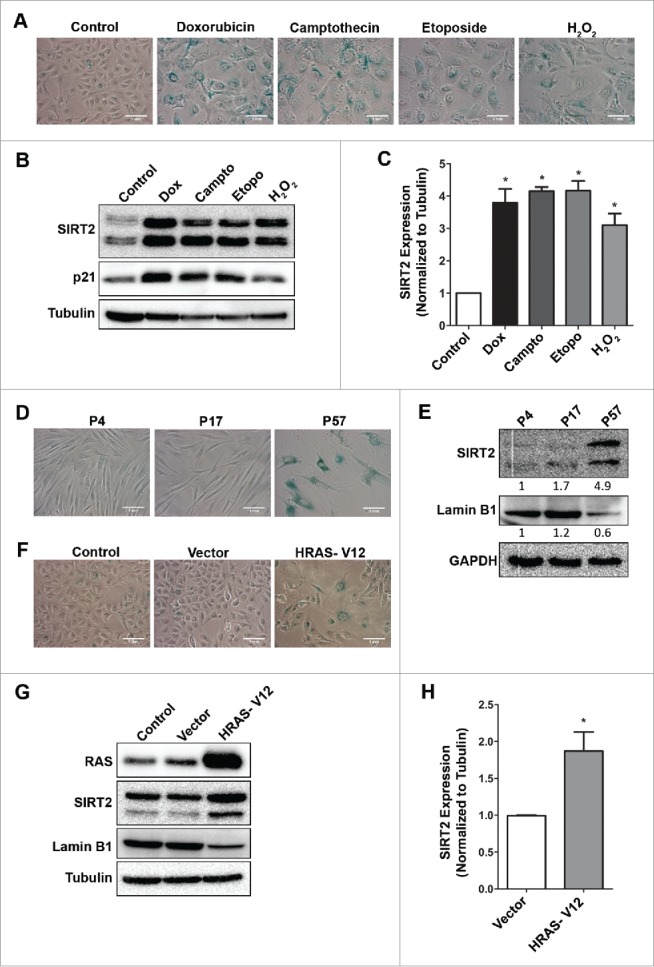
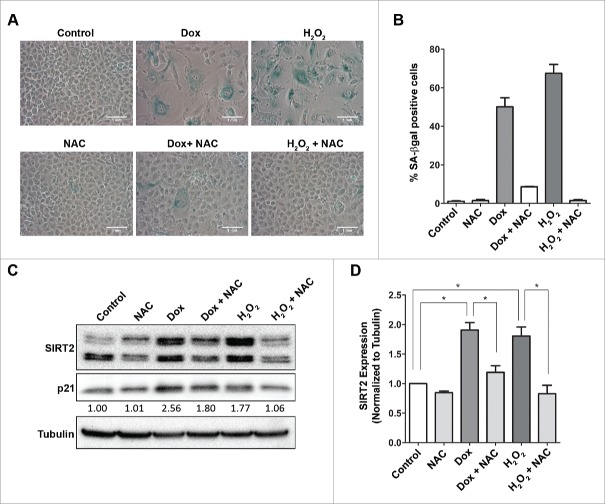
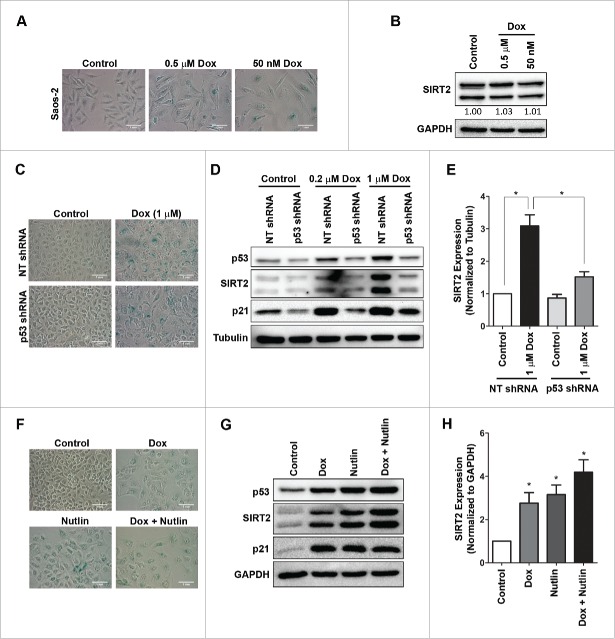
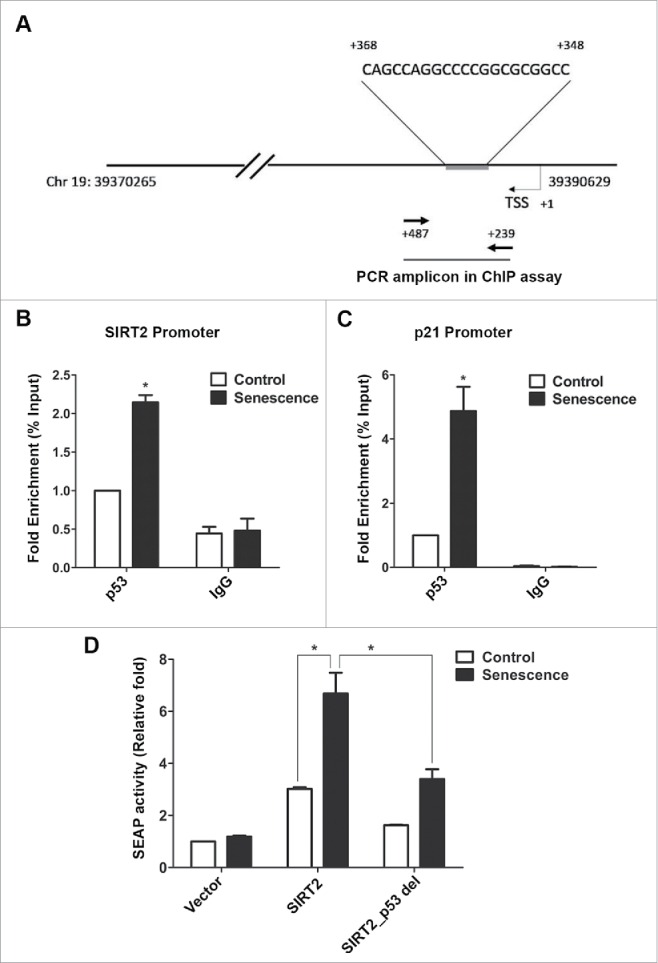
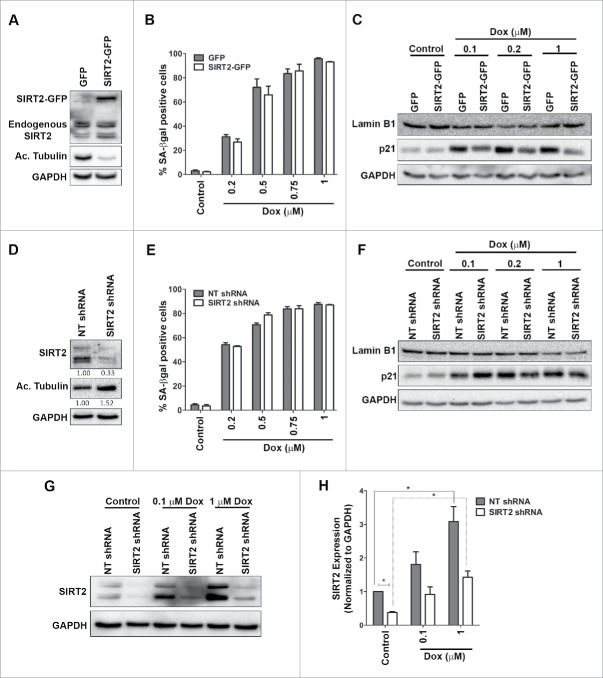
Sirtuins (SIRT) belonging to the NAD+ dependent histone deacetylase III class of enzymes have emerged as master regulators of metabolism and longevity. However, their role in prevention of organismal aging and cellular senescence still remains controversial. In the present study, we now report upregulation of SIRT2 as a specific feature associated with stress induced premature senescence but not with either quiescence or cell death. Additionally, increase in SIRT2 expression was noted in different types of senescent conditions such as replicative and oncogene induced senescence using multiple cell lines. Induction of SIRT2 expression during senescence was dependent on p53 status as depletion of p53 by shRNA prevented its accumulation. Chromatin immunoprecipitation revealed the presence of p53 binding sites on the SIRT2 promoter suggesting its regulation by p53, which was also corroborated by the SEAP reporter assay. Overexpression or knockdown of SIRT2 had no effect on stress induced premature senescence, thereby indicating that SIRT2 increase is not a cause of senescence; rather it is an effect linked to senescence-associated changes. Overall, our results suggest SIRT2 as a promising marker of cellular senescence at least in cells with wild type p53 status.
Keywords: SIRT2; Sirtuins; doxorubicin; p53; senescence.
Figures
References
-
- Harley CB, Futcher AB, Greider CW. Telomeres shorten during ageing of human fibroblasts. Nature 1990; 345:458-60; PMID:2342578; http://dx.doi.org/ 10.1038/345458a0 - DOI - PubMed
-
- Chen J-H, Ozanne SE, Hales CN. Methods of cellular senescence induction using oxidative stress. Methods Mol Biol 2007; 371:179-89; PMID:17634582; http://dx.doi.org/ 10.1007/978-1-59745-361-5_14 - DOI - PubMed
-
- Di Leonardo A, Linke SP, Clarkin K, Wahl GM. DNA damage triggers a prolonged p53-dependent G1 arrest and long-term induction of Cip1 in normal human fibroblasts. Genes Dev 1994; 8:2540-51; PMID:7958916; http://dx.doi.org/ 10.1101/gad.8.21.2540 - DOI - PubMed
-
- Serrano M, Lin AW, McCurrach ME, Beach D, Lowe SW. Oncogenic ras provokes premature cell senescence associated with accumulation of p53 and p16INK4a. Cell 1997; 88:593-602; PMID:9054499; http://dx.doi.org/ 10.1016/S0092-8674(00)81902-9 - DOI - PubMed
-
- Alimonti A, Nardella C, Chen Z, Clohessy JG, Carracedo A, Trotman LC, Cheng K, Varmeh S, Kozma SC, Thomas G, et al.. A novel type of cellular senescence that can be enhanced in mouse models and human tumor xenografts to suppress prostate tumorigenesis. J Clin Invest 2010; 120:681-93; PMID:20197621; http://dx.doi.org/ 10.1172/JCI40535 - DOI - PMC - PubMed
Publication types
MeSH terms
Substances
LinkOut - more resources
Full Text Sources
Other Literature Sources
Molecular Biology Databases
Research Materials
Miscellaneous
