


Molecular Epidemiology and Antibiotic Susceptibility of Vibrio cholerae Associated with a Large Cholera Outbreak in Ghana in 2014
- PMID: 27232338
- PMCID: PMC4883745
- DOI: 10.1371/journal.pntd.0004751
Molecular Epidemiology and Antibiotic Susceptibility of Vibrio cholerae Associated with a Large Cholera Outbreak in Ghana in 2014
Abstract
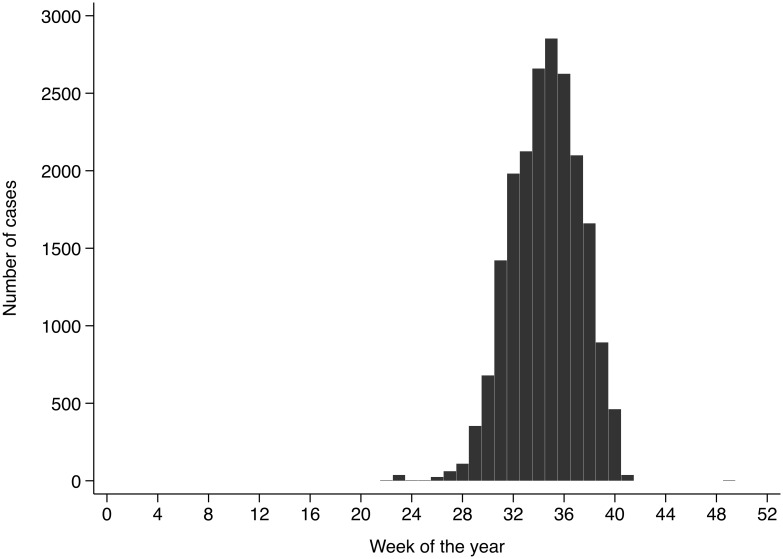
Background: Ghana is affected by regular cholera epidemics and an annual average of 3,066 cases since 2000. In 2014, Ghana experienced one of its largest cholera outbreaks within a decade with more than 20,000 notified infections. In order to attribute this rise in cases to a newly emerging strain or to multiple simultaneous outbreaks involving multi-clonal strains, outbreak isolates were characterized, subtyped and compared to previous epidemics in 2011 and 2012.
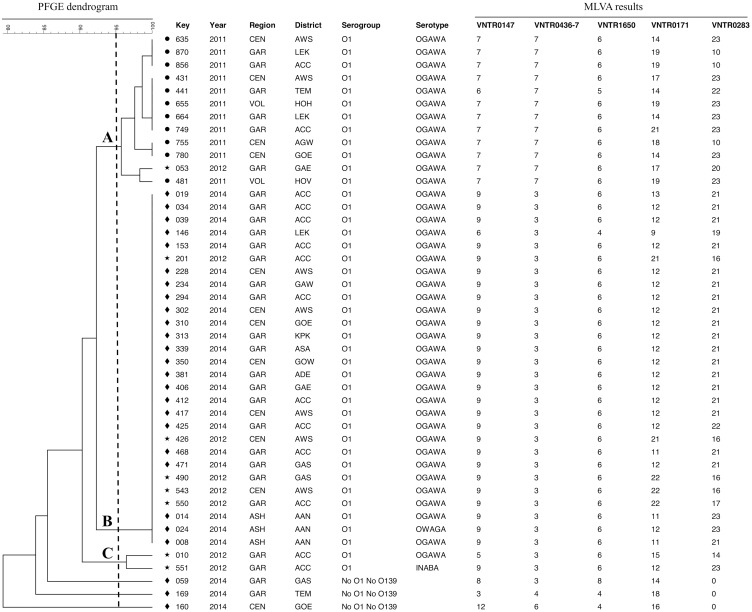
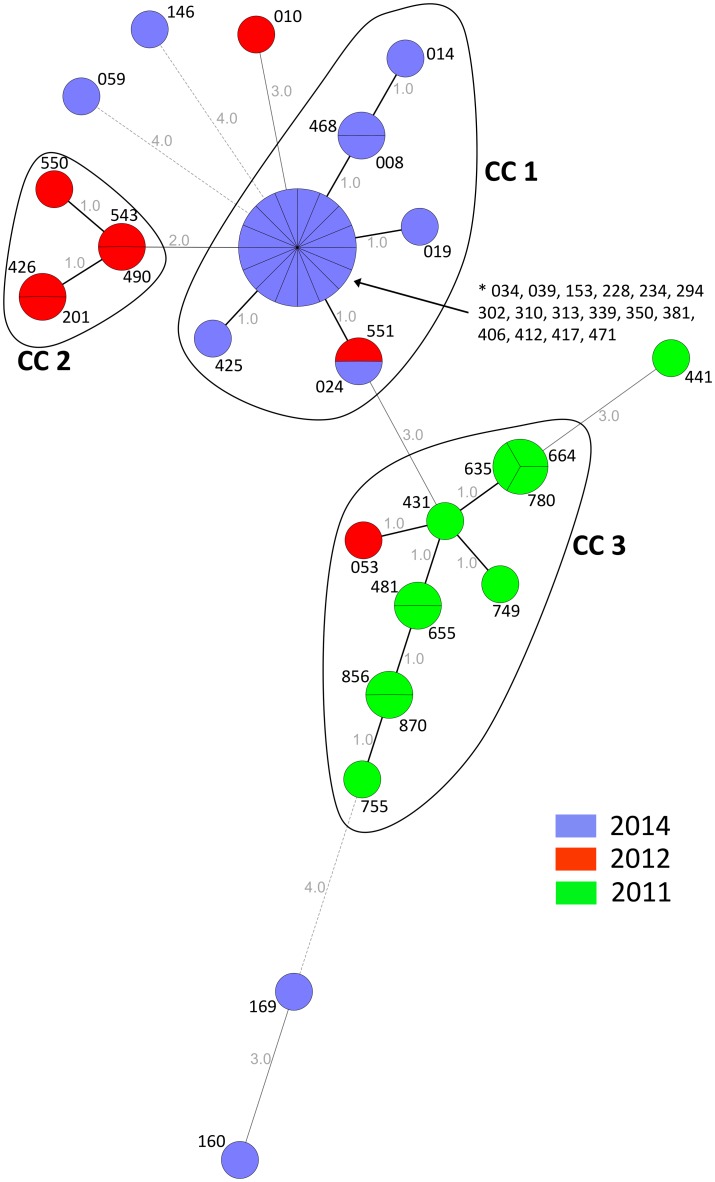
Methodology/principal findings: Serotypes, biotypes, antibiotic susceptibilities were determined for 92 Vibrio cholerae isolates collected in 2011, 2012 and 2014 from Southern Ghana. For a subgroup of 45 isolates pulsed-field gel electrophoresis, multilocus sequence typing and multilocus-variable tandem repeat analysis (MLVA) were performed. Eighty-nine isolates (97%) were identified as ctxB (classical type) positive V. cholerae O1 biotype El Tor and three (3%) isolates were cholera toxin negative non-O1/non-O139 V. cholerae. Among the selected isolates only sulfamethoxazole/trimethoprim resistance was detectable in 2011, while 95% of all 2014 isolates showed resistance towards sulfamethoxazole/trimethoprim, ampicillin and reduced susceptibility to ciprofloxacin. MLVA achieved the highest subtype discrimination, revealing 22 genotypes with one major outbreak cluster in each of the three outbreak years. Apart from those clusters genetically distant genotypes circulate during each annual epidemic.
Conclusions/significance: This analysis suggests different endemic reservoirs of V. cholerae in Ghana with distinct annual outbreak clusters accompanied by the occurrence of genetically distant genotypes. Preventive measures for cholera transmission should focus on aquatic reservoirs. Rapidly emerging multidrug resistance must be monitored closely.
Conflict of interest statement
The authors have declared that no competing interests exist.
Figures
References
-
- World Health Organization. Cholera Cholera-Fact Sheet no. 107. World Health Organization; 2014.
-
- World Health Organization. Cholera [every year since 2000]. Wkly Epidemiol Rec.
-
- Pobee J, Grant F. Case Report of Cholera. Ghana Med J. 1970;306–9.
Publication types
MeSH terms
Substances
Grants and funding
LinkOut - more resources
Full Text Sources
Other Literature Sources
Medical
