


Alveolar epithelial disintegrity in pulmonary fibrosis
- PMID: 27233996
- PMCID: PMC5005273
- DOI: 10.1152/ajplung.00115.2016
Alveolar epithelial disintegrity in pulmonary fibrosis
Abstract
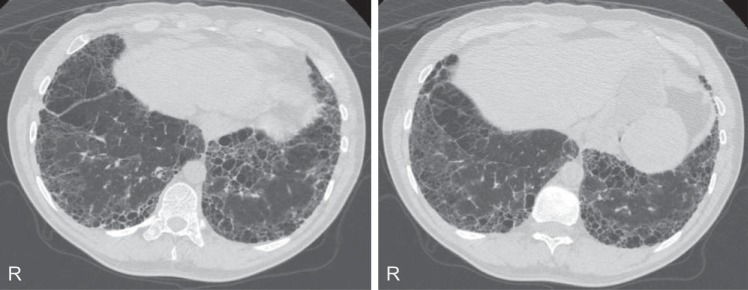
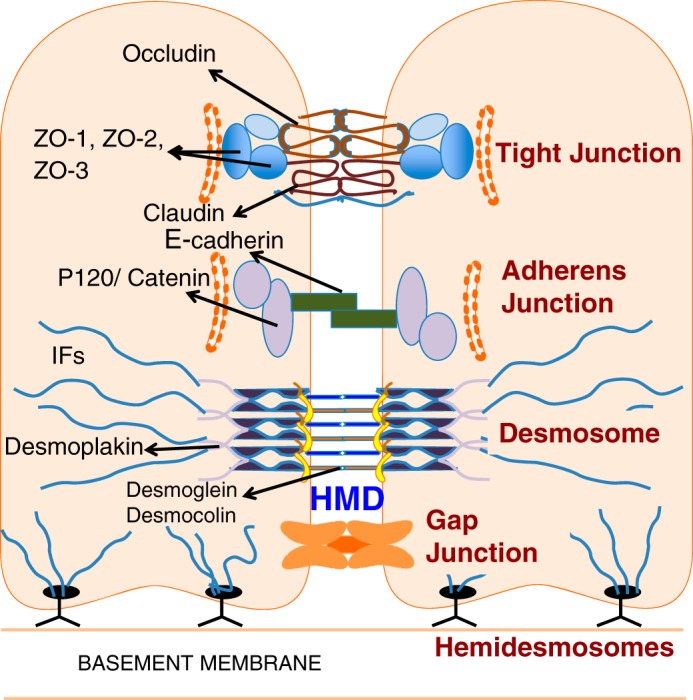
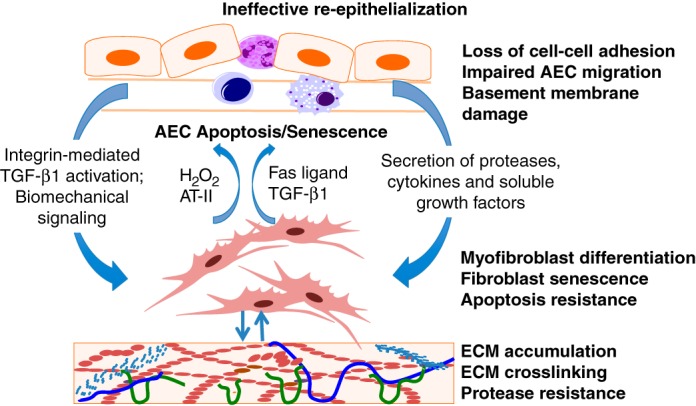
Idiopathic pulmonary fibrosis (IPF) is a chronic lung disease characterized by progressive decline in lung function, resulting in significant morbidity and mortality. Current concepts of the pathogenesis of IPF primarily center on dysregulated epithelial cell repair and altered epithelial-mesenchymal communication and extracellular matrix deposition following chronic exposure to cigarette smoke or environmental toxins. In recent years, increasing attention has been directed toward the role of the intercellular junctional complex in determining the specific properties of epithelia in pulmonary diseases. Additionally, recent genomewide association studies suggest that specific genetic variants predictive of epithelial cell dysfunction may confer susceptibility to the development of sporadic idiopathic pulmonary fibrosis. A number of genetic disorders linked to pulmonary fibrosis and familial interstitial pneumonias are associated with loss of epithelial integrity. However, the potential links between extrapulmonary clinical syndromes associated with defects in epithelial cells and the development of pulmonary fibrosis are not well understood. Here, we report a case of hereditary mucoepithelial dysplasia that presented with pulmonary fibrosis and emphysema on high-resolution computed tomography. This case illustrates a more generalizable concept of epithelial disintegrity in the development of fibrotic lung diseases, which is explored in greater detail in this review article.
Keywords: cell-cell adhesion; epithelial barrier dysfunction; epithelial junctional complex; pulmonary fibrosis.
Copyright © 2016 the American Physiological Society.
Figures
References
-
- Abraham V, Chou ML, DeBolt KM, Koval M. Phenotypic control of gap junctional communication by cultured alveolar epithelial cells. Am J Physiol Lung Cell Mol Physiol 276: L825–L834, 1999. - PubMed
-
- Armanios MY, Chen JJ, Cogan JD, Alder JK, Ingersoll RG, Markin C, Lawson WE, Xie M, Vulto I, Phillips JA 3rd, Lansdorp PM, Greider CW, Loyd JE. Telomerase mutations in families with idiopathic pulmonary fibrosis. N Engl J Med 356: 1317–1326, 2007. - PubMed
-
- Boralevi F, Haftek M, Vabres P, Lepreux S, Goizet C, Leaute-Labreze C, Taieb A. Hereditary mucoepithelial dysplasia: clinical, ultrastructural and genetic study of eight patients and literature review. Br J Dermatol 153: 310–318, 2005. - PubMed
-
- Chapman HA. Epithelial-mesenchymal interactions in pulmonary fibrosis. Annu Rev Physiol 73: 413–435, 2011. - PubMed
Publication types
MeSH terms
Grants and funding
LinkOut - more resources
Full Text Sources
Other Literature Sources
