


Rates of formal diagnosis of dementia in primary care: The effect of screening
- PMID: 27239495
- PMCID: PMC4876881
- DOI: 10.1016/j.dadm.2014.11.007
Rates of formal diagnosis of dementia in primary care: The effect of screening
Abstract
Background: Screening could improve recognition of dementia in primary care. We sought to determine the effect of screening for dementia in primary care practices on the formal diagnosis rate; the distribution of differential diagnoses; and the factors associated with receiving a formal diagnosis.
Methods: The "Dementia: life- and person-centered help in Mecklenburg-Western Pomerania" is an ongoing general practitioner (GP)-based, randomized, controlled intervention trial. A total of 4064 community dwelling patients (aged ≥70 years) were screened for dementia in 108 GP practices. Of these patients, 692 (17%) had positive screening results (DemTect score <9). Of these 692 patients, 406 (59%) provided informed consent. The analyses included the data from 243 patients with a complete baseline assessment (preliminary data; January 2014).
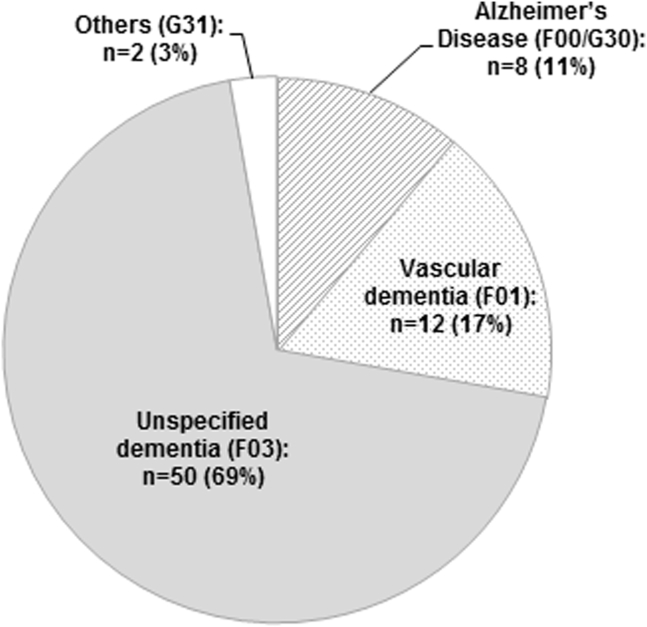
Results: Of 146 patients without a formal diagnosis of dementia, 72 (49%) received a formal diagnosis after a positive screening outcome (69% with "unspecified dementia"). Female sex was significantly associated with receiving a formal diagnosis (multivariate analyses).
Conclusion: Screening improved the identification of dementia considerably. Because of the risk of receiving a false-positive diagnosis, additional diagnostic assessment should be mandatory.
Keywords: DelpHi trial; Dementia; Diagnosis rate; Differential diagnosis; Early diagnosis; Primary care; Recognition; Screening.
Figures
References
-
- Prince M., Bryce R., Ferri C. Alzheimer's Disease International (ADI); London: 2011. World Alzheimer Report 2011—The Benefits of Early Diagnosis and Intervention.
-
- Relkin N. Screening and early diagnosis of dementia. Am J Manag Care. 2000;6(22 Suppl):S1111–S1118. - PubMed
-
- Eichler T., Thyrian J., Hertel J., Köhler L., Wucherer D., Dreier A. Rates of formal diagnosis in people screened positive for dementia in primary care: Results of the DelpHi-trial. J Alzheimers Dis. 2014;42:451–458. - PubMed
-
- Sandholzer H., Breull A., Fischer G.C. Early diagnosis and early treatment of cognitive disorders: A study of geriatric screening of an unselected patient population in general practice. Z Gerontol Geriatr. 1999;32:172–178. - PubMed
LinkOut - more resources
Full Text Sources
Other Literature Sources
Medical