. 2016 May 27;17(6):822.
doi: 10.3390/ijms17060822.

The Effect of Hydrofluoric Acid Etching Duration on the Surface Micromorphology, Roughness, and Wettability of Dental Ceramics

Affiliations

The Effect of Hydrofluoric Acid Etching Duration on the Surface Micromorphology, Roughness, and Wettability of Dental Ceramics

Ravikumar Ramakrishnaiah et al. Int J Mol Sci. .

Abstract

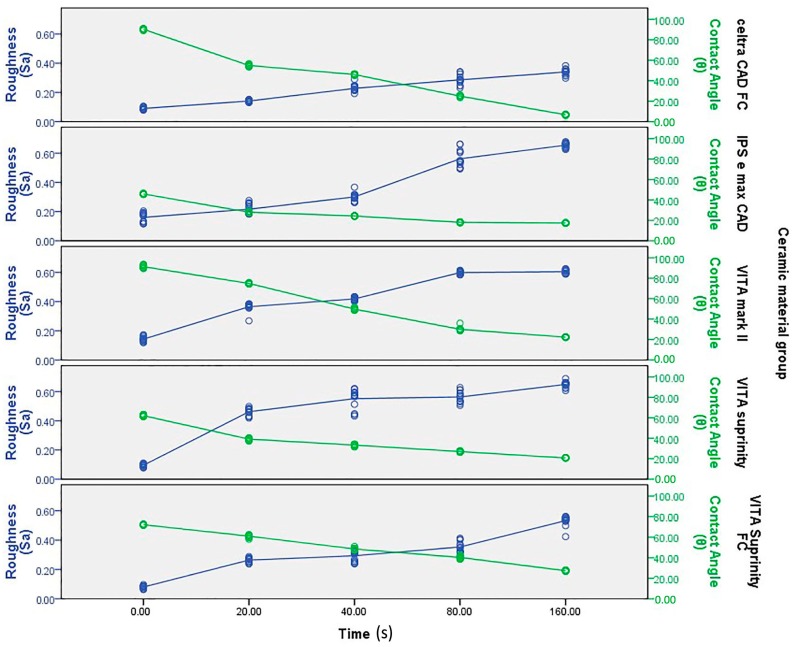
The current laboratory study is evaluating the effect of hydrofluoric acid etching duration on the surface characteristics of five silica-based glass ceramics. Changes in the pore pattern, crystal structure, roughness, and wettability were compared and evaluated. Seventy-five rectangularly shaped specimens were cut from each material (IPS e-max™, Dentsply Celtra™, Vita Suprinity™, Vita mark II™, and Vita Suprinity FC™); the sectioned samples were finished, polished, and ultrasonically cleaned. Specimens were randomly assigned into study groups: control (no etching) and four experimental groups (20, 40, 80 and 160 s of etching). The etched surfaces' microstructure including crystal structure, pore pattern, pore depth, and pore width was studied under a scanning electron microscope, and the surface roughness and wettability were analyzed using a non-contact surface profilometer and a contact angle measuring device, respectively. The results were statistically analyzed using one-way analysis of variance (ANOVA) and the post hoc Tukey's test. The results showed a significant change in the pore number, pore pattern, crystal structure, surface roughness, and wettability with increased etching duration. Etching for a short time resulted in small pores, and etching for longer times resulted in wider, irregular grooves. A significant increase in the surface roughness and wettability was observed with an increase in the etching duration. The findings also suggested a strong association between the surface roughness and wettability.

Keywords: acid etching; dental ceramics; lithium disilicate glass ceramics; micromorphology; surface roughness; wettability.


Figures
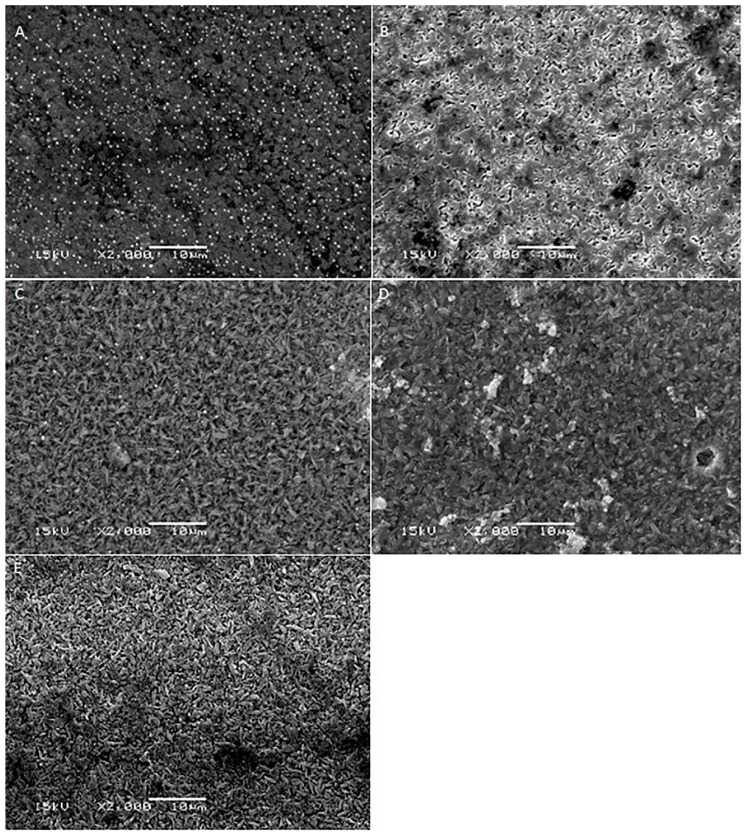
Figure 1
Figure 1
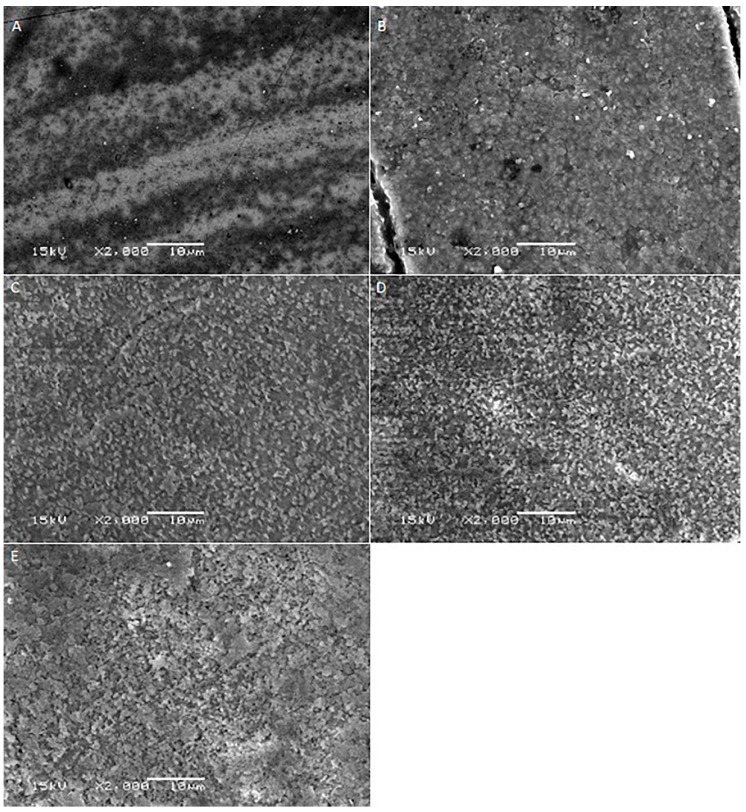
SEM photomicrographs of etched IPS e-max™ ceramic surfaces applied with different etching times. A: Control group; B: 20 s etching; C: 40 s etching; D: 80 s etching; E: 160 s etching. Original magnification: 2000×; bar = 10 µm.
Figure 2
Figure 2
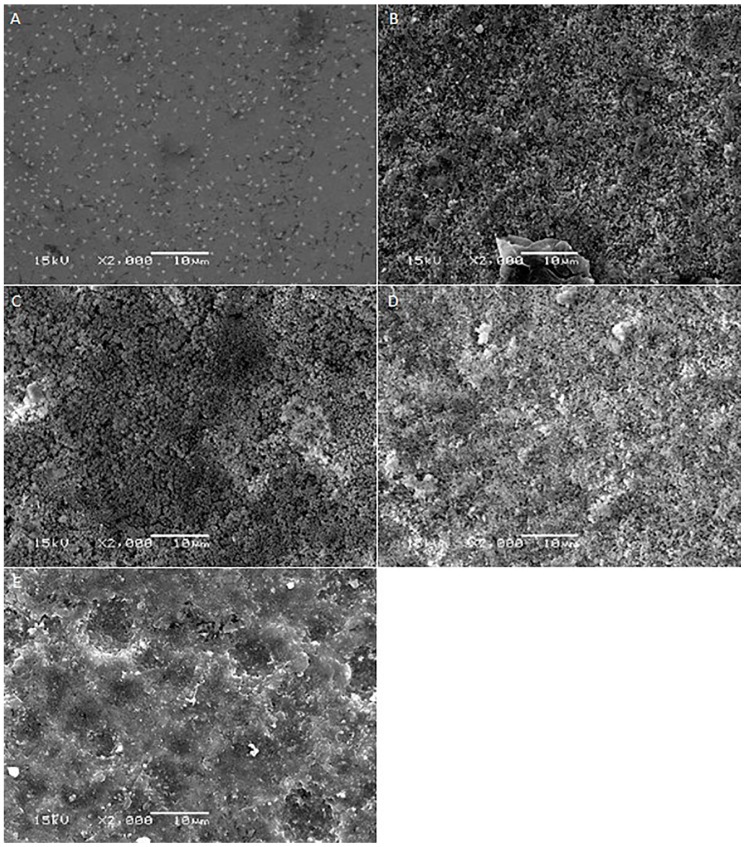
SEM photomicrographs of etched Dentsply Celtra™ ceramic surfaces applied with different etching times. A: Control group; B: 20 s etching; C: 40 s etching; D: 80 s etching; E: 160 s etching. Original magnification: 2000×; bar = 10 µm.
Figure 3
Figure 3
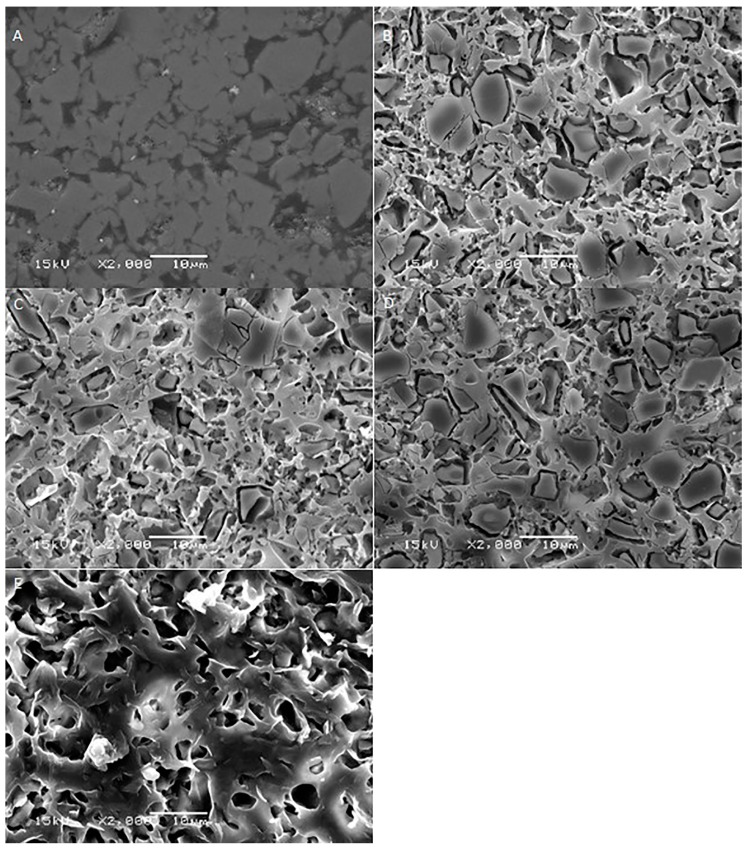
SEM photomicrographs of etched Vita Suprinity™ ceramic surfaces applied with different etching times. A: Control group; B: 20 s etching; C: 40 s etching; D: 80 s etching; E: 160 s etching. Original magnification: 2000×; bar = 10 µm.
Figure 4
Figure 4
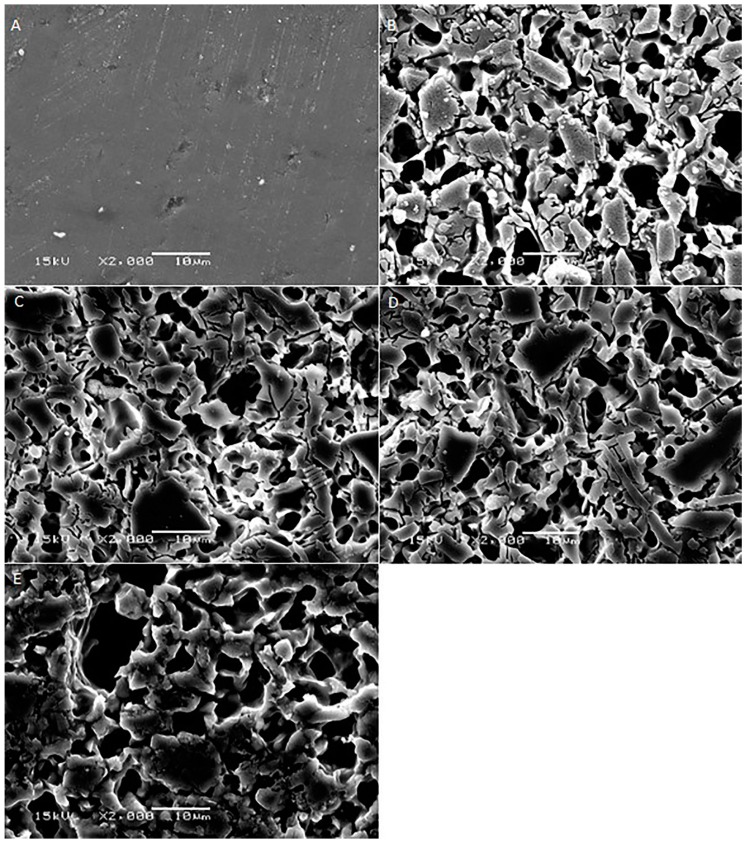
SEM photomicrographs of etched Vita mark II™ ceramic surfaces applied with different etching times. A: Control group; B: 20 s etching; C: 40 s etching; D: 80 s etching; E: 160 s etching. Original magnification: 2000×; bar = 10 µm.
Figure 5
Figure 5
SEM photomicrographs of etched Vita Suprinity FC™ ceramic surfaces applied with different etching times. A: Control group; B: 20 s etching; C: 40 s etching; D: 80 s etching; E: 160 s etching. Original magnification: 2000×; bar = 10 µm.
Figure 6
Figure 6
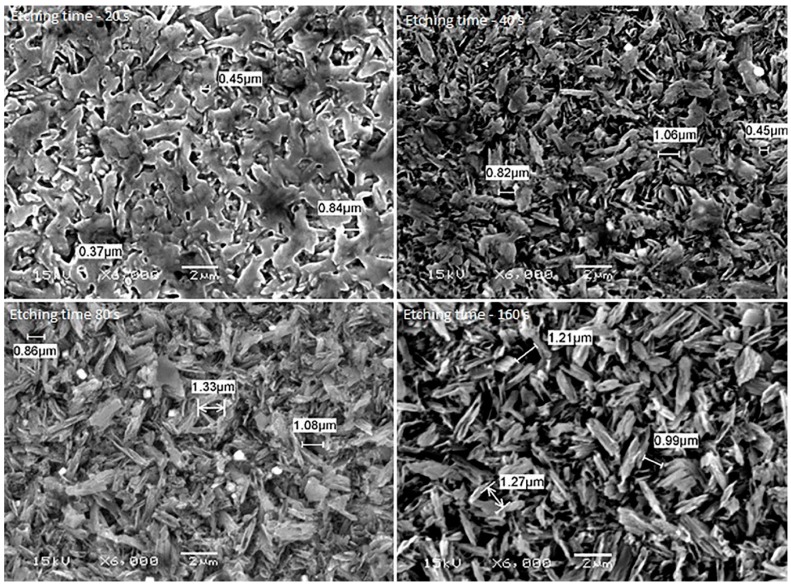
SEM photomicrographs showing microstructure of ceramics etched for different etching times (from the left, upper line: 20, 40, 80 and 160 s). Original magnification 6000×; bar = 2 µm.
Figure 7
Figure 7
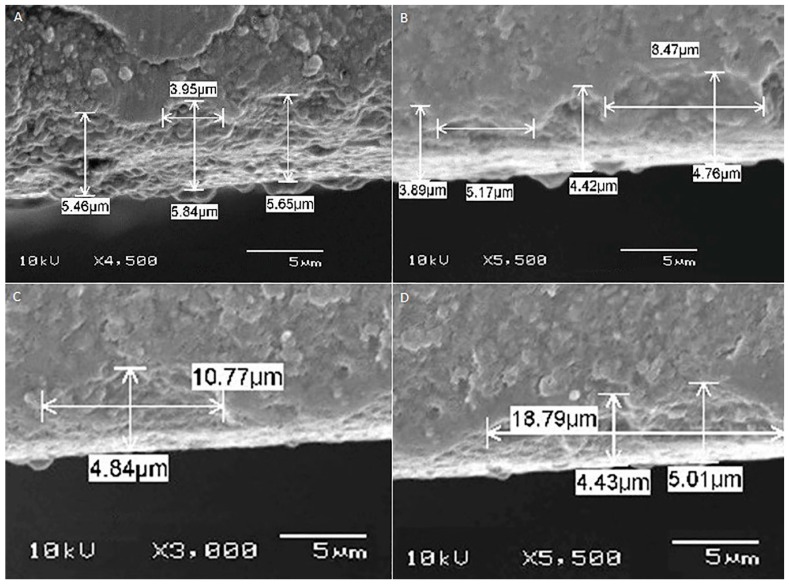
SEM photomicrographs of cross section showing width and pore pattern at different etching times. A: =20 s; B: =40 s; C: =80 s; D: =160 s; original magnifications: 4500×; 5500×; 3000×; and 5500×, respectively.
Figure 8
Figure 8
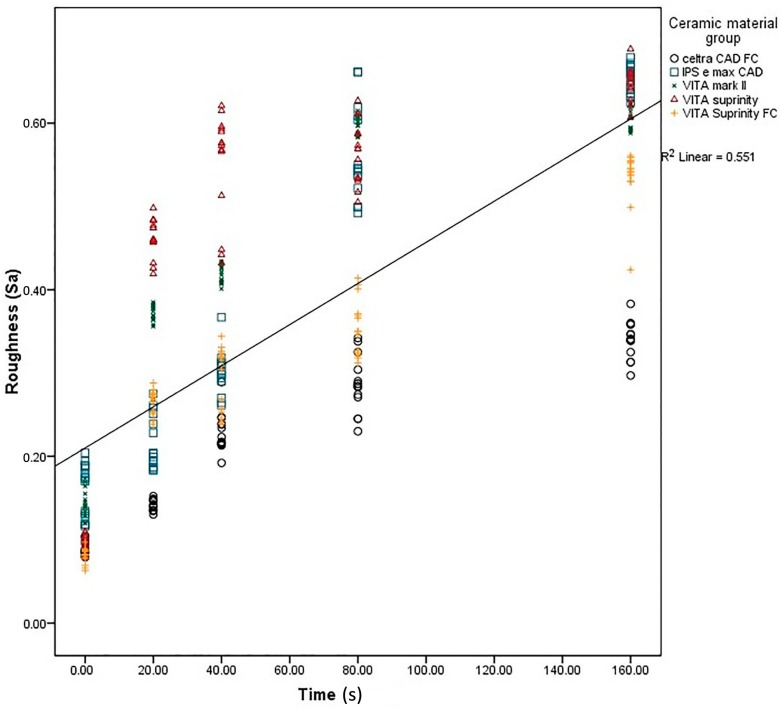
Regression analysis of surface roughness at different acid etching durations.
Figure 9
Figure 9
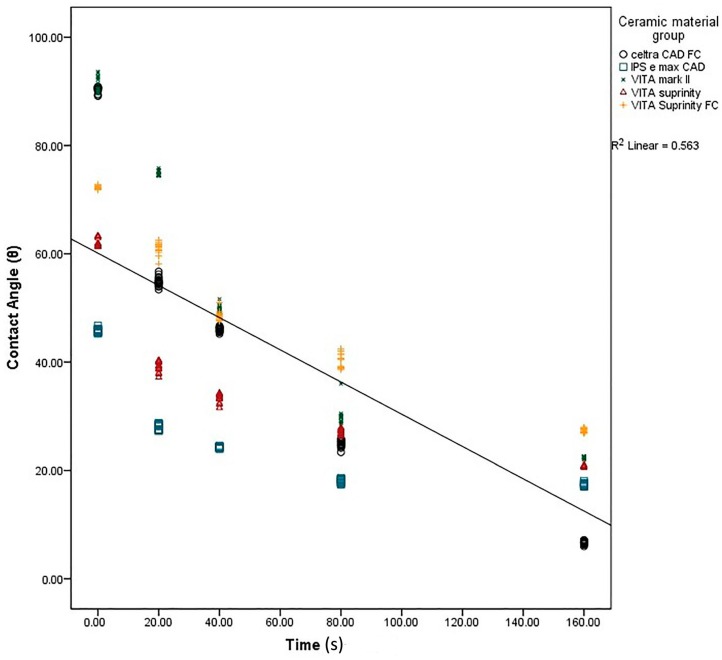
Regression analysis of contact angle at different acid etching durations.
Figure 10
Figure 10
Regression analysis of surface roughness and contact angle at different acid etching durations.

References

    1. Ozkurt Z., Kazazoglu E. Zirconia dental implants: A literature review. J. Oral. Implantol. 2011;37:367–376. doi: 10.1563/AAID-JOI-D-09-00079. - DOI - PubMed
    1. Kohal R.J., Klaus G. A zirconia implant-crown system: A case report. Int. J. Periodontics. Restorative. Dent. 2004;24:147–153. - PubMed
    1. Ho G.W., Matinlinna J.P. Insights on ceramics as dental materials. Part I: Ceramic material types in dentistry. Silicon. 2011;3:109–115. doi: 10.1007/s12633-011-9078-7. - DOI
    1. Chaiyabutr Y., McGowan S., Phillips K.M., Kois J.C., Giordano R.A. The effect of hydrofluoric acid surface treatment and bond strength of a zirconia veneering ceramic. J. Prosthet. Dent. 2008;100:194–202. doi: 10.1016/S0022-3913(08)60178-X. - DOI - PubMed
    1. Ayad M.F., Fahmy N.Z., Rosenstiel S.F. Effect of surface treatment on roughness and bond strength of a heat-pressed ceramic. J. Prosthet. Dent. 2008;99:123–130. doi: 10.1016/S0022-3913(08)60028-1. - DOI - PubMed

LinkOut - more resources