


Effects of disturbed sleep on gastrointestinal and somatic pain symptoms in irritable bowel syndrome
- PMID: 27240555
- PMCID: PMC5020700
- DOI: 10.1111/apt.13677
Effects of disturbed sleep on gastrointestinal and somatic pain symptoms in irritable bowel syndrome
Abstract
Background: Sleep disturbances are common, and perhaps are even more prevalent in irritable bowel syndrome (IBS).
Aims: To determine the effect of measured sleep on IBS symptoms the following day, IBS-specific quality of life (IBS-QOL) and non-GI pain symptoms.
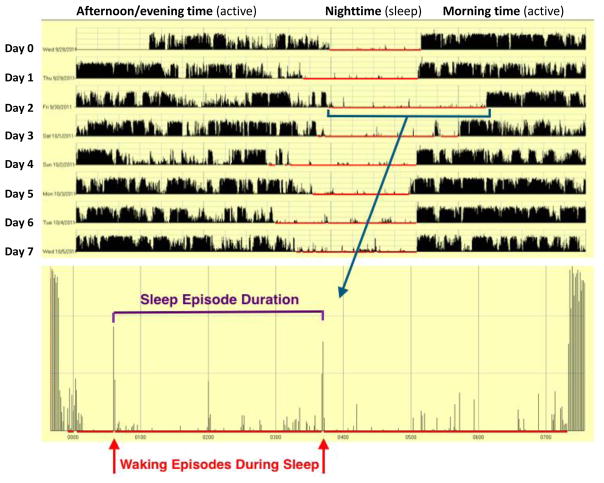
Methods: IBS patients' sleep patterns were compared to healthy individuals via wrist-mounted actigraphy over 7 days. Daily bowel pain logs (severity, distress; 10-point Likert) stool pattern (Bristol scale) and supporting symptoms (e.g. bloating, urgency; 5-point Likert) were kept. Validated measures, including the GI Symptom Rating Scale-IBS, Visceral Sensitivity Index, Pittsburgh Sleep Quality Index and the IBS-Quality of Life were collected. Mediation analysis explored the relationship between sleep, mood and bowel symptoms.
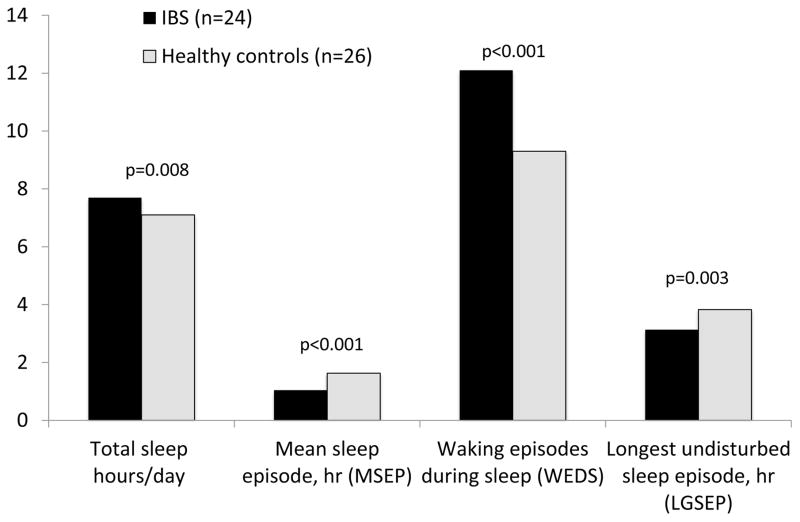
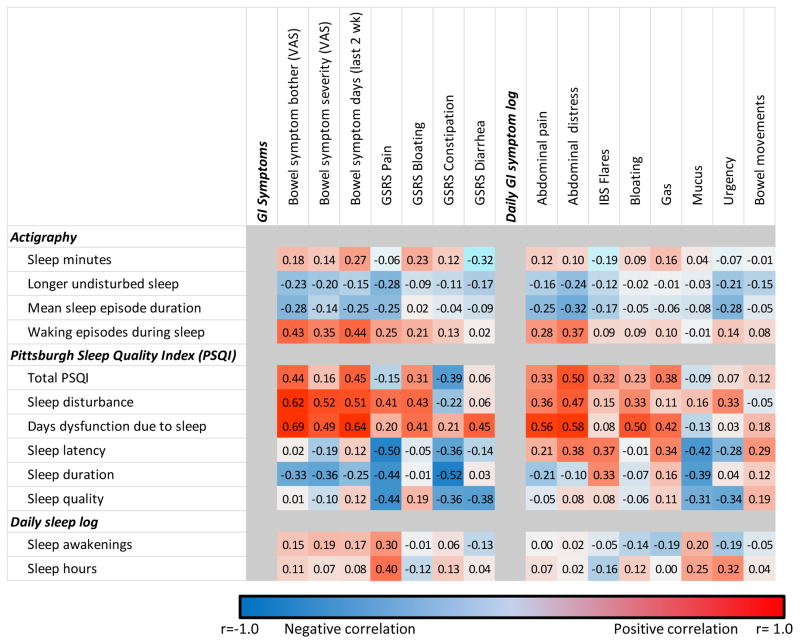
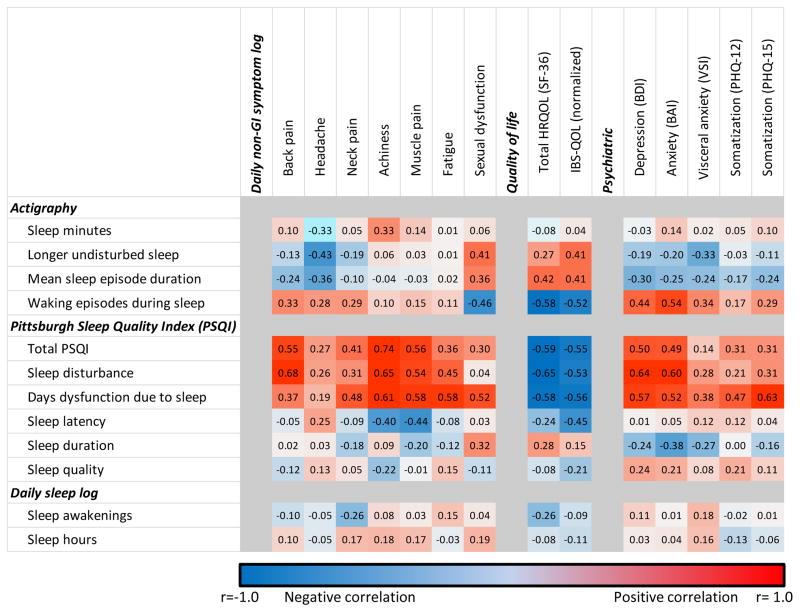
Results: Fifty subjects (38.6 ± 1.0 years old, 44 female; 24 IBS and 26 healthy controls) completed sleep monitoring. IBS patients slept more hours per day (7.7 ± 0.2 vs. 7.1 ± 0.1, P = 0.008), but felt less well-rested. IBS patients demonstrated more waking episodes during sleep (waking episodes; 12.1 vs. 9.3, P < 0.001). Waking episodes predicted worse abdominal pain (P ≤ 0.01) and GI distress (P < 0.001), but not bowel pattern or accessory IBS symptoms (P > 0.3 for each). Waking episodes negatively correlated with general- and IBS-specific QOL in IBS (r = -0.58 and -0.52, P < 0.001 for each). Disturbed sleep effects on abdominal pain were partially explained by mood as an intermediate.
Conclusions: Sleep disturbances are more common in irritable bowel syndrome, and correlate with IBS-related pain, distress and poorer irritable bowel syndrome-related quality of life. Disturbed sleep effects extend beyond the bowel, leading to worse mood and greater somatic pain in patients with the irritable bowel syndrome.
© 2016 John Wiley & Sons Ltd.
Conflict of interest statement
None of the authors have any conflicts of interest to report. No writing assistance was obtained.
Figures
References
-
- Saito YA, Schoenfeld P, Locke GR., 3rd The epidemiology of irritable bowel syndrome in North America: a systematic review. The American journal of gastroenterology. 2002;97(8):1910–5. - PubMed
-
- Gralnek IM, Hays RD, Kilbourne A, Naliboff B, Mayer EA. The impact of irritable bowel syndrome on health-related quality of life. Gastroenterology. 2000;119(3):654–60. - PubMed
-
- de Roest RH, Dobbs BR, Chapman BA, et al. The low FODMAP diet improves gastrointestinal symptoms in patients with irritable bowel syndrome: a prospective study. International journal of clinical practice. 2013;67(9):895–903. - PubMed
-
- Rao SS, Yu S, Fedewa A. Systematic review: dietary fibre and FODMAP-restricted diet in the management of constipation and irritable bowel syndrome. Alimentary pharmacology & therapeutics. 2015 - PubMed
-
- Levy RL, Linde JA, Feld KA, Crowell MD, Jeffery RW. The association of gastrointestinal symptoms with weight, diet, and exercise in weight-loss program participants. Clin Gastroenterol Hepatol. 2005;3(10):992–6. - PubMed
MeSH terms
Grants and funding
LinkOut - more resources
Full Text Sources
Other Literature Sources
Medical