Movement Disorders Following Cerebrovascular Lesion in the Basal Ganglia Circuit
- PMID: 27240808
- PMCID: PMC4886205
- DOI: 10.14802/jmd.16005
Movement Disorders Following Cerebrovascular Lesion in the Basal Ganglia Circuit
Abstract
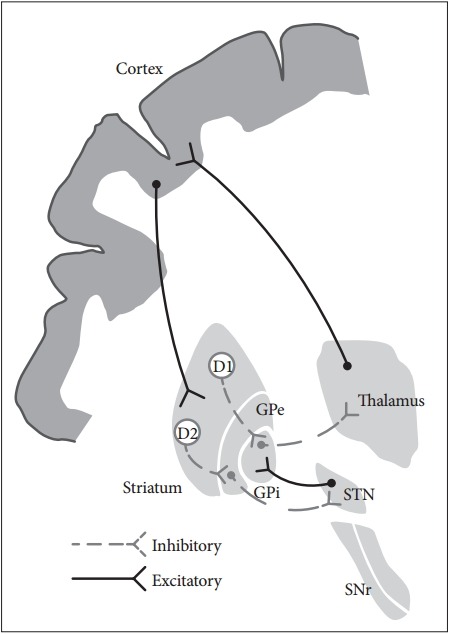
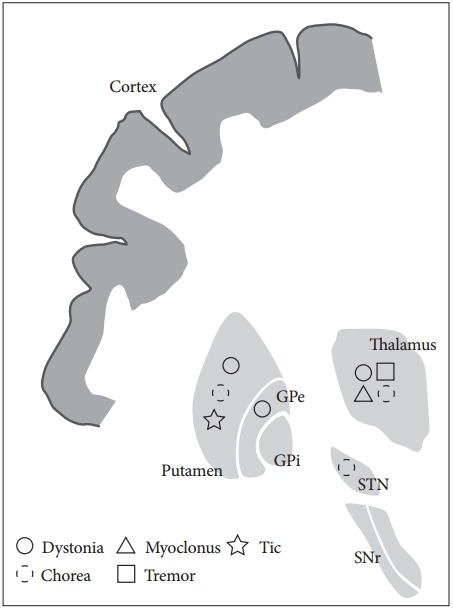
Movement disorders are primarily associated with the basal ganglia and the thalamus; therefore, movement disorders are more frequently manifest after stroke compared with neurological injuries associated with other structures of the brain. Overall clinical features, such as types of movement disorder, the time of onset and prognosis, are similar with movement disorders after stroke in other structures. Dystonia and chorea are commonly occurring post-stroke movement disorders in basal ganglia circuit, and these disorders rarely present with tremor. Rarer movement disorders, including tic, restless leg syndrome, and blepharospasm, can also develop following a stroke. Although the precise mechanisms underlying the pathogenesis of these conditions have not been fully characterized, disruptions in the crosstalk between the inhibitory and excitatory circuits resulting from vascular insult are proposed to be the underlying cause. The GABA (gamma-aminobutyric acid)ergic and dopaminergic systems play key roles in post-stroke movement disorders. This review summarizes movement disorders induced by basal ganglia and thalamic stroke according to the anatomical regions in which they manifest.
Keywords: Basal ganglia; Cerebrovascular disease; Movement disorder; Thalamus.
Conflict of interest statement
The author has no financial conflicts of interest.
Figures
References
-
- Ghika-Schmid F, Ghika J, Regli F, Bogousslavsky J. Hyperkinetic movement disorders during and after acute stroke: the Lausanne Stroke Registry. J Neurol Sci. 1997;146:109–116. - PubMed
-
- Wolters EC, Van Laar T, Berendse HW. Parkinsonism and related disorders. 3rd ed. Amsterdam: VU University Press; 2010.
-
- Fahn S, Jankovic J, Hallett M. Principles and practice of movement disorders. Philadelphia: Elsevier Health Sciences; 2011.
Publication types
LinkOut - more resources
Full Text Sources
Other Literature Sources
Molecular Biology Databases