


Antimicrobial Susceptibility and Clonality of Clinical Ureaplasma Isolates in the United States
- PMID: 27246773
- PMCID: PMC4958210
- DOI: 10.1128/AAC.00671-16
Antimicrobial Susceptibility and Clonality of Clinical Ureaplasma Isolates in the United States
Abstract
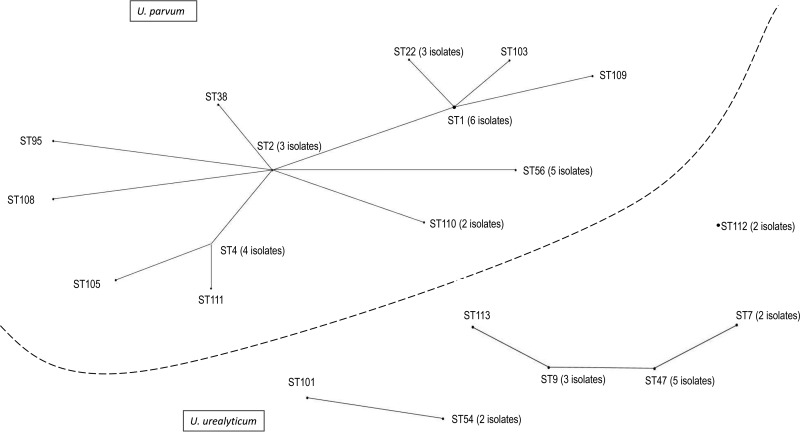
Ureaplasma urealyticum and Ureaplasma parvum are pathogens involved in urogenital tract and intrauterine infections and also in systemic diseases in newborns and immunosuppressed patients. There is limited information on the antimicrobial susceptibility and clonality of these species. In this study, we report the susceptibility of 250 contemporary isolates of Ureaplasma (202 U. parvum and 48 U. urealyticum isolates) recovered at Mayo Clinic, Rochester, MN. MICs of doxycycline, azithromycin, ciprofloxacin, tetracycline, erythromycin, and levofloxacin were determined by broth microdilution, with MICS of the last three interpreted according to CLSI guidelines. Levofloxacin resistance was found in 6.4% and 5.2% of U. parvum and U. urealyticum isolates, respectively, while 27.2% and 68.8% of isolates, respectively, showed ciprofloxacin MICs of ≥4 μg/ml. The resistance mechanism of levofloxacin-resistant isolates was due to mutations in parC, with the Ser83Leu substitution being most frequent, followed by Glu87Lys. No macrolide resistance was found among the 250 isolates studied; a single U. parvum isolate was tetracycline resistant. tet(M) was found in 10 U. parvum isolates, including the single tetracycline-resistant isolate, as well as in 9 isolates which had low tetracycline and doxycycline MICs. Multilocus sequence typing (MLST) performed on a selection of 46 isolates showed high diversity within the clinical Ureaplasma isolates studied, regardless of antimicrobial susceptibility. The present work extends previous knowledge regarding susceptibility to antimicrobial agents, resistance mechanisms, and clonality of Ureaplasma species in the United States.
Copyright © 2016, American Society for Microbiology. All Rights Reserved.
Figures
References
Publication types
MeSH terms
Substances
LinkOut - more resources
Full Text Sources
Other Literature Sources
Medical
