. 2016:2016:6293163.
doi: 10.1155/2016/6293163. Epub 2016 May 9.

A Drosophila Model for Screening Antiobesity Agents

Affiliations

A Drosophila Model for Screening Antiobesity Agents

Tran Thanh Men et al. Biomed Res Int. 2016.

Abstract

Although triacylglycerol, the major component for lipid storage, is essential for normal physiology, its excessive accumulation causes obesity in adipose tissue and is associated with organ dysfunction in nonadipose tissue. Here, we focused on the Drosophila model to develop therapeutics for preventing obesity. The brummer (bmm) gene in Drosophila melanogaster is known to be homologous with human adipocyte triglyceride lipase, which is related to the regulation of lipid storage. We established a Drosophila model for monitoring bmm expression by introducing the green fluorescent protein (GFP) gene as a downstream reporter of the bmm promoter. The third-instar larvae of Drosophila showed the GFP signal in all tissues observed and specifically in the salivary gland nucleus. To confirm the relationship between bmm expression and obesity, the effect of oral administration of glucose diets on bmm promoter activity was analyzed. The Drosophila flies given high-glucose diets showed higher lipid contents, indicating the obesity phenotype; this was suggested by a weaker intensity of the GFP signal as well as reduced bmm mRNA expression. These results demonstrated that the transgenic Drosophila model established in this study is useful for screening antiobesity agents. We also report the effects of oral administration of histone deacetylase inhibitors and some vegetables on the bmm promoter activity.


Figures
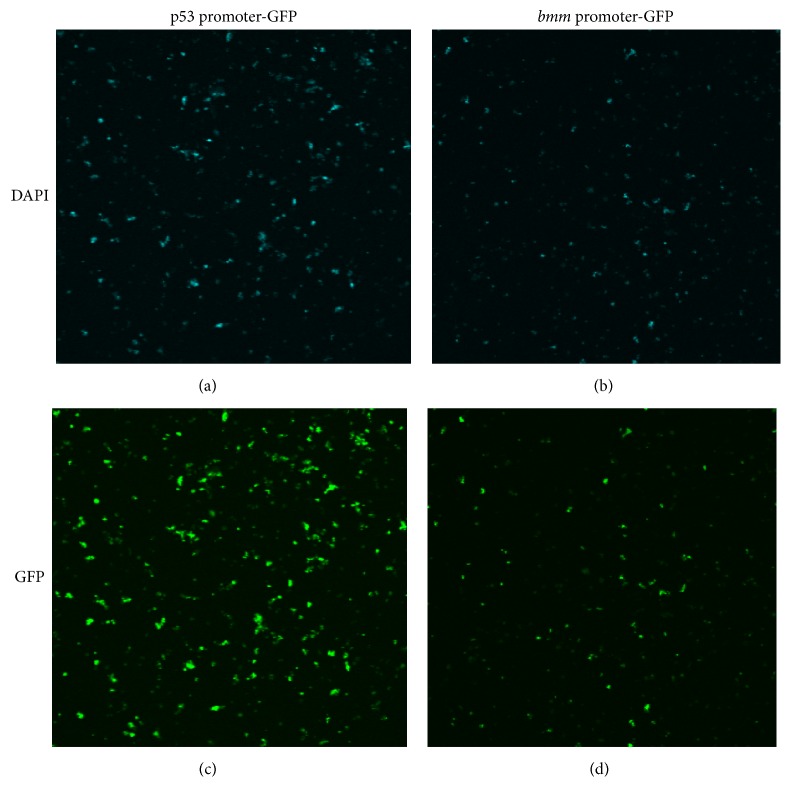
Figure 1
Figure 1
Transfection of S2-DRSC Drosophila cells. S2-DRSC Drosophila cells were transfected with pOBP-bmm promoter-GFP (b, d) or with pOBP-p53 promoter-GFP as a positive control (a, c). After staining with DAPI, cells were observed for DAPI signals (a, b) and GFP signals (c, d) under a fluorescence microscope. Cells transfected with pOBP-bmm promoter-GFP showed GFP signals, indicating that the bmm promoter functioned as expected.
Figure 2
Figure 2
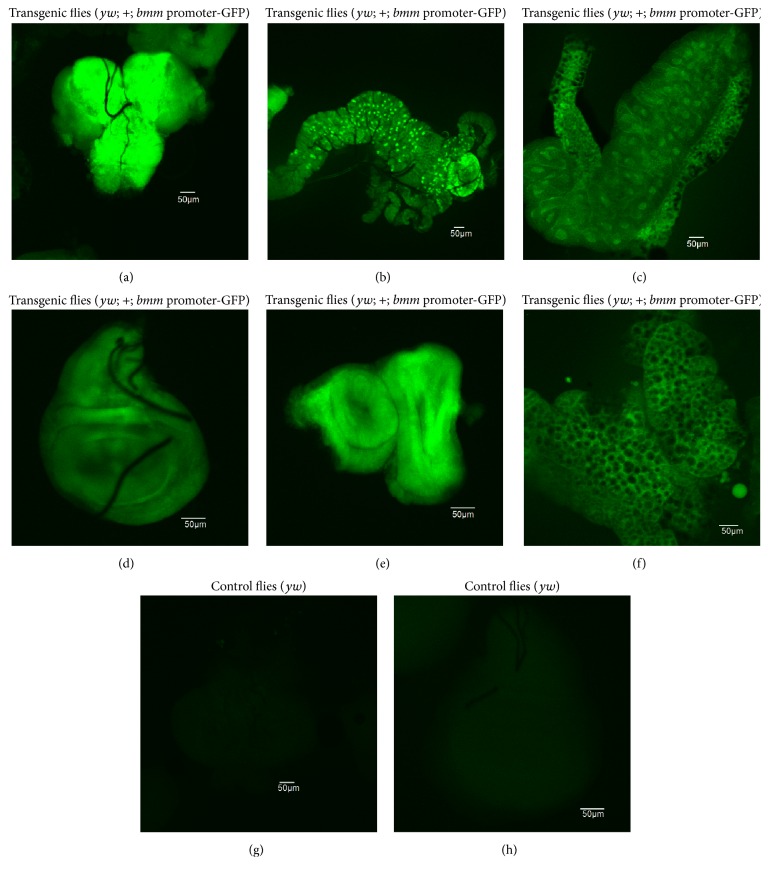
The bmm promoter-driven expression of GFP in transgenic Drosophila (yw; +; bmm promoter-GFP). The various tissues of the third-instar larvae of transgenic flies were observed by fluorescence microscopy. The sections of brain lobe (a), gut (b), salivary gland (c), wing disc (d), eye disc (e), and lipid tissue (f) showed GFP signals. In contrast, the control fly (yw) showed no detectable GFP signal ((g) brain lobe; (h) wing disc).
Figure 3
Figure 3
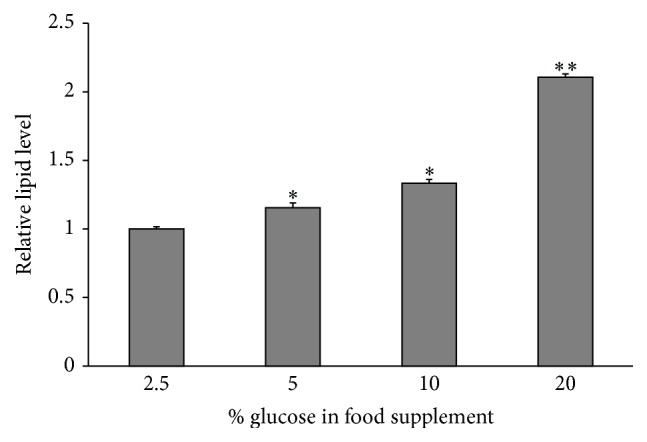
Relative lipid level in transgenic flies fed different glucose diets. The lipid level was measured by the sulfophosphovanillin method and normalized with body weight. The lipid content increased with increasing glucose content in the food supplements. n = 30 for each treatment. The error bars represent the standard deviation. p < 0.05; ∗∗ p < 0.001.
Figure 4
Figure 4
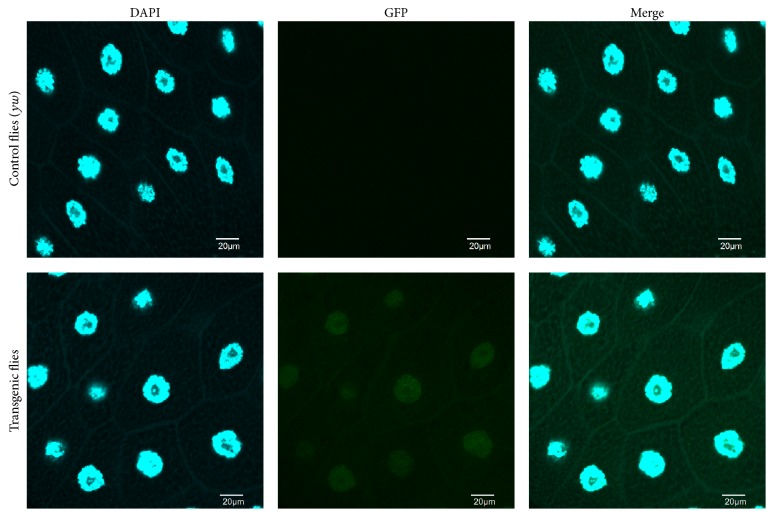
Intracellular localization of the GFP signal in the salivary gland. After staining with DAPI, the salivary glands of the third-instar larvae were observed by fluorescence microscopy. There was no detectable GFP signal in control flies (yw), whereas GFP carrying the nuclear localization sequence was detected in the nucleus of transgenic Drosophila (yw; +; bmm promoter-GFP).
Figure 5
Figure 5
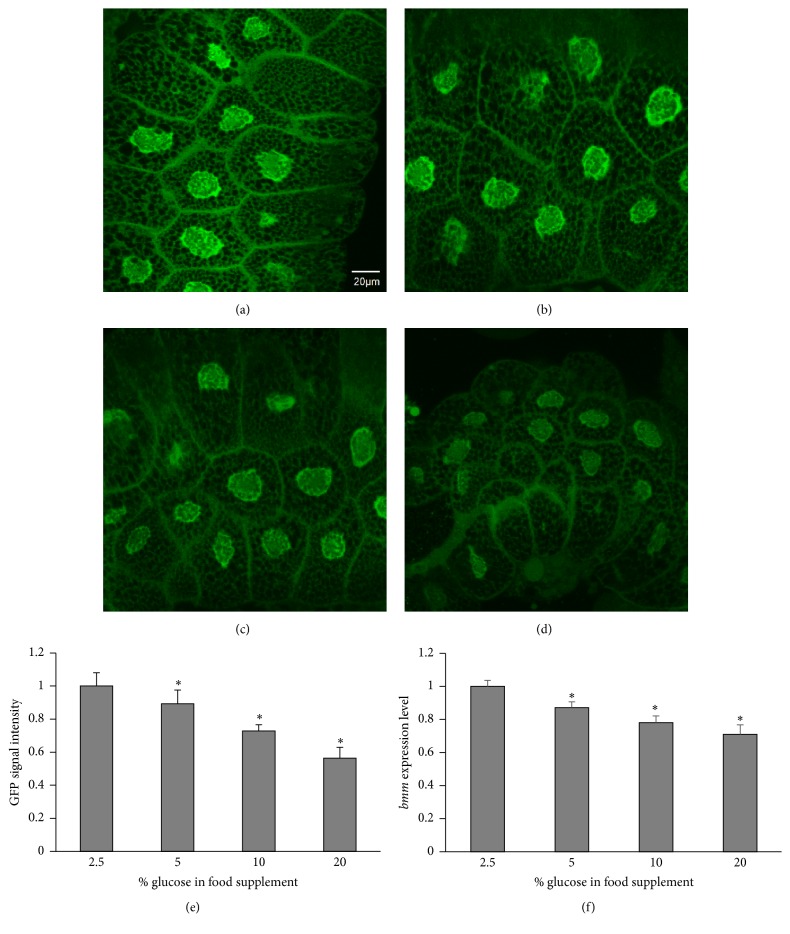
Relationship between bmm expression and glucose contents in diets. The transgenic flies were fed with diet containing different amounts of glucose, and the salivary glands of the third-instar larvae were observed by fluorescence microscopy. GFP signal intensities measured by the MetaMorph software (e) showed that flies fed 2.5% glucose (a) showed stronger signals than flies fed 5% (b), 10% (c), and 20% (d) glucose, respectively. Real-time PCRs were used to measure the endogenous bmm mRNA expression levels of transgenic flies (f). n = 30 for each treatment. The error bars represent the standard deviation. p < 0.05.
Figure 6
Figure 6
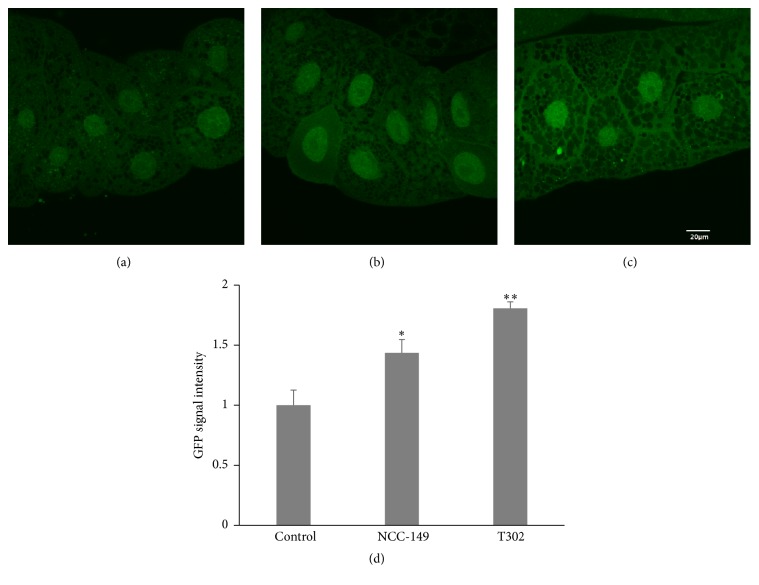
Effects of oral administration of histone deacetylase (HDAC) inhibitors on bmm expression in Drosophila. The transgenic flies were fed a diet containing HDAC inhibitors, and the salivary glands of the third-instar larvae were observed by fluorescence microscopy to evaluate bmm promoter-driven GFP signaling as a marker. GFP signals of Drosophila fed with instant food alone (a), instant food with NCC-149 (HDAC8 inhibitor) (b), or instant food with T302 (an HDAC9 inhibitor) (c). The GFP intensity measured by the MetaMorph software was enhanced in flies fed the HDAC inhibitors, and significant differences were observed relative to the control (d). n = 20 for each treatment. The error bars represent the standard deviation. p < 0.05; ∗∗ p < 0.001.

References

    1. Hotamisligil G. S. Inflammation and metabolic disorders. Nature. 2006;444(7121):860–867. doi: 10.1038/nature05485. - DOI - PubMed
    1. Hinney A., Vogel C. I. G., Hebebrand J. From monogenic to polygenic obesity: recent advances. European Child and Adolescent Psychiatry. 2010;19(3):297–310. doi: 10.1007/s00787-010-0096-6. - DOI - PMC - PubMed
    1. Chang Y.-C., Liu P.-H., Lee W.-J., et al. Common variation in the fat mass and obesity-associated (FTO) gene confers risk of obesity and modulates BMI in the chinese population. Diabetes. 2008;57(8):2245–2252. doi: 10.2337/db08-0377. - DOI - PMC - PubMed
    1. Walley A. J., Blakemore A. I. F., Froguel P. Genetics of obesity and the prediction of risk for health. Human Molecular Genetics. 2006;15(2):R124–R130. doi: 10.1093/hmg/ddl215. - DOI - PubMed
    1. Baker K. D., Thummel C. S. Diabetic larvae and obese flies-emerging studies of metabolism in Drosophila . Cell Metabolism. 2007;6(4):257–266. doi: 10.1016/j.cmet.2007.09.002. - DOI - PMC - PubMed

MeSH terms

LinkOut - more resources