Effects of speech style, room acoustics, and vocal fatigue on vocal effort
- PMID: 27250179
- PMCID: PMC5392070
- DOI: 10.1121/1.4950812
Effects of speech style, room acoustics, and vocal fatigue on vocal effort
Abstract
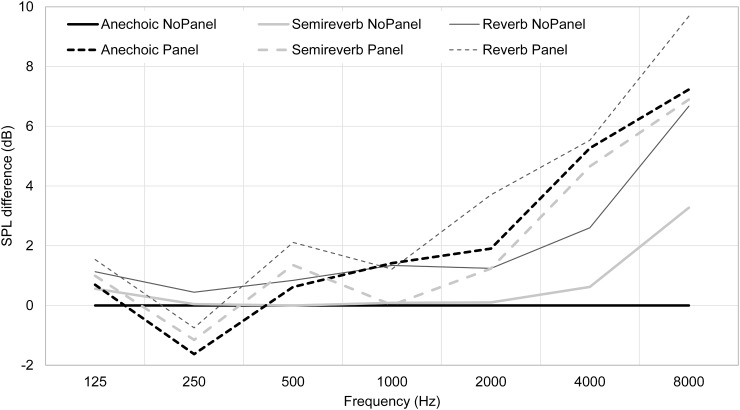
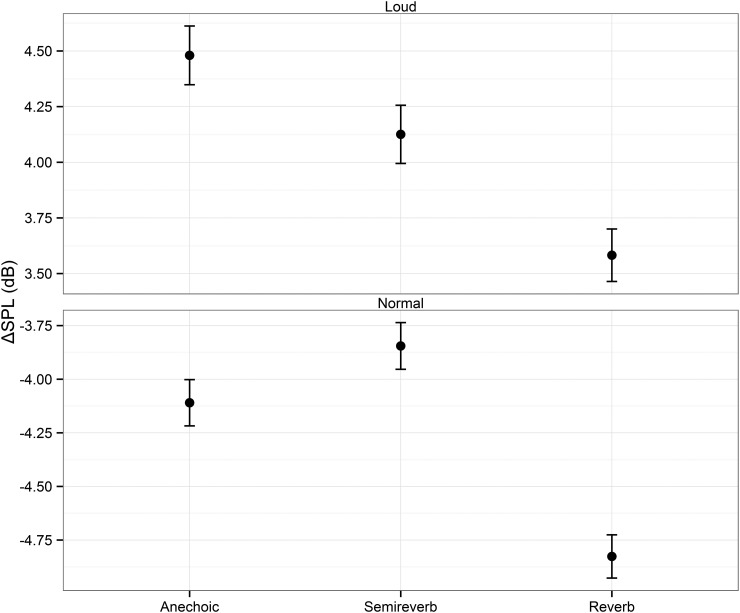
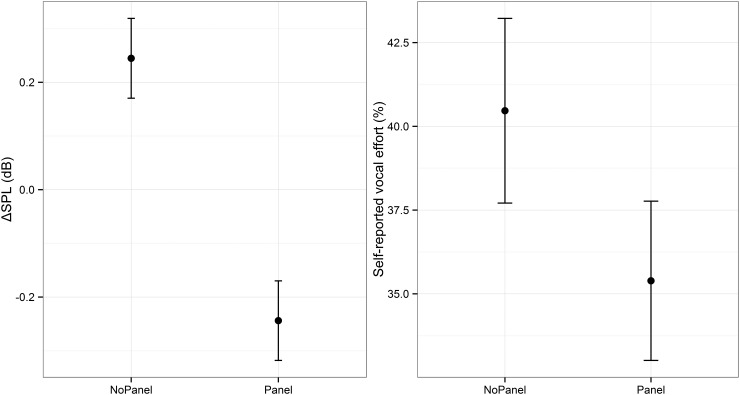
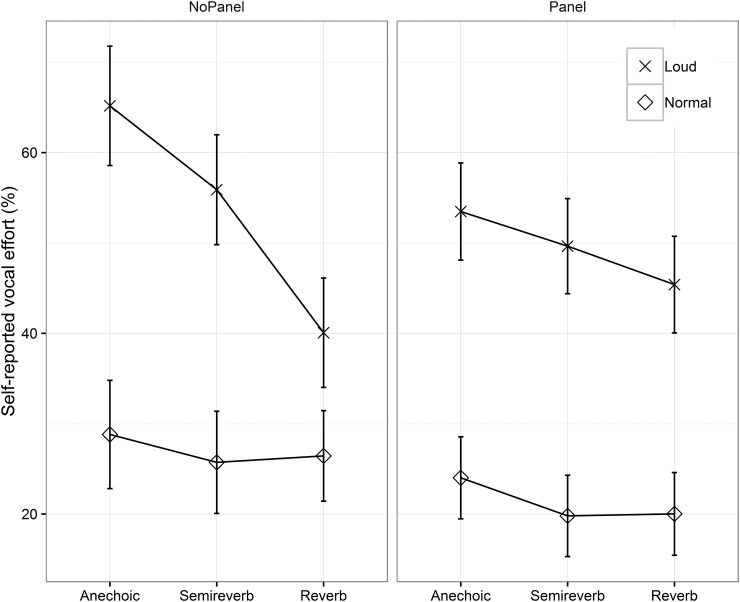
Vocal effort is a physiological measure that accounts for changes in voice production as vocal loading increases. It has been quantified in terms of sound pressure level (SPL). This study investigates how vocal effort is affected by speaking style, room acoustics, and short-term vocal fatigue. Twenty subjects were recorded while reading a text at normal and loud volumes in anechoic, semi-reverberant, and reverberant rooms in the presence of classroom babble noise. The acoustics in each environment were modified by creating a strong first reflection in the talker position. After each task, the subjects answered questions addressing their perception of the vocal effort, comfort, control, and clarity of their own voice. Variation in SPL for each subject was measured per task. It was found that SPL and self-reported effort increased in the loud style and decreased when the reflective panels were present and when reverberation time increased. Self-reported comfort and control decreased in the loud style, while self-reported clarity increased when panels were present. The lowest magnitude of vocal fatigue was experienced in the semi-reverberant room. The results indicate that early reflections may be used to reduce vocal effort without modifying reverberation time.
Figures
References
-
- Akaike, H. (1973). “Information theory and an extension of maximum likelihood principle,” in Second International Symposium on Information Theory, edited by Petrov B. N. and Csaki F. ( Akademiai Kiado, Budapest: ), pp. 167–281.
-
- Black, J. W. (1950). “ The effect of room characteristic upon vocal intensity and rate,” J. Acoust. Soc. Am. 22(2), 174–176. 10.1121/1.1906585 - DOI
Publication types
MeSH terms
Grants and funding
LinkOut - more resources
Full Text Sources
Other Literature Sources
Medical