Review
. 2016 Sep;3(3):173-85.
doi: 10.1093/rb/rbw016. Epub 2016 Mar 8.

Biomedical titanium alloys with Young's moduli close to that of cortical bone

Affiliations
Review

Biomedical titanium alloys with Young's moduli close to that of cortical bone

Mitsuo Niinomi et al. Regen Biomater. 2016 Sep.

Abstract

Biomedical titanium alloys with Young's moduli close to that of cortical bone, i.e., low Young's modulus titanium alloys, are receiving extensive attentions because of their potential in preventing stress shielding, which usually leads to bone resorption and poor bone remodeling, when implants made of their alloys are used. They are generally β-type titanium alloys composed of non-toxic and allergy-free elements such as Ti-29Nb-13Ta-4.6Zr referred to as TNTZ, which is highly expected to be used as a biomaterial for implants replacing failed hard tissue. Furthermore, to satisfy the demands from both patients and surgeons, i.e., a low Young's modulus of the whole implant and a high Young's modulus of the deformed part of implant, titanium alloys with changeable Young's modulus, which are also β-type titanium alloys, for instance Ti-12Cr, have been developed. In this review article, by focusing on TNTZ and Ti-12Cr, the biological and mechanical properties of the titanium alloys with low Young's modulus and changeable Young's modulus are described. In addition, the titanium alloys with shape memory and superelastic properties were briefly addressed. Surface modifications for tailoring the biological and anti-wear/corrosion performances of the alloys have also been briefly introduced.

Keywords: TNTZ; Young’s modulus; biological performances; mechanical strength; surface modification; titanium alloys.


Figures
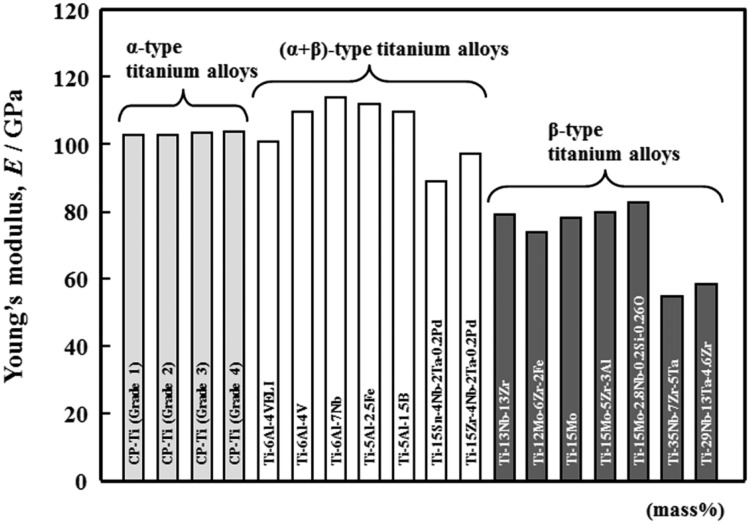
Figure 1.
Figure 1.
Young’s moduli of representative α-type, (α + β)-type and β-type titanium alloys.
Figure 2.
Figure 2.
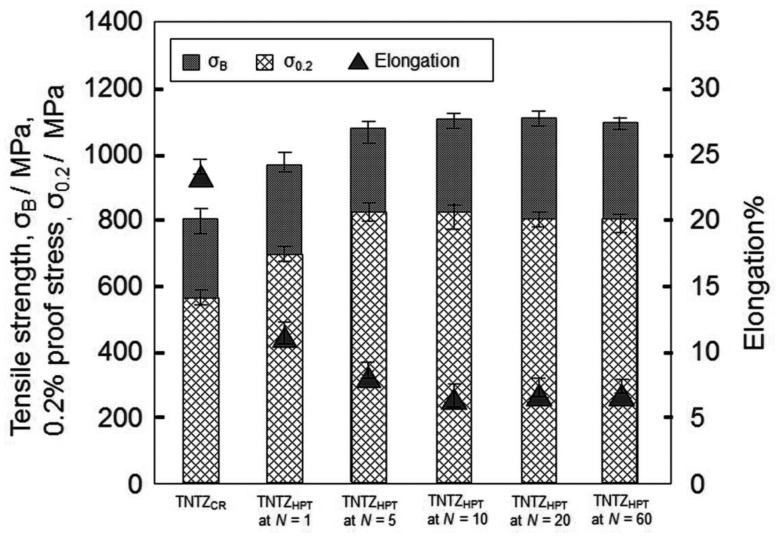
Tensile properties of TNTZCR and TNTZHPT at rotation numbers N = 1–60.
Figure 3.
Figure 3.
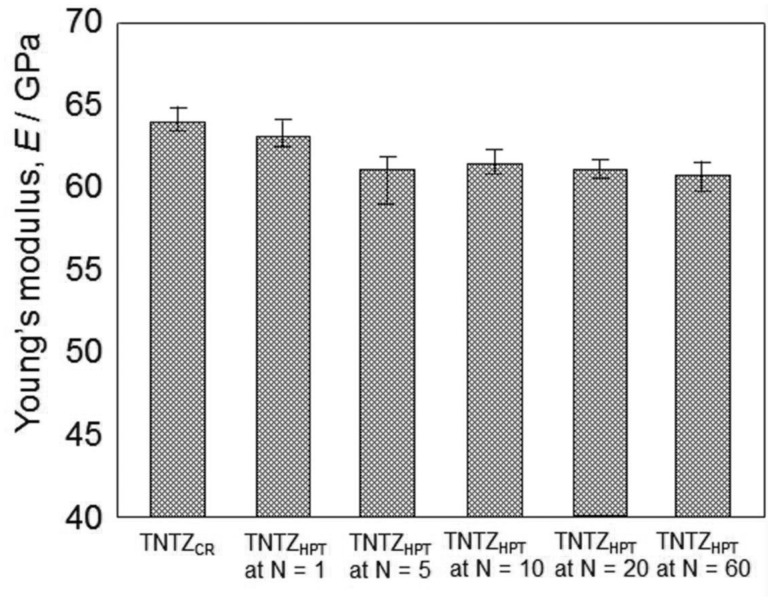
Young’s moduli of TNTZCR and TNTZHPT at rotation numbers N = 1–60.
Figure 4.
Figure 4.
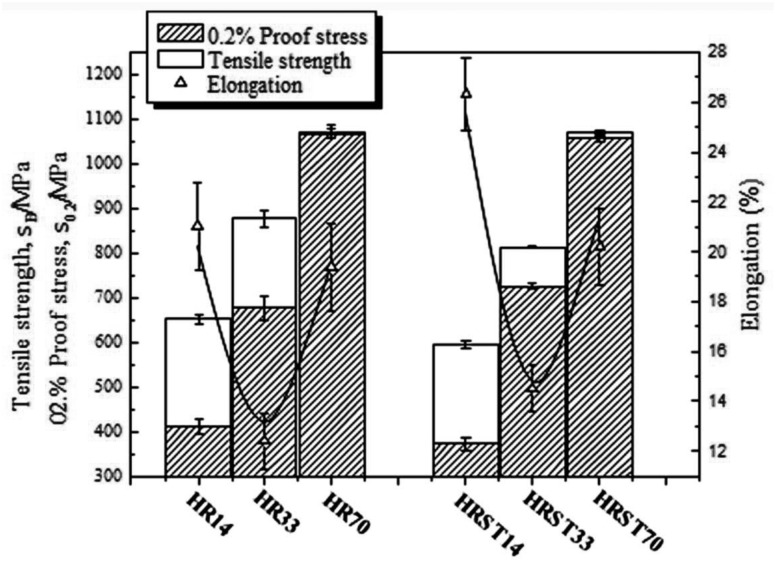
Tensile properties: tensile strength, 0.2% proof stress and elongation of TNTZ-0.14O, TNTZ-0.33O and TNTZ-0.70O subjected to hot rolling (HR14, HR33 and HR70), and solution treatment at 1003, 1083 and 1243 K for 3.6 ks after hot rolling (HRST14, HRST33 and HRST70).
Figure 5.
Figure 5.
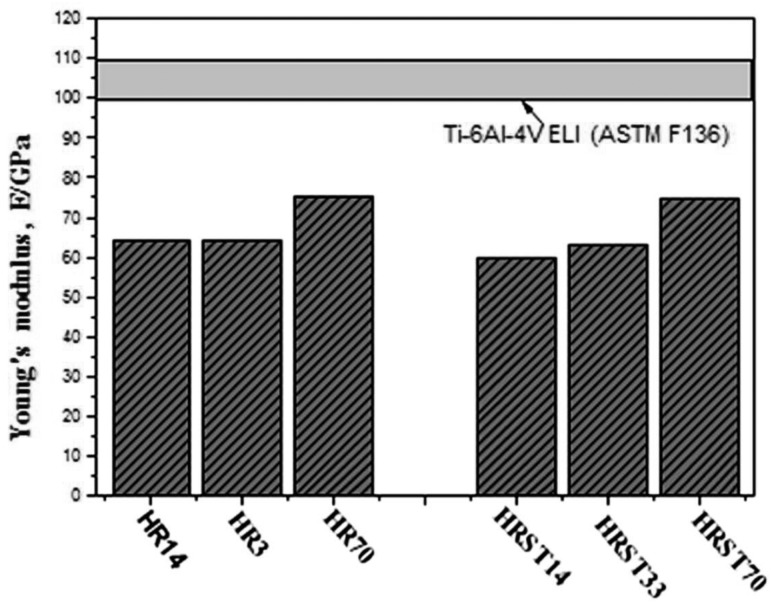
Young’s moduli of TNTZ-0.14O, TNTZ-0.33O and TNTZ-0.70O subjected to hot rolling (HR14, HR33 and HR70), and solution treatment at 1003, 1083 and 1243 K for 3.6 ks after hot rolling (HRST14, HRST33 and HRST70), respectively.
Figure 6.
Figure 6.
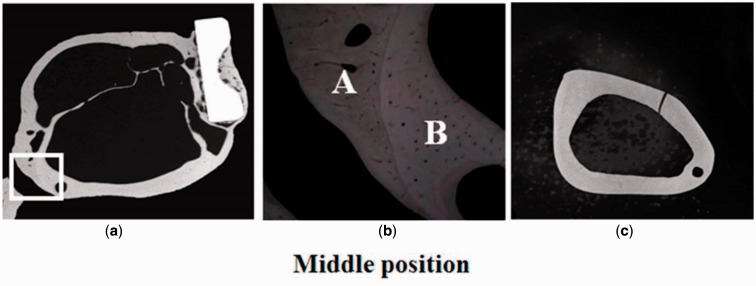
CMRs (Carbon-13 Nuclear Magnetic Resonance) of cross sections of fracture models implanted with and without bone plates made of TNTZ at middle position at 48 weeks after implantation: (a) cross section of fracture model, (b) enlarged view of the selected area in (a), namely high-magnification CMR of branched parts of bones formed outer and inner sides of tibiae, and (c) cross sections of unimplanted tibiae.
Figure 7.
Figure 7.
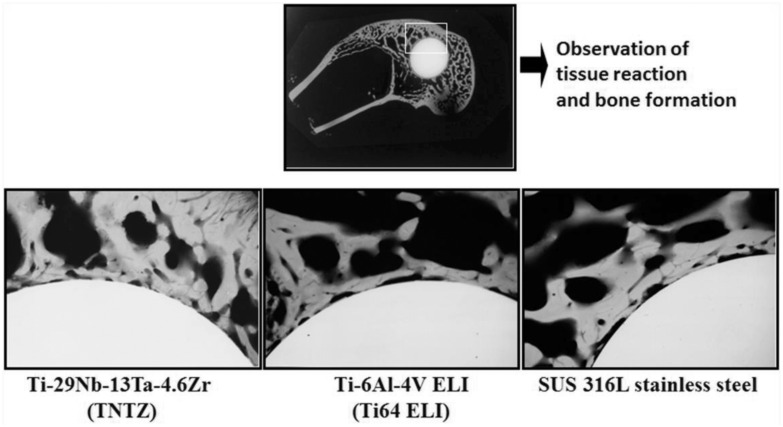
CMR. Photograph of boundary of each specimen and bone at 8 weeks after implantation.
Figure 8.
Figure 8.
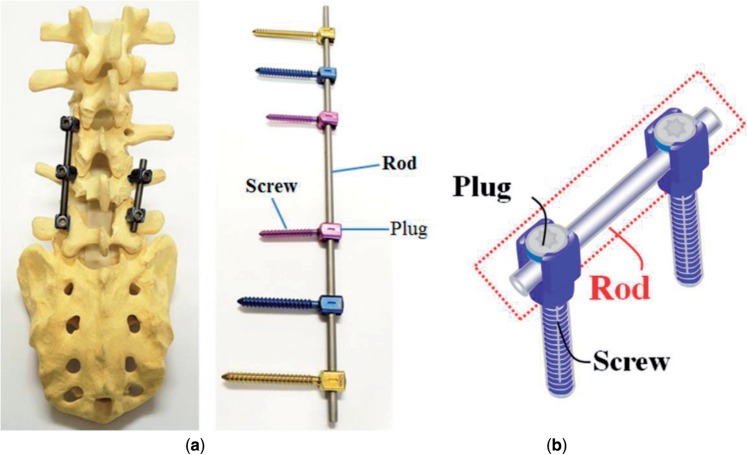
(a) Images and (b) schematic drawing of spinal fixation system consisting of rods, screws and plugs.
Figure 9.
Figure 9.
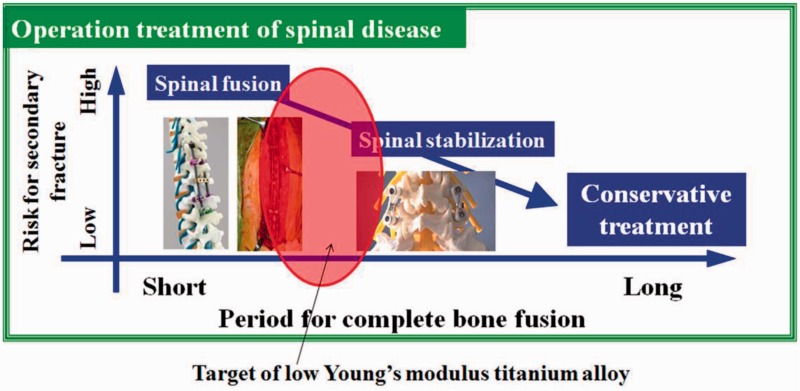
Schematic drawing of risk for secondary fracture and period for complete bone fusion in operation treatment of spinal disease.
Figure 10.
Figure 10.
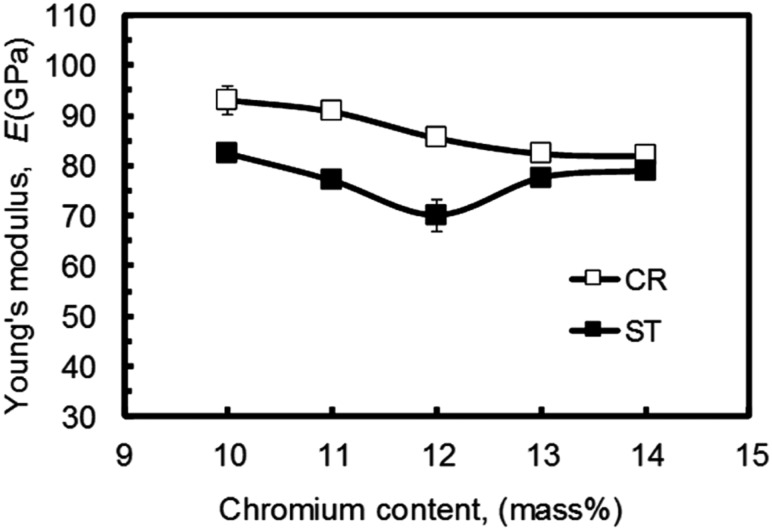
Young’s modulus of Ti–(10-14)Cr alloys subjected to solution treatment and cold rolling.
Figure 11.
Figure 11.
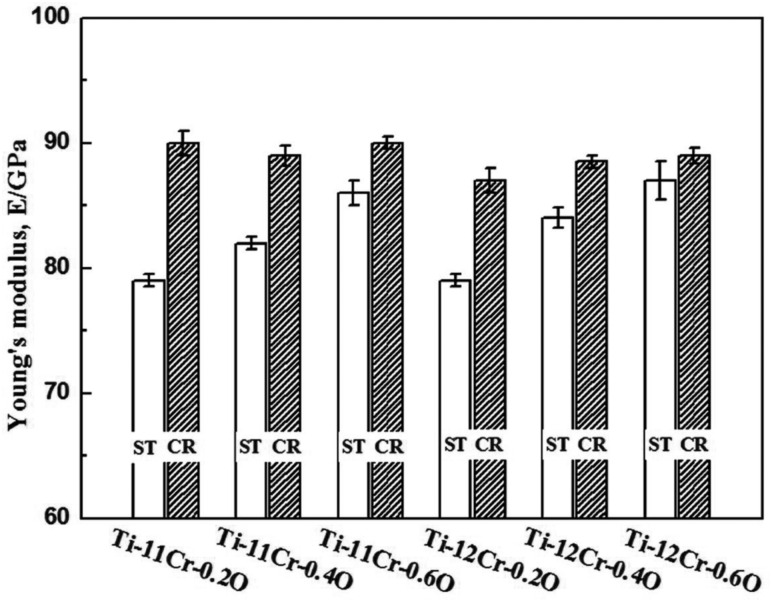
Young’s moduli of Ti-(11,12) Cr-(0.2,0.6) O alloys subjected to solution treatment (ST) and 10% reduction cold rolling (CR).
Figure 12.
Figure 12.
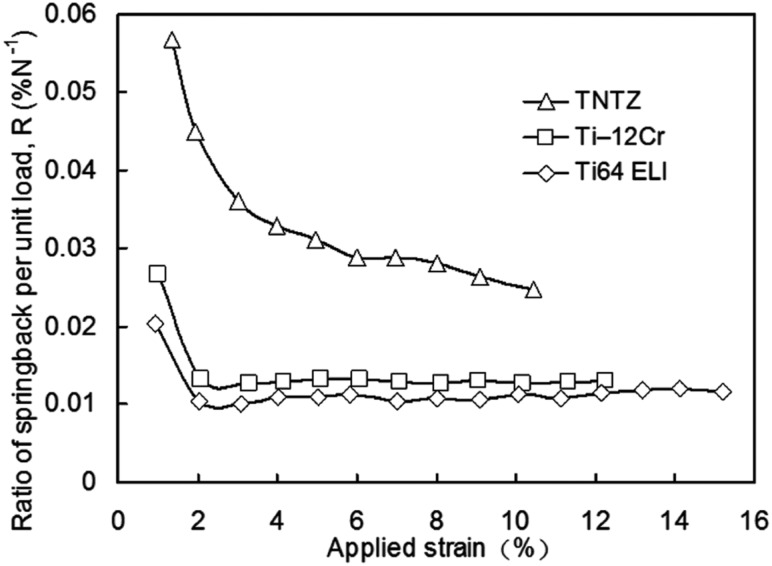
Ratio of springback per unit load as a function of applied strain for Ti–12Cr, Ti64 ELI, and TNTZ, and strains for calculation of the springback ratio.
Figure 13.
Figure 13.
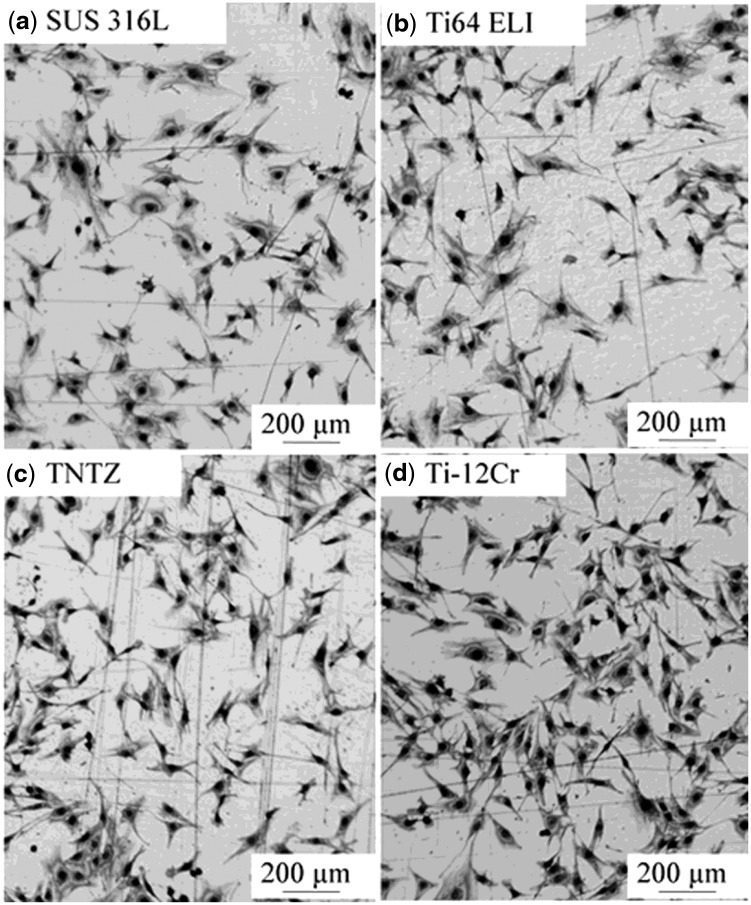
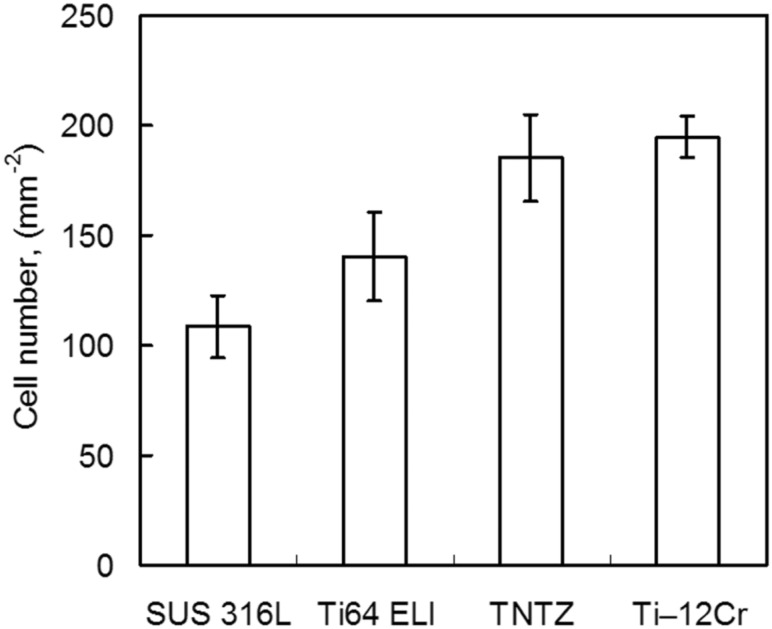
Optical images of MC3T3-E1 cells cultured in Ti–12Cr alloy and the alloys considered for comparison for 24 h.
Figure 14.
Figure 14.
Density (cell number) of MC3T3-E1 cells cultured in Ti–12Cr alloy and the alloys considered for comparison for 24 h.
Figure 15.
Figure 15.
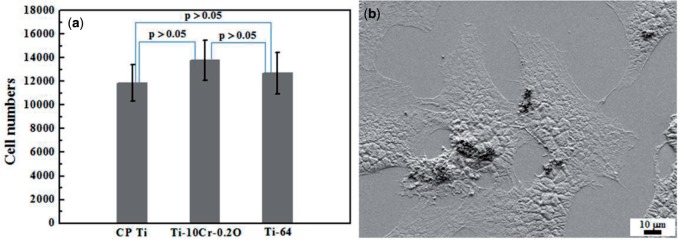
Cytocompatibility of the alloys. (a) Cell numbers after culturing for 7 days on CP ti, Ti–10Cr–0.2O, and Ti64 ELI (Ti-64) and (b) SEM image of cells cultured on Ti–10Cr–0.2O.
Figure 16.
Figure 16.
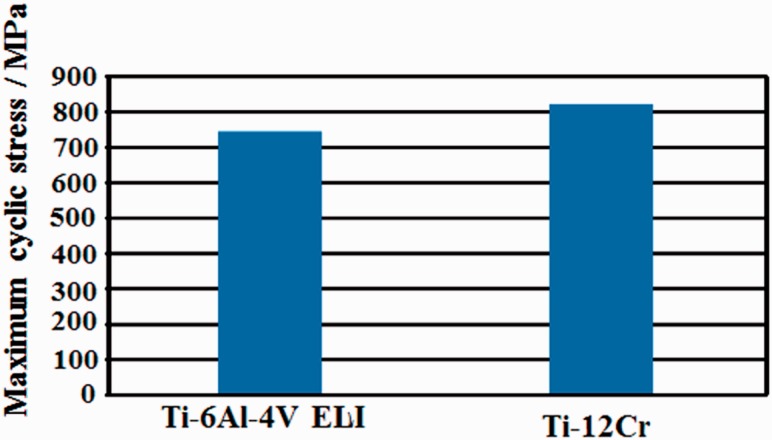
Fatigue limit of Ti–12Cr and Ti–6Al–4V ELI.
Figure 17.
Figure 17.
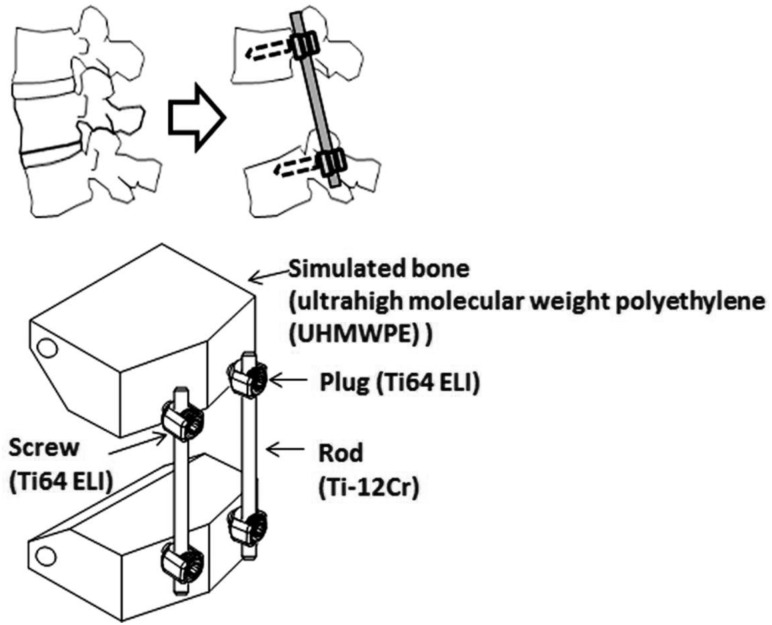
Schematic drawing of compressive fatigue strength test method according to ASTM F1717.
Figure 18.
Figure 18.
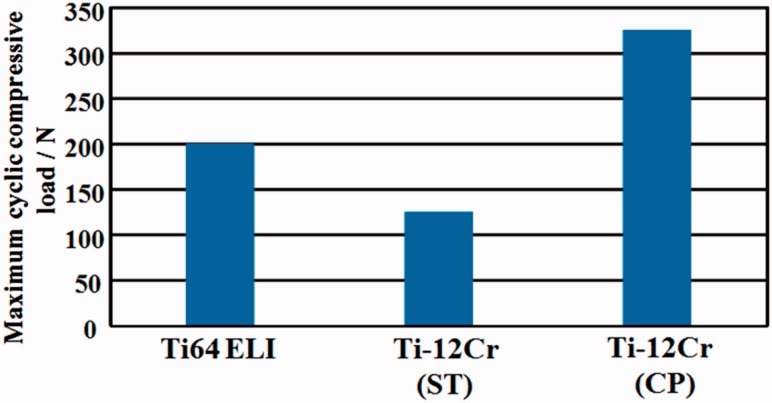
Compressive fatigue limit of Ti–6Al–4V ELI (Ti64 ELI), and Ti–12Cr subjected to ST and cavitation peening after solution treatment (CP) evaluated according to ASTM F 1717.
Figure 19.
Figure 19.
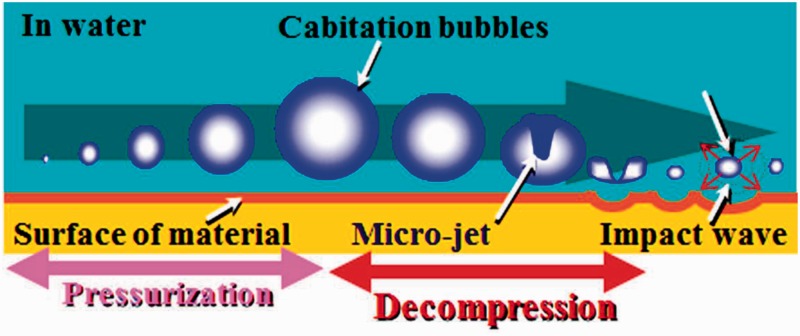
Schematic drawings of development and crashing of cavitation.
Figure 20.
Figure 20.
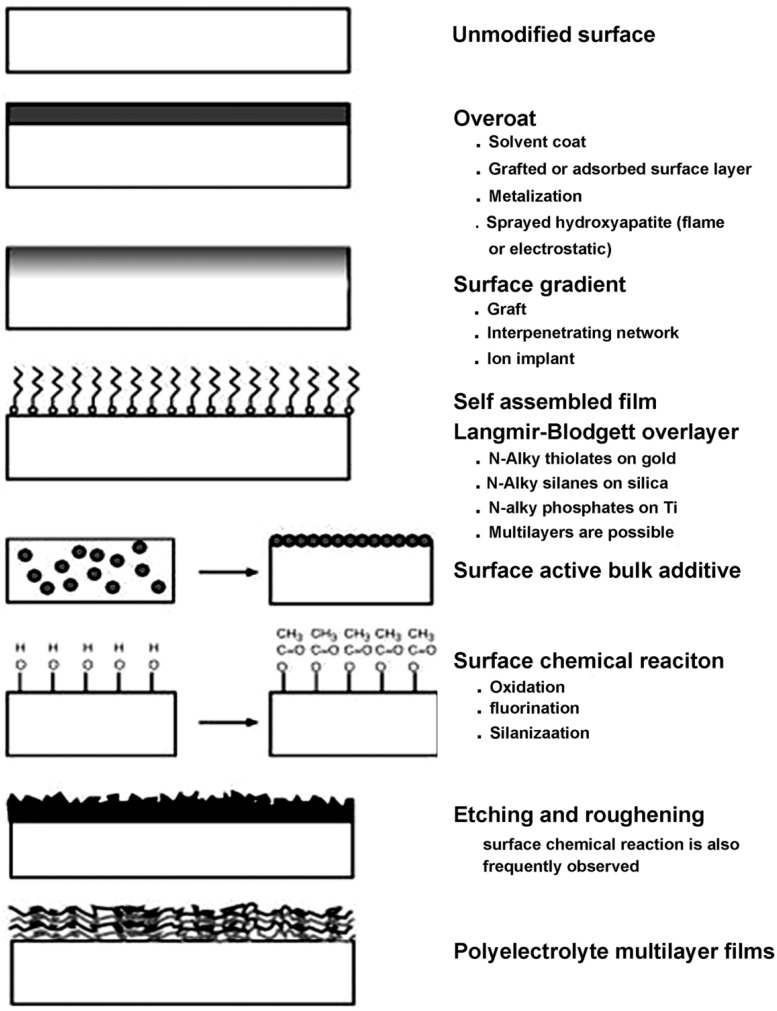
Schematic representation of the surface modification approaches.

References

    1. Niinomi M. Recent research and development in titanium alloys for biomedical applications and healthcare goods. Sci. Technol. Adv. Mater. 2003;4:445–54.
    1. Pilliar RM. Modern metal processing for improved load-bearing surgical implants. Biomaterials 1991;12:95–100. - PubMed
    1. Niinomi M. Recent metallic materials for biomedical applications. Metall Mater Trans A 2002;33:477–86.
    1. Rho JY, Tsui TY, Pharr GM. Elastic properties of human cortical and trabecular lamellar bone measured by nano-indentation. Biomaterials 1997;18:1325–30. - PubMed
    1. Kuroda D, Niinomi M, Morinaga M, et al. Design and mechanical properties of new type titanium alloys for implant materials. Mater Sci Eng A 1998;243:243. p 244-249.