


Antenatal depression, treatment with selective serotonin reuptake inhibitors, and neonatal brain structure: A propensity-matched cohort study
- PMID: 27254086
- PMCID: PMC4930375
- DOI: 10.1016/j.pscychresns.2016.05.004
Antenatal depression, treatment with selective serotonin reuptake inhibitors, and neonatal brain structure: A propensity-matched cohort study
Abstract
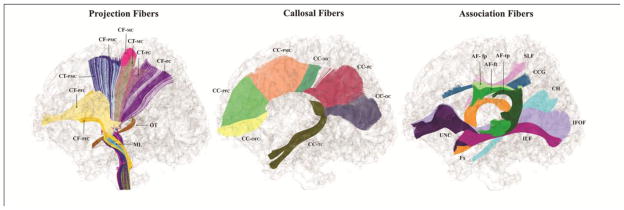
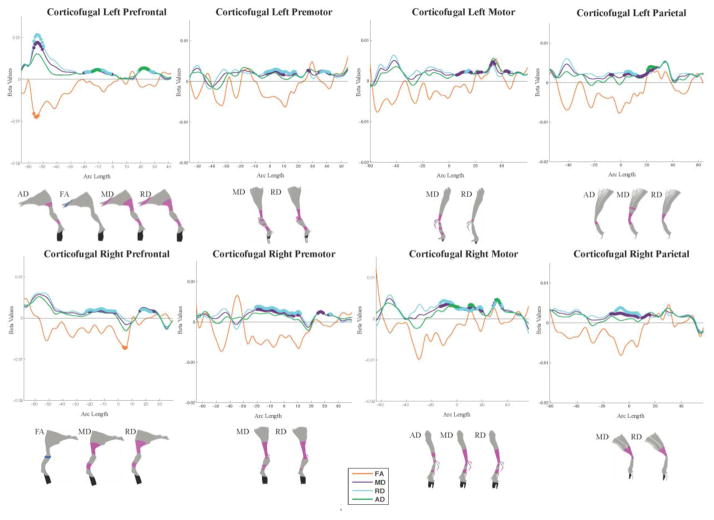
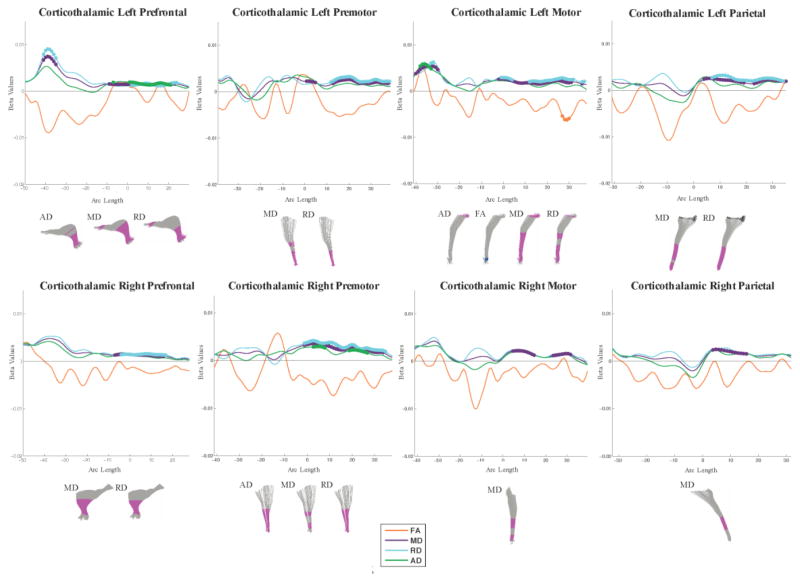
The aim of this propensity-matched cohort study was to evaluate the impact of prenatal SSRI exposure and a history of maternal depression on neonatal brain volumes and white matter microstructure. SSRI-exposed neonates (n=27) were matched to children of mothers with no history of depression or SSRI use (n=54). Additionally, neonates of mothers with a history of depression, but no prenatal SSRI exposure (n=41), were matched to children of mothers with no history of depression or SSRI use (n=82). Structural magnetic resonance imaging and diffusion weighted imaging scans were acquired with a 3T Siemens Allegra scanner. Global tissue volumes were characterized using an automatic, atlas-moderated expectation maximization segmentation tool. Local differences in gray matter volumes were examined using deformation-based morphometry. Quantitative tractography was performed using an adaptation of the UNC-Utah NA-MIC DTI framework. SSRI-exposed neonates exhibited widespread changes in white matter microstructure compared to matched controls. Children exposed to a history of maternal depression but no SSRIs showed no significant differences in brain development compared to matched controls. No significant differences were found in global or regional tissue volumes. Additional research is needed to clarify whether SSRIs directly alter white matter development or whether this relationship is mediated by depressive symptoms during pregnancy.
Keywords: Antidepressant; Depression; Diffusion tensor imaging; Fetal development; Infant, Newborn; Magnetic resonance imaging.
Copyright © 2016 Elsevier Ireland Ltd. All rights reserved.
Figures
References
-
- Boukhris T, Sheehy O, Mottron L, Berard A. Antidepressant Use During Pregnancy and the Risk of Autism Spectrum Disorder in Children. JAMA pediatrics. 2016;170:117–124. - PubMed
-
- Casper RC, Fleisher BE, Lee-Ancajas JC, Gilles A, Gaylor E, DeBattista A, Hoyme HE. Follow-up of children of depressed mothers exposed or not exposed to antidepressant drugs during pregnancy. The Journal of pediatrics. 2003;142:402–408. - PubMed
-
- Casper RC, Gilles AA, Fleisher BE, Baran J, Enns G, Lazzeroni LC. Length of prenatal exposure to selective serotonin reuptake inhibitor (SSRI) antidepressants: effects on neonatal adaptation and psychomotor development. Psychopharmacology. 2011;217:211–219. - PubMed
-
- Cooper WO, Willy ME, Pont SJ, Ray WA. Increasing use of antidepressants in pregnancy. American journal of obstetrics and gynecology. 2007;196:544, e541–545. - PubMed
Publication types
MeSH terms
Substances
Grants and funding
- UL1 TR001111/TR/NCATS NIH HHS/United States
- U54 EB005149/EB/NIBIB NIH HHS/United States
- K01 MH083045/MH/NIMH NIH HHS/United States
- R01 MH086633/MH/NIMH NIH HHS/United States
- P50 MH064065/MH/NIMH NIH HHS/United States
- U54 HD079124/HD/NICHD NIH HHS/United States
- P30 HD003110/HD/NICHD NIH HHS/United States
- R01 MH070890/MH/NIMH NIH HHS/United States
- T32 NS007431/NS/NINDS NIH HHS/United States
- U01 MH070890/MH/NIMH NIH HHS/United States
- T32 GM008719/GM/NIGMS NIH HHS/United States
- K23 MH085165/MH/NIMH NIH HHS/United States
- R01 MH092335/MH/NIMH NIH HHS/United States
LinkOut - more resources
Full Text Sources
Other Literature Sources
Medical
