


Buspirone reduces sexual risk-taking intent but not cocaine self-administration
- PMID: 27254258
- PMCID: PMC4896094
- DOI: 10.1037/pha0000076
Buspirone reduces sexual risk-taking intent but not cocaine self-administration
Abstract
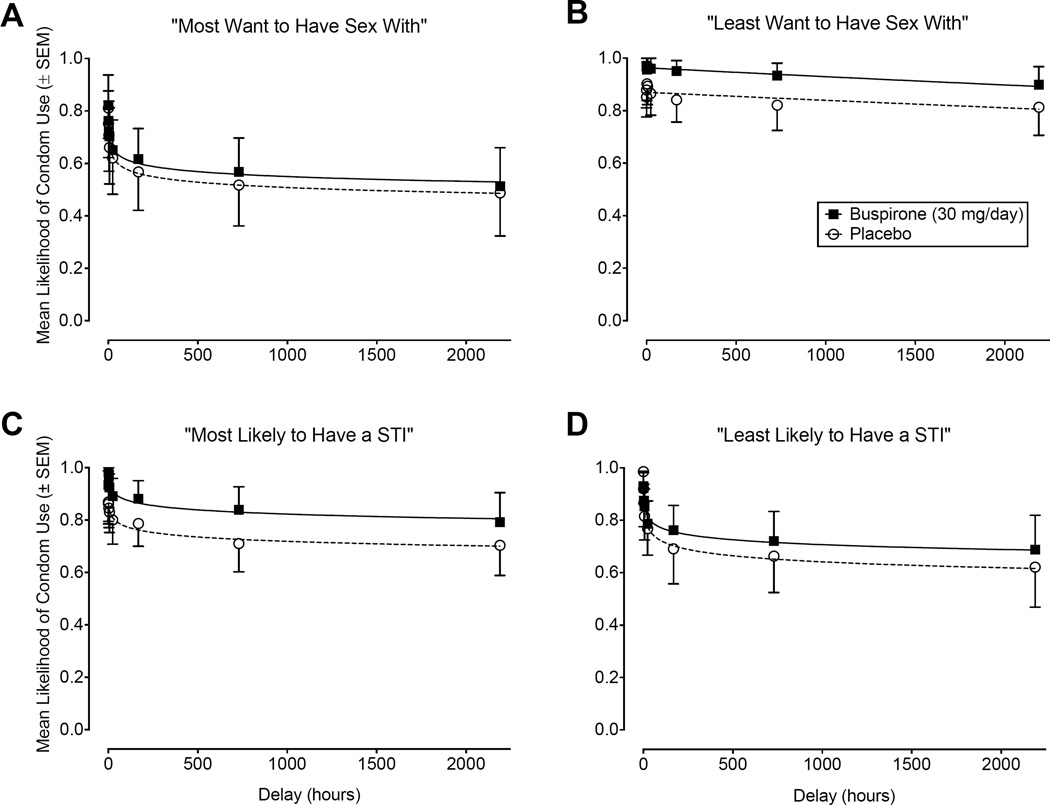
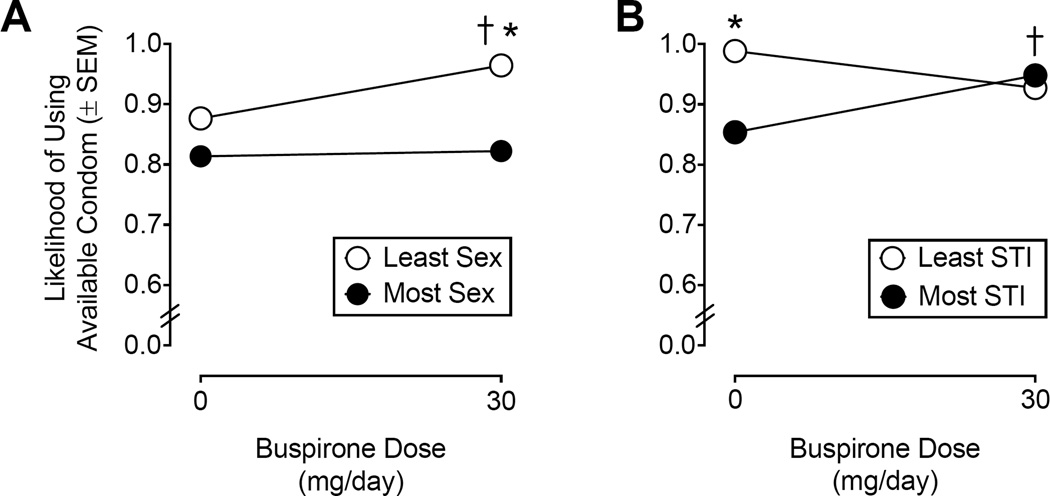
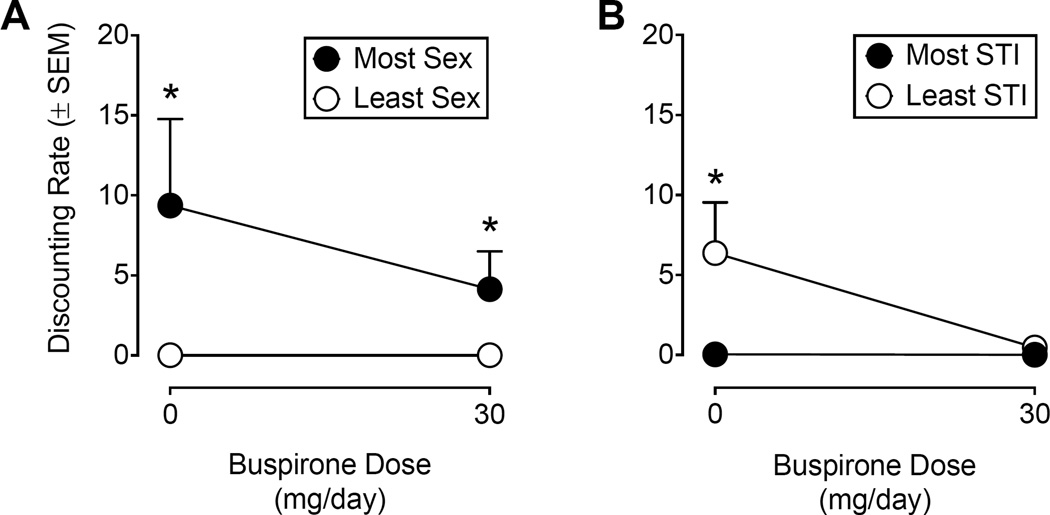
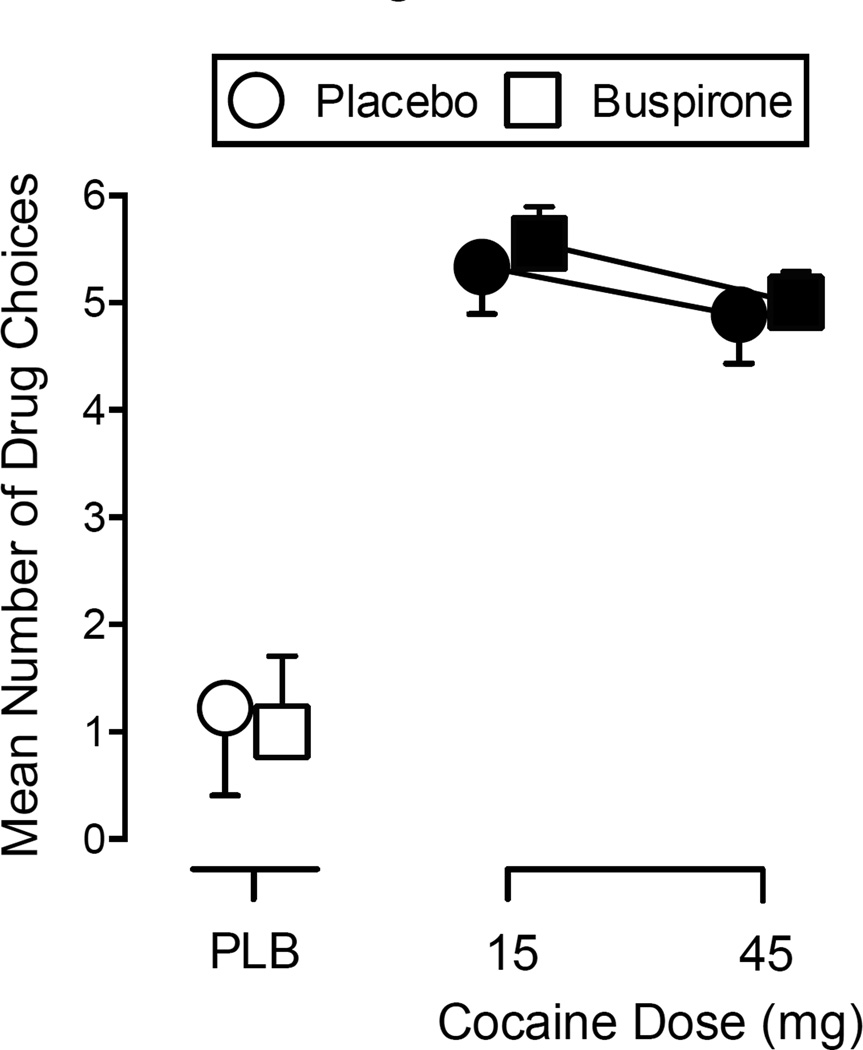
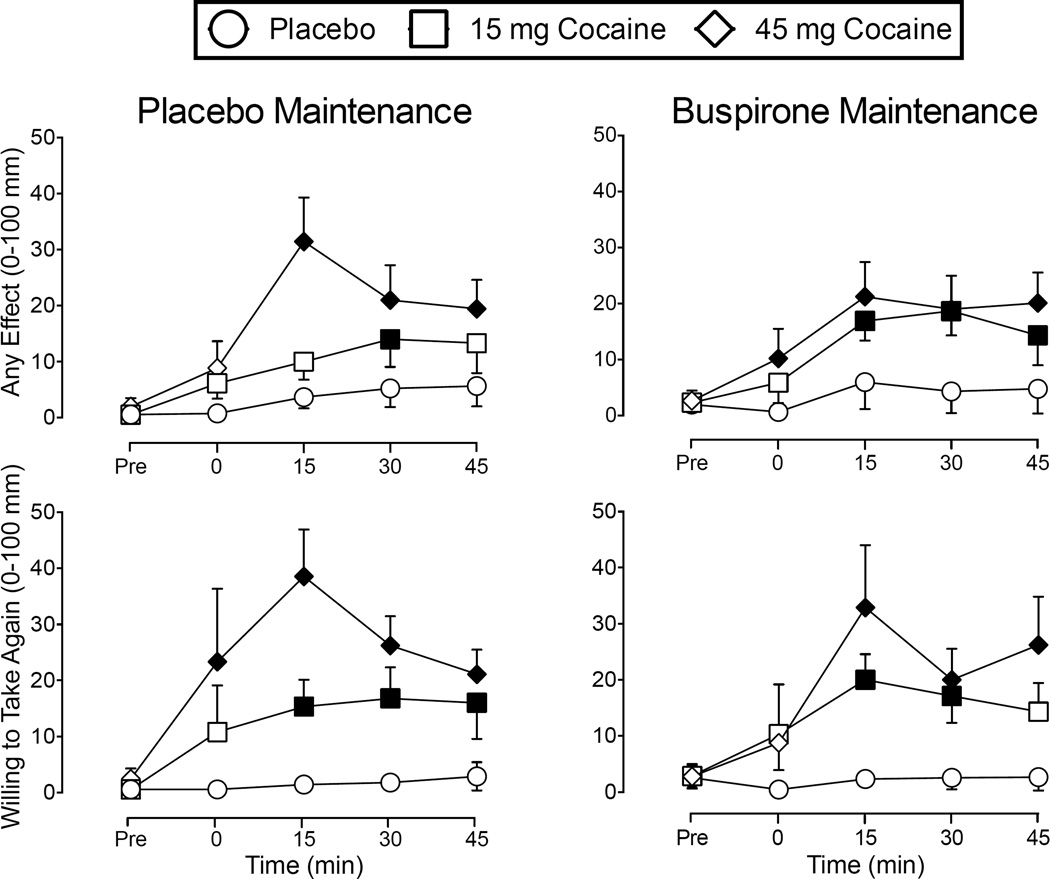
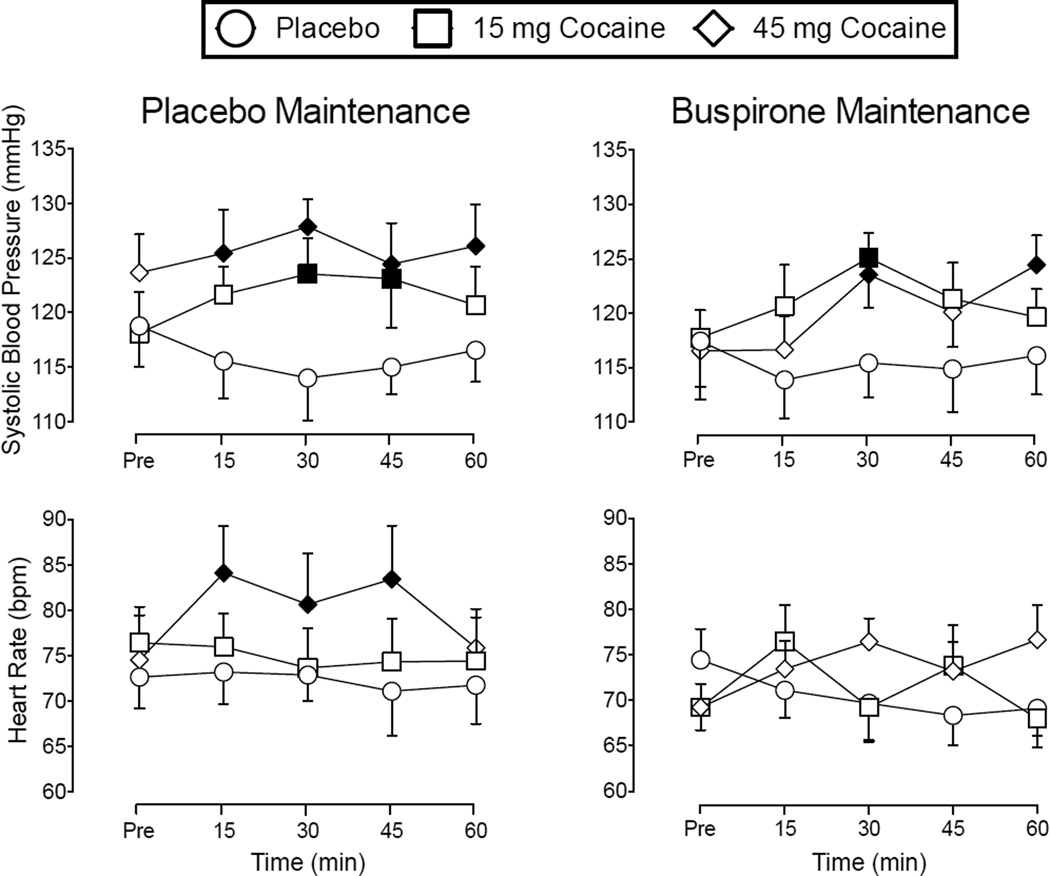
Impulsive sexual decision-making may underlie sexual risk-taking behavior that contributes to the disproportionately high prevalence of HIV infection among cocaine users. Delay-discounting procedures measure impulsive decision-making and may provide insight into the underlying mechanisms of sexual risk-taking behavior. The anxiolytic drug buspirone reduces delay discounting in rats and blunts the reinforcing effects of cocaine in some preclinical studies suggesting that it might have utility in the treatment of cocaine-use disorders. This study determined whether buspirone mitigates impulsive risky sexual decision-making in cocaine users on a sexual delay-discounting procedure. The effects of buspirone maintenance on the abuse-related and physiological effects of cocaine were also tested. Nine (N = 9) current cocaine users completed a repeated-measures, inpatient protocol in which sexual delay discounting was assessed after 3 days of maintenance on placebo and buspirone (30 mg/day) in counterbalanced order. The reinforcing, subject-rated, and physiological effects of placebo and intranasal cocaine (15 and 45 mg) were also assessed during buspirone and placebo maintenance. Buspirone increased the likelihood of condom use for hypothetical sexual partners that were categorized as most likely to have a sexually transmitted infection and least sexually desirable. Cocaine functioned as a reinforcer and increased positive subjective effects ratings, but buspirone maintenance did not impact these effects of cocaine. Buspirone was also safe and tolerable when combined with cocaine and may have blunted some its cardiovascular effects. The results from the sexual delay-discounting procedure indicate that buspirone may reduce preference for riskier sex in cocaine users. (PsycINFO Database Record
(c) 2016 APA, all rights reserved).
Conflict of interest statement
The authors have no real or potential conflicts of interest to disclose that are relevant to this research.
Figures
References
-
- Achat-Mendes C, Grundt P, Cao J, Platt DM, Newman AH, Spealman RD. Dopamine D3 and D2 receptor mechanisms in the abuse-related behavioral effects of cocaine: studies with preferential antagonists in squirrel monkeys. The Journal of Pharmacology and Experimental Therapeutics. 2010;334(2):556–565. - PMC - PubMed
-
- Akaike H. Likelihood of a model and information criteria. Journal of Econometrics. 1981;16:3–14.
-
- American Psychiatric Association. The Diagnostic and Statistical Manual of Mental Disorders 4th ed. Text Revision. Washington D.C.: American Psychiatric Association; 2000.
-
- Balster RL. Abuse potential of buspirone and related drugs. Journal of Clinical Psychopharmacology. 1990;10(3 Supplement):31S–37S. - PubMed
MeSH terms
Substances
Grants and funding
LinkOut - more resources
Full Text Sources
Other Literature Sources
