


The incidence rate and characteristics of clinically diagnosed defecatory disorders in the community
- PMID: 27254309
- PMCID: PMC5083162
- DOI: 10.1111/nmo.12868
The incidence rate and characteristics of clinically diagnosed defecatory disorders in the community
Abstract
Background: Defecatory disorders (DD) are defined by clinical and objective features of impaired rectal evacuation. The epidemiology of DD in the population is unknown, partly because many constipated patients do not undergo anorectal tests. Our objectives were to estimate the incidence rate and clinical features of DD in the community.
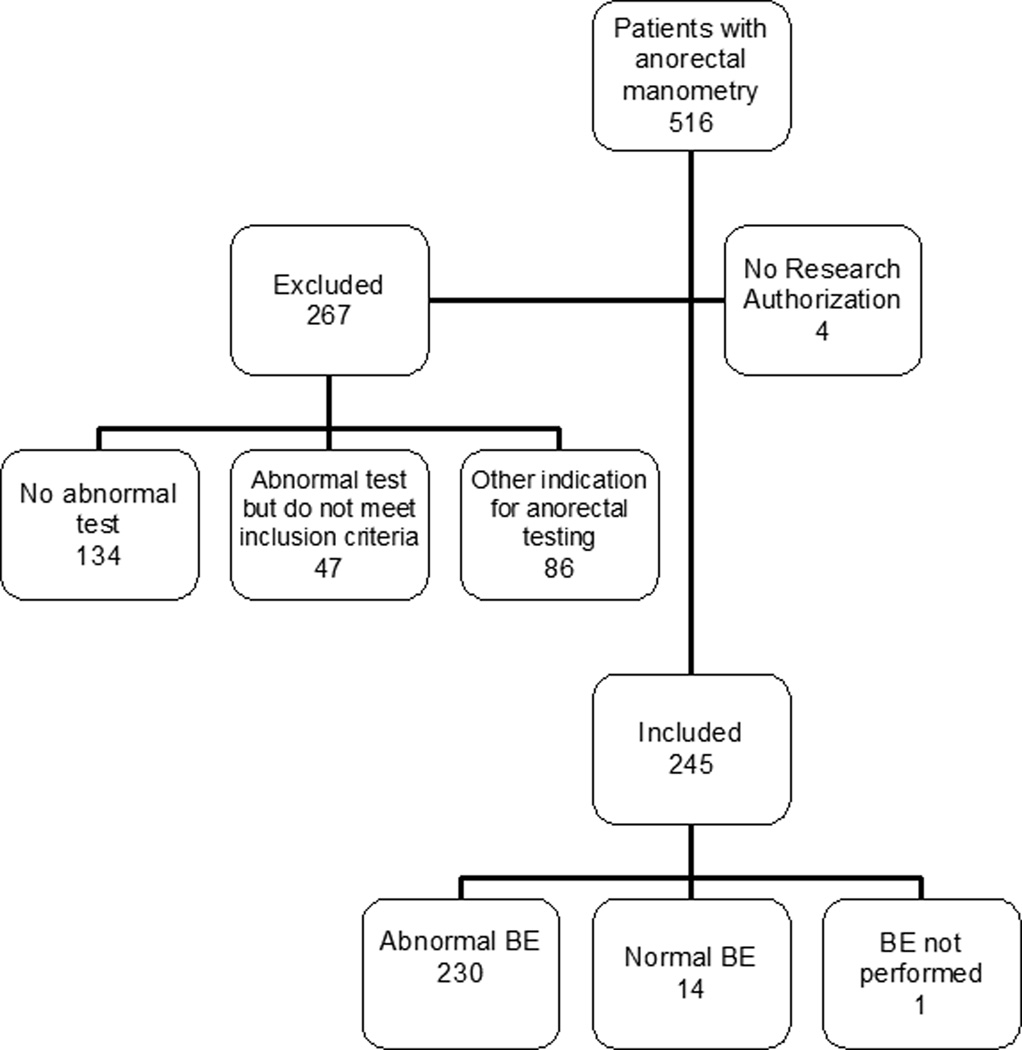
Methods: We reviewed the medical records of all patients older than 16 years in Olmsted County, MN, who had constipation and underwent anorectal manometry from 1999 through 2008. Criteria for diagnosing DD were constipation for 6 months or longer and one of the following: (i) abnormal rectal balloon expulsion test; (ii) reduced or increased perineal descent; or (iii) two or more abnormal features with defecography or surface electromyography.
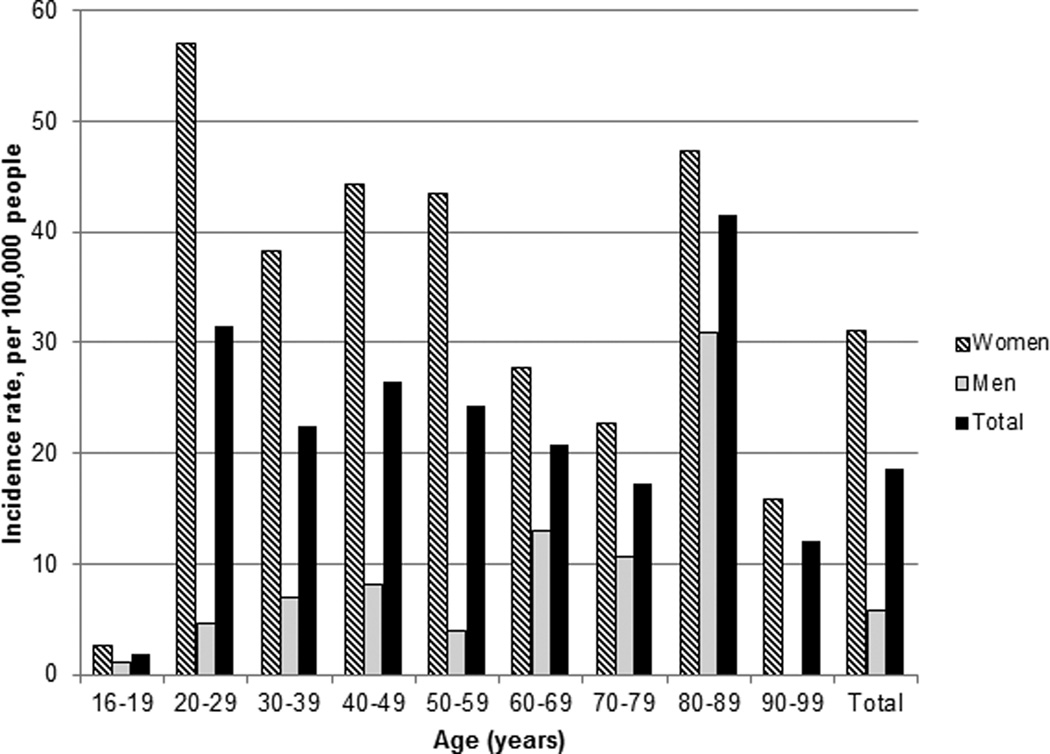
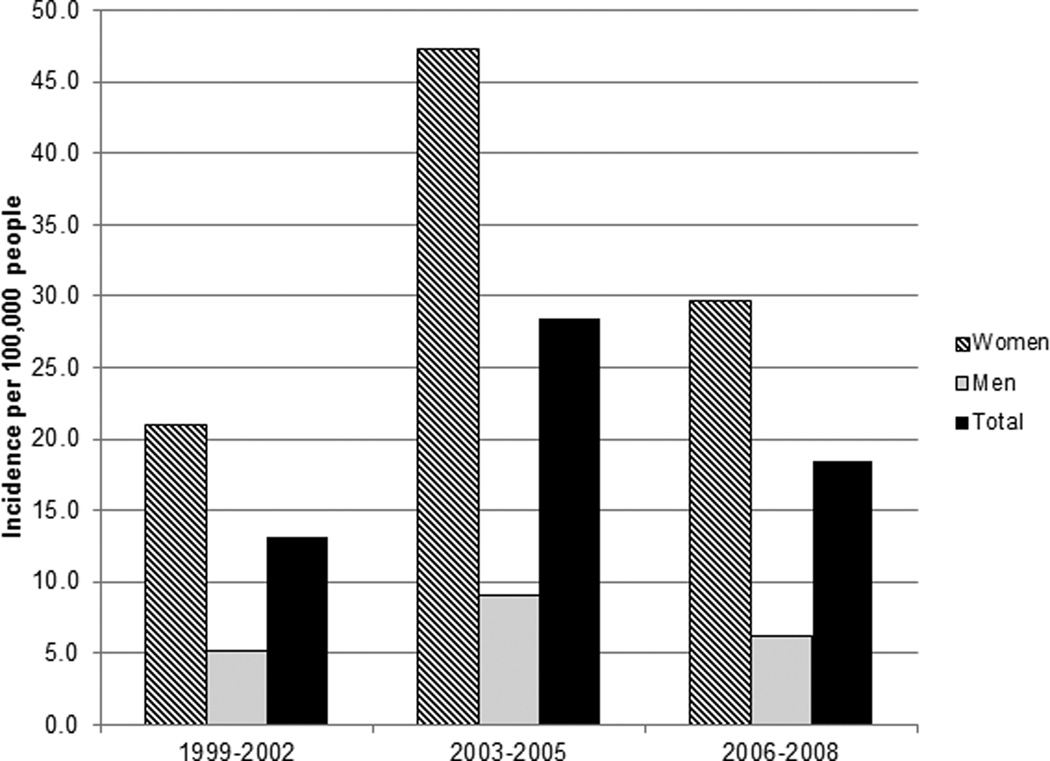
Key results: Of 11 112 constipated patients, 516 had undergone anorectal tests; 245 of these (209 women, 36 men) had a DD. The mean (±SD) age at diagnosis was 44 years (±18) among women and 49 years (±19) among men. The overall age- and sex-adjusted incidence rate per 100 000 person-years was 19.3 (95% CI: 16.8-21.8). The age-adjusted incidence per 100 000 person-years was greater (p < 0.0001) in women (31.8, 95% CI: 27.4-36.1) than in men (6.6, 95% CI: 4.4-8.9). Prior to the diagnosis of DD, nearly 30% of patients had irritable bowel syndrome (IBS), 48% had a psychiatric diagnosis, 18% had a history of abuse, and 21% reported urinary and/or fecal incontinence.
Conclusions & inferences: Among constipated patients, DD are fourfold more common in women than men and often associated with IBS and psychiatric diagnoses.
Keywords: constipation; defecation; defecography; incidence.
© 2016 John Wiley & Sons Ltd.
Figures
References
-
- Surrenti E, Rath DM, Pemberton JH, Camilleri M. Audit of constipation in a tertiary referral gastroenterology practice. Am J Gastroenterol. 1995;90:1471–1475. - PubMed
-
- Bharucha AE, Wald A, Enck P, Rao S. Functional anorectal disorders. Gastroenterology. 2006;130:1510–1518. - PubMed
-
- Iantorno G, Cinquetti M, Mazzocchi A, Morelli A, Bassotti G. Audit of constipation in a gastroenterology referral center. Dig Dis Sci. 2007;52:317–320. - PubMed
MeSH terms
Grants and funding
LinkOut - more resources
Full Text Sources
Other Literature Sources
