


Repression of the Antioxidant NRF2 Pathway in Premature Aging
- PMID: 27259148
- PMCID: PMC4893198
- DOI: 10.1016/j.cell.2016.05.017
Repression of the Antioxidant NRF2 Pathway in Premature Aging
Abstract
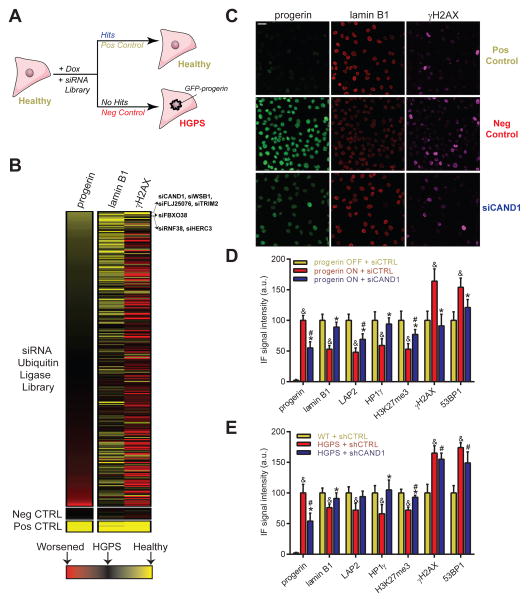
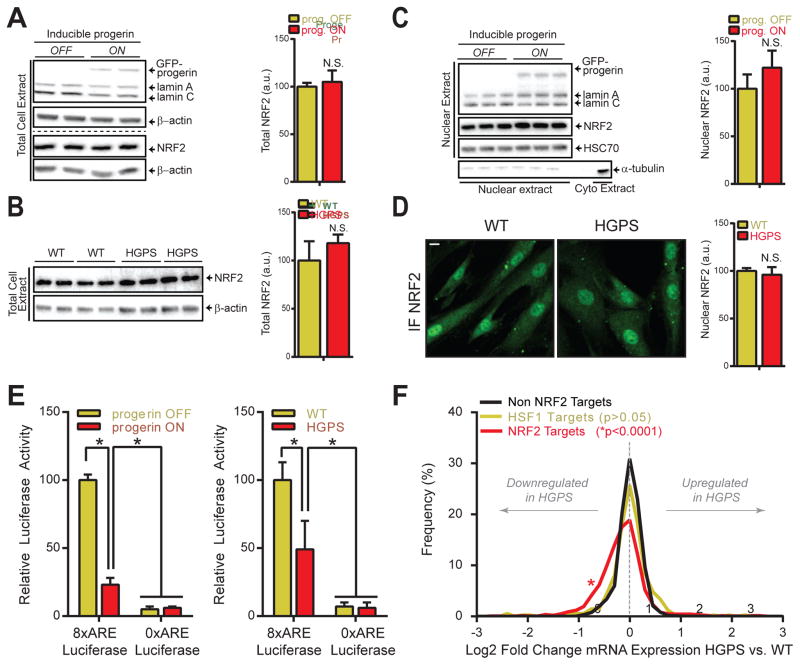
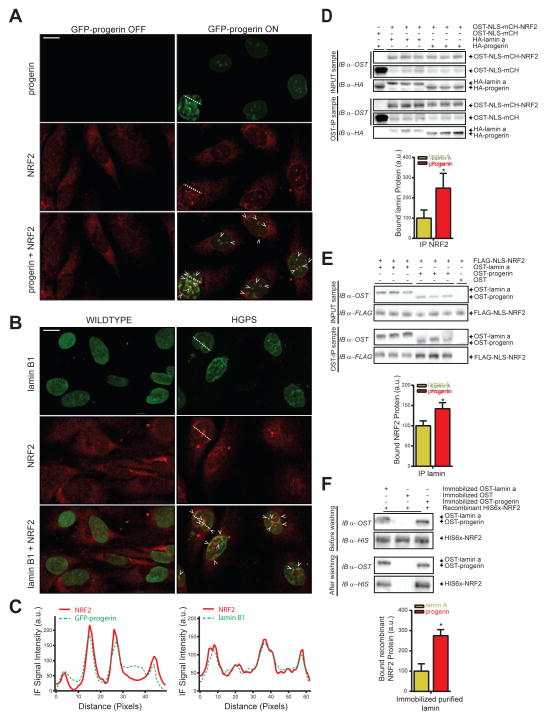
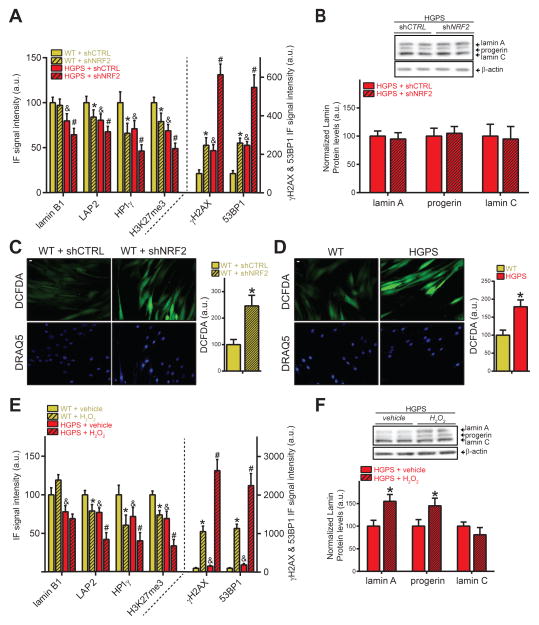
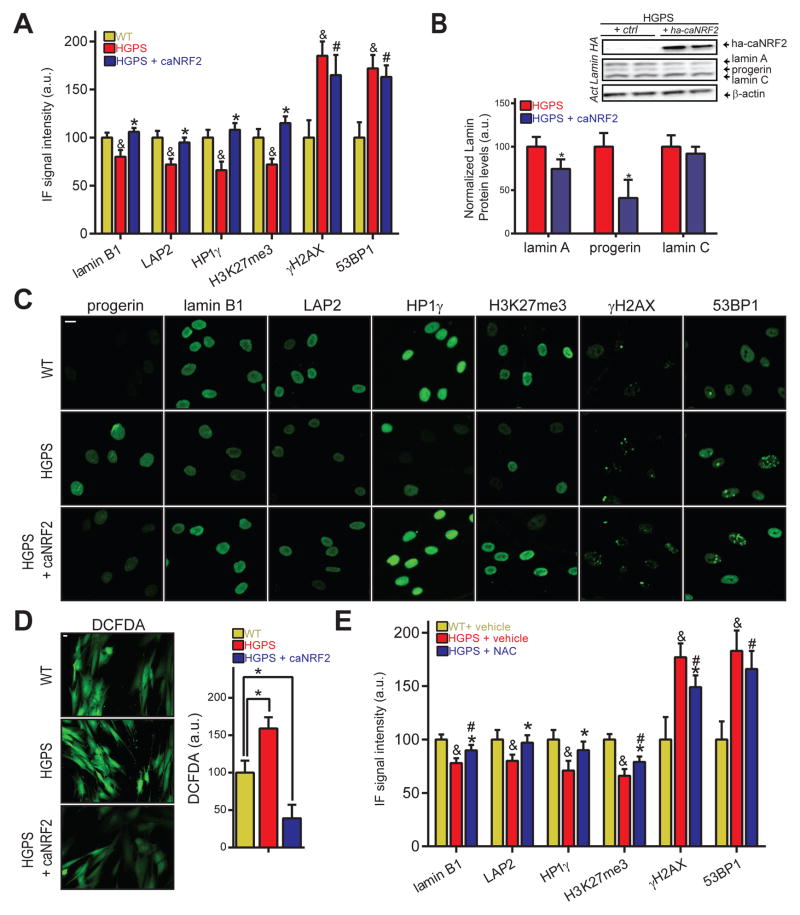
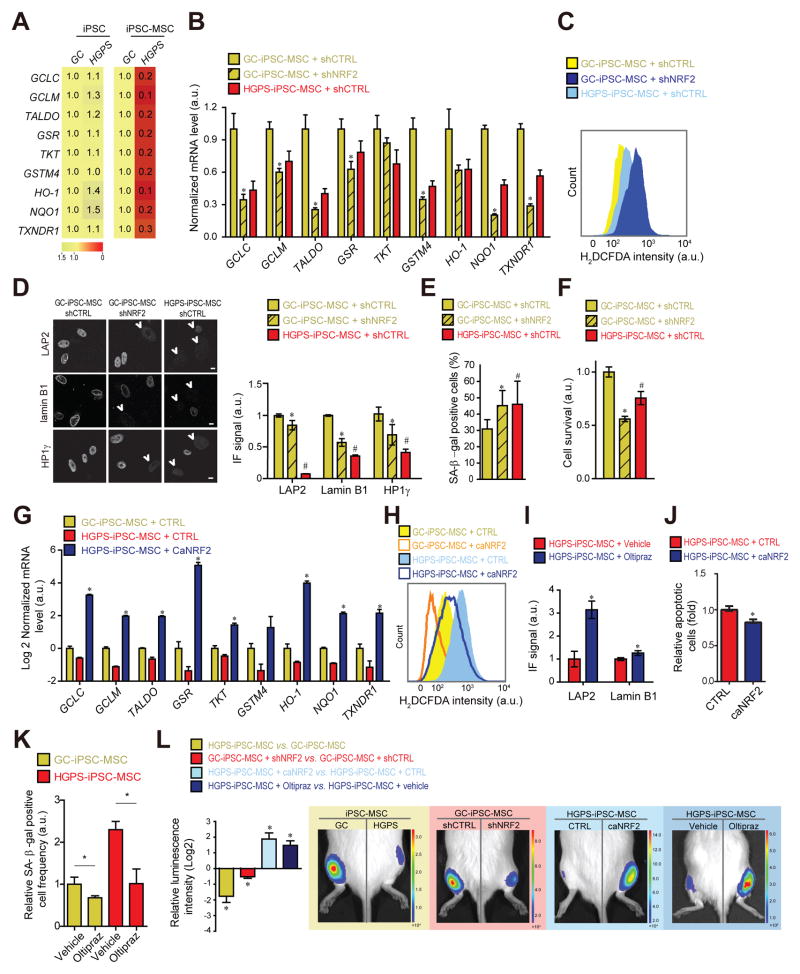
Hutchinson-Gilford progeria syndrome (HGPS) is a rare, invariably fatal premature aging disorder. The disease is caused by constitutive production of progerin, a mutant form of the nuclear architectural protein lamin A, leading, through unknown mechanisms, to diverse morphological, epigenetic, and genomic damage and to mesenchymal stem cell (MSC) attrition in vivo. Using a high-throughput siRNA screen, we identify the NRF2 antioxidant pathway as a driver mechanism in HGPS. Progerin sequesters NRF2 and thereby causes its subnuclear mislocalization, resulting in impaired NRF2 transcriptional activity and consequently increased chronic oxidative stress. Suppressed NRF2 activity or increased oxidative stress is sufficient to recapitulate HGPS aging defects, whereas reactivation of NRF2 activity in HGPS patient cells reverses progerin-associated nuclear aging defects and restores in vivo viability of MSCs in an animal model. These findings identify repression of the NRF2-mediated antioxidative response as a key contributor to the premature aging phenotype.
Keywords: HGPS; NRF2; aging; oxidative stress; progerin.
Published by Elsevier Inc.
Conflict of interest statement
The authors declare no conflicts of interest.
Figures
Comment in
-
Dangerous Entrapment for NRF2.Cell. 2016 Jun 2;165(6):1312-1313. doi: 10.1016/j.cell.2016.05.061. Cell. 2016. PMID: 27259142
References
-
- Andersen JS, Lyon CE, Fox AH, Leung AK, Lam YW, Steen H, Mann M, Lamond AI. Directed proteomic analysis of the human nucleolus. Current biology: CB. 2002;12:1–11. - PubMed
-
- Bloom DA, Jaiswal AK. Phosphorylation of Nrf2 at Ser40 by protein kinase C in response to antioxidants leads to the release of Nrf2 from INrf2, but is not required for Nrf2 stabilization/accumulation in the nucleus and transcriptional activation of antioxidant response element-mediated NAD(P)H:quinone oxidoreductase-1 gene expression. The Journal of biological chemistry. 2003;278:44675–44682. - PubMed
Publication types
MeSH terms
Substances
Grants and funding
LinkOut - more resources
Full Text Sources
Other Literature Sources
Medical
Molecular Biology Databases
