


Mutations in the Na(+)/citrate cotransporter NaCT (SLC13A5) in pediatric patients with epilepsy and developmental delay
- PMID: 27261973
- PMCID: PMC5023510
- DOI: 10.2119/molmed.2016.00077
Mutations in the Na(+)/citrate cotransporter NaCT (SLC13A5) in pediatric patients with epilepsy and developmental delay
Abstract
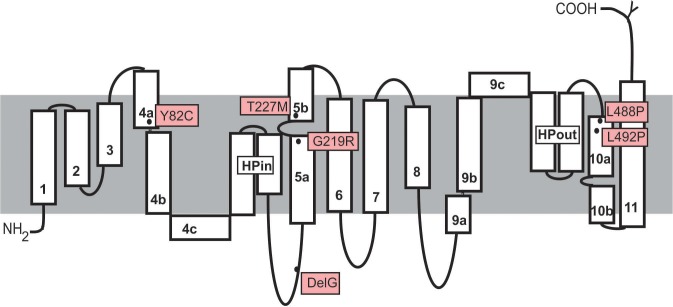
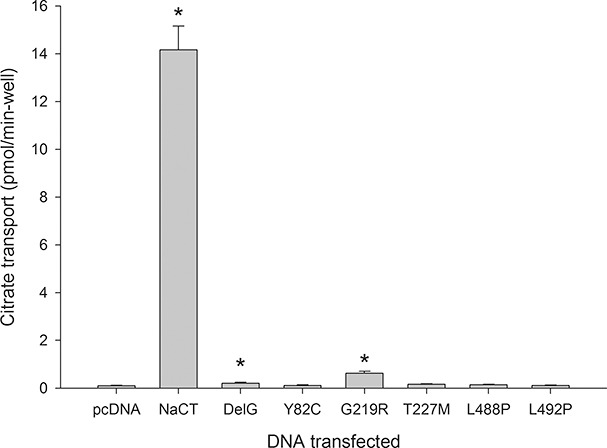
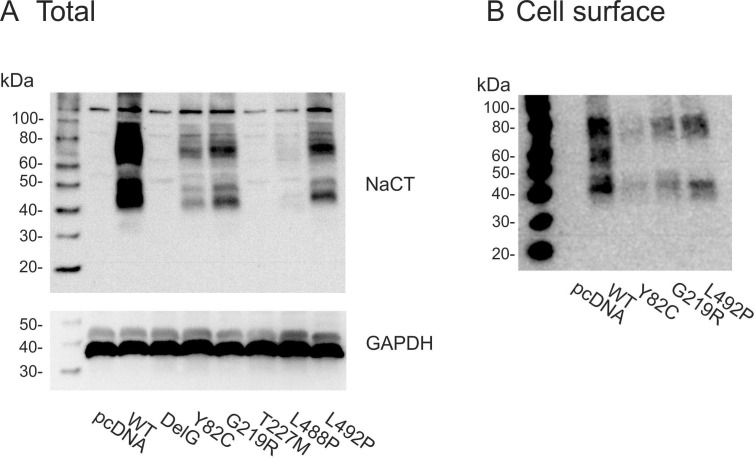
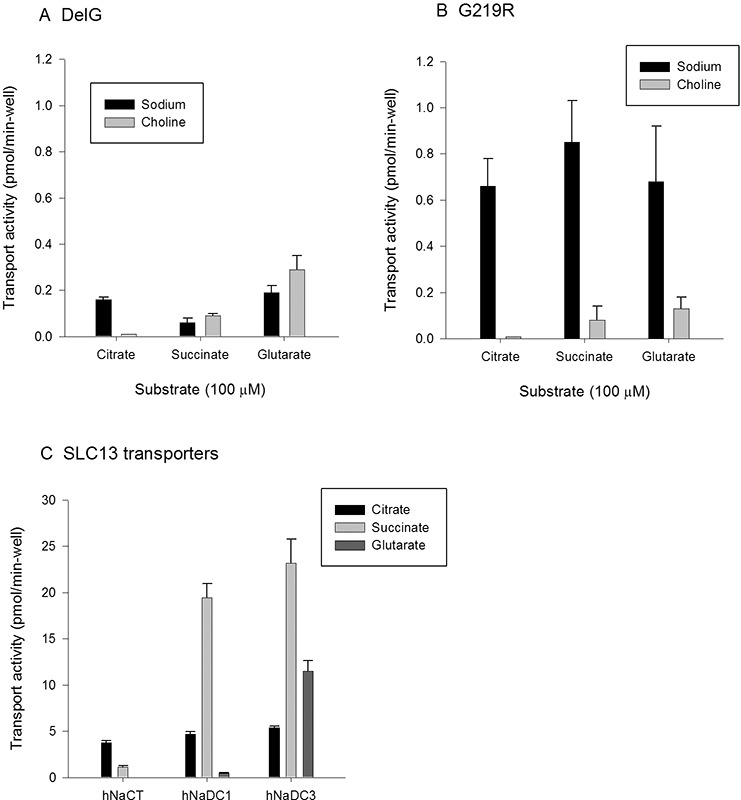
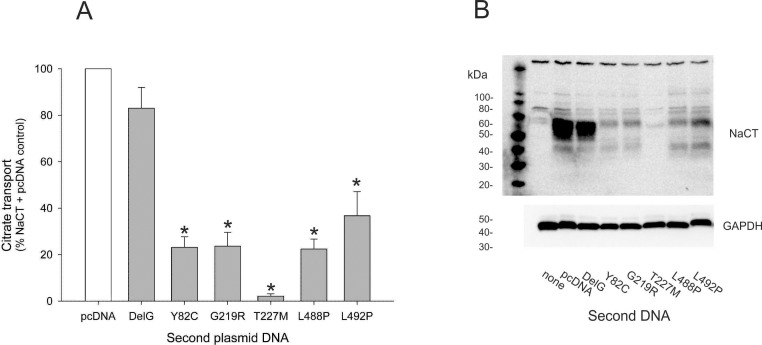
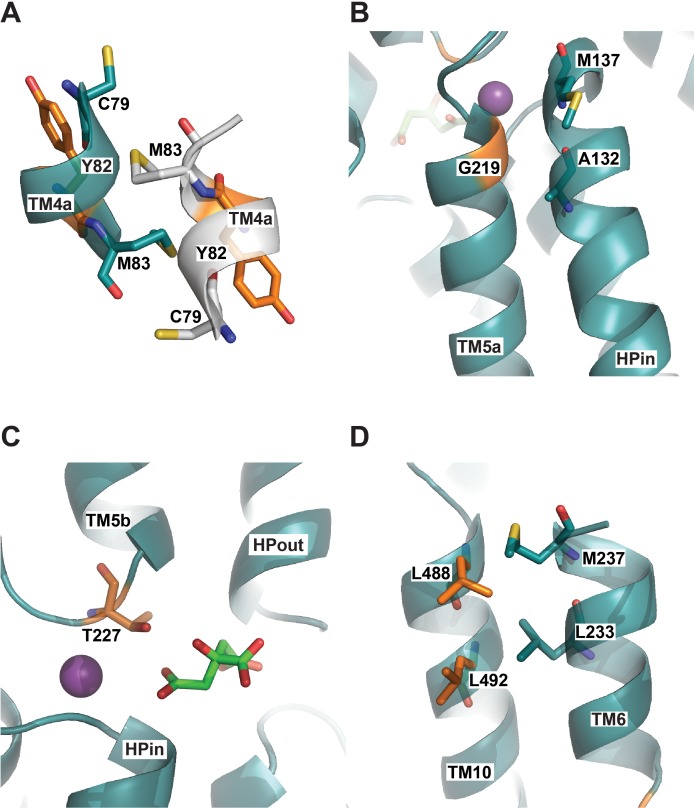
Mutations in the SLC13A5 gene that codes for the Na(+)/citrate cotransporter, NaCT, are associated with early onset epilepsy, developmental delay and tooth dysplasia in children. In the present study we identify additional SLC13A5 mutations in nine epilepsy patients from six families. To better characterize the syndrome, families with affected children answered questions about the scope of illness and treatment strategies. There are currently no effective treatments, but some anti-epileptic drugs targeting the GABA system reduce seizure frequency. Acetazolamide, a carbonic anhydrase inhibitor and atypical anti-seizure medication decreases seizures in 4 patients. In contrast to previous reports, the ketogenic diet and fasting produce worsening of symptoms. The effects of the mutations on NaCT transport function and protein expression were examined by transient transfections of COS-7 cells. There was no transport activity from any of the mutant transporters, although some of the mutant transporter proteins were present on the plasma membrane. The structural model of NaCT suggests that these mutations can affect helix packing or substrate binding. We tested various treatments, including chemical chaperones and low temperatures, but none improve transport function in the NaCT mutants. Interestingly, coexpression of NaCT and the mutants results in decreased protein expression and activity of the wild-type transporter, indicating functional interaction. In conclusion, our study has identified additional SLC13A5 mutations in patients with chronic epilepsy starting in the neonatal period, with the mutations producing inactive Na(+)/citrate transporters.
Keywords: citrate; epilepsy; sodium; tooth hypoplasia; transporter.
Conflict of interest statement
The authors declare that they have no competing interests as defined by Molecular Medicine, or other interests that might be perceived to influence the results and discussion reported in this paper.
Figures
References
-
- Gursoy S, Ercal D. Diagnostic approach to genetic causes of early-onset epileptic encephalopathy. J Child Neurol. 2016;31:523–32. - PubMed
-
- Hardies K, et al. Recessive mutations in SLC13A5 result in a loss of citrate transport and cause neonatal epilepsy, developmental delay and teeth hypoplasia. Brain. 2015;138:3238–50. - PubMed
-
- Zsurka G, Kunz WS. Mitochondrial dysfunction and seizures: The neuronal energy crisis. Lancet Neurol. 2015;14:956–66. - PubMed
-
- Inoue K, Zhuang L, Ganapathy V. Human Na+-coupled citrate transporter: Primary structure, genomic organization, and transport function. Biochem Biophys Res Commun. 2002;299:465–71. - PubMed
MeSH terms
Substances
Grants and funding
LinkOut - more resources
Full Text Sources
Other Literature Sources
Medical
