


A Systematic Review to Assess Sugar-Sweetened Beverage Interventions for Children and Adolescents across the Socioecological Model
- PMID: 27262383
- PMCID: PMC4967019
- DOI: 10.1016/j.jand.2016.04.015
A Systematic Review to Assess Sugar-Sweetened Beverage Interventions for Children and Adolescents across the Socioecological Model
Abstract
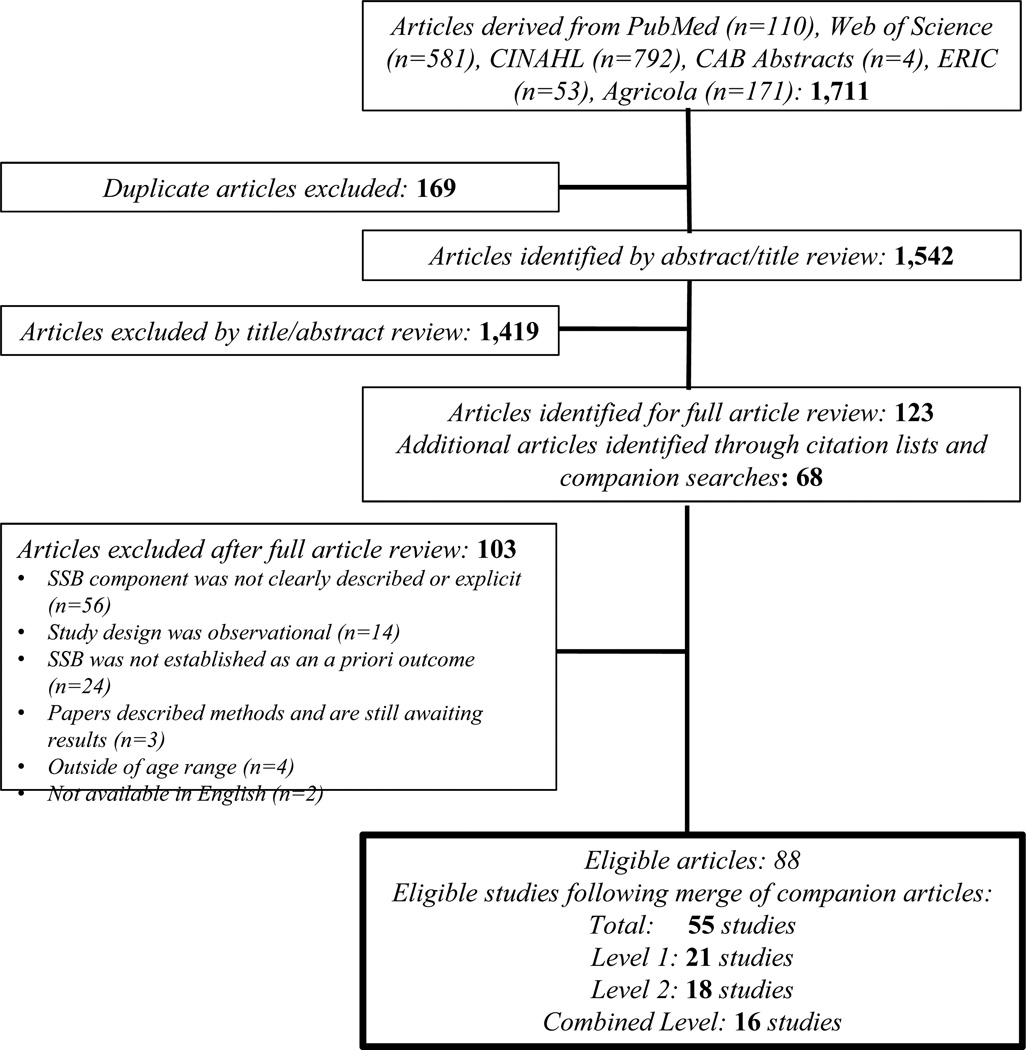
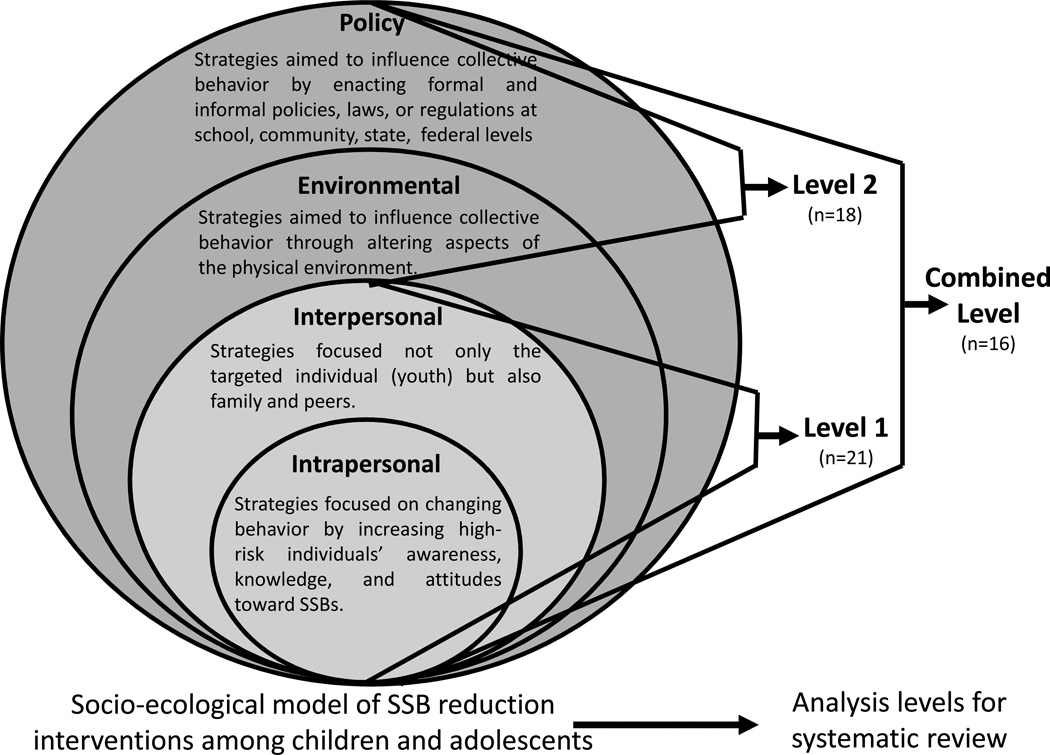
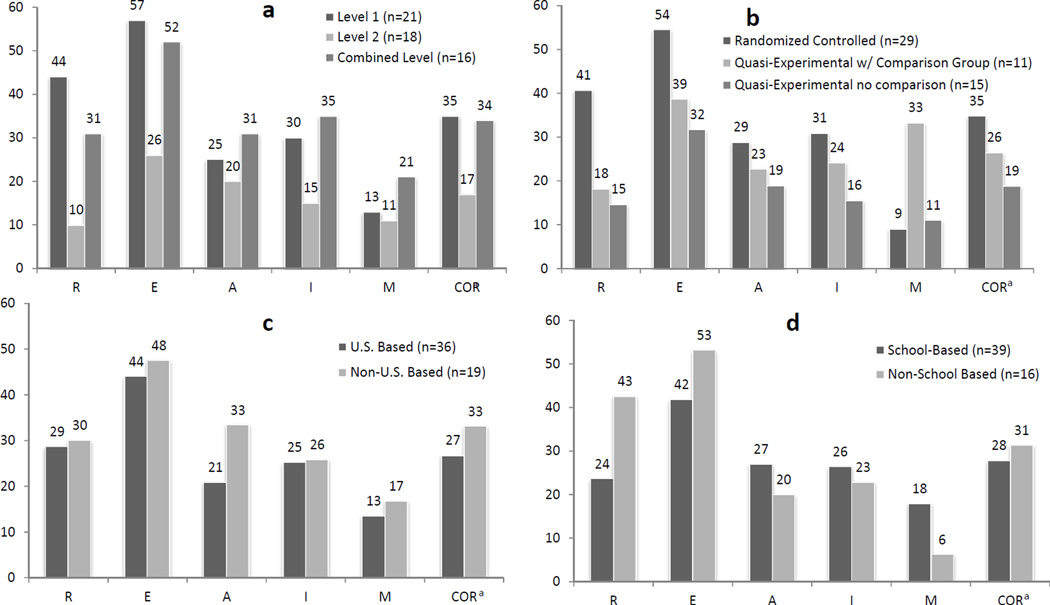
Sugar-sweetened beverage (SSB) consumption among children and adolescents is a determinant of childhood obesity. Many programs to reduce consumption across the socioecological model report significant positive results; however, the generalizability of the results, including whether reporting differences exist among socioecological strategy levels, is unknown. This systematic review aimed to examine the extent to which studies reported internal and external validity indicators defined by the reach, effectiveness, adoption, implementation, and maintenance (RE-AIM) model and assess reporting differences by socioecological level: Intrapersonal/interpersonal (Level 1), environmental/policy (Level 2), and multilevel (Combined Level). A systematic literature review was conducted in six major databases (PubMed, Web of Science, Cinahl, CAB Abstracts, Education Research Information Center, and Arcola) to identify studies from 2004-2015 meeting inclusion criteria (children aged 3 to 12 years, adolescents aged 13 to 17 years, and young adults aged 18 years, experimental or quasiexperimental, and substantial SSB component). Interventions were categorized by socioecological level, and data were extracted using a validated RE-AIM protocol. One-way analysis of variance assessed differences between levels. There were 55 eligible studies accepted, including 21 Level 1, 18 Level 2, and 16 Combined Level studies. Thirty-six studies (65%) were conducted in the United States, 19 studies (35%) were conducted internationally, and 39 studies (71%) were implemented in schools. Across levels, reporting averages were low for all RE-AIM dimensions (reach=29%, efficacy or effectiveness=45%, adoption=26%, implementation=27%, and maintenance=14%). Level 2 studies had significantly lower reporting on reach and effectiveness (10% and 26%, respectively) compared with Level 1 (44% and 57%, respectively) or Combined Level studies (31% and 52%, respectively) (P<0.001). Adoption, implementation, and maintenance reporting did not vary among levels. Interventions to reduce SSB consumption in children and adolescents across the socioecological spectrum do not provide the necessary information for dissemination and implementation in community nutrition settings. Future interventions should address both internal and external validity to maximize population influence.
Keywords: Beverages; Children and adolescents; Review; Systematic; Youth.
Copyright © 2016 Academy of Nutrition and Dietetics. Published by Elsevier Inc. All rights reserved.
Conflict of interest statement
Conflict of Interest Statement
The authors of “Assessing the internal and external validity of sugar-sweetened beverage consumption interventions for children and adolescents: a systematic RE-AIM review using a socio-ecological approach” have no conflicts of interest to report.
Figures
References
-
- Harrington S. The role of sugar-sweetened beverage consumption in adolescent obesity: a review of the literature. J Sch Nurs. 2008;24(1):3–12. - PubMed
-
- Morenga LT, Mallard S, Mann J. Dietary sugars and body weight: systematic review and meta-analyses of randomised controlled trials and cohort studies. BMJ. 2013;346:e7492. - PubMed
Publication types
MeSH terms
Substances
Grants and funding
LinkOut - more resources
Full Text Sources
Other Literature Sources
