


Regeneration of pancreatic insulin-producing cells by in situ adaptive cell conversion
- PMID: 27266969
- PMCID: PMC5135655
- DOI: 10.1016/j.gde.2016.05.010
Regeneration of pancreatic insulin-producing cells by in situ adaptive cell conversion
Abstract
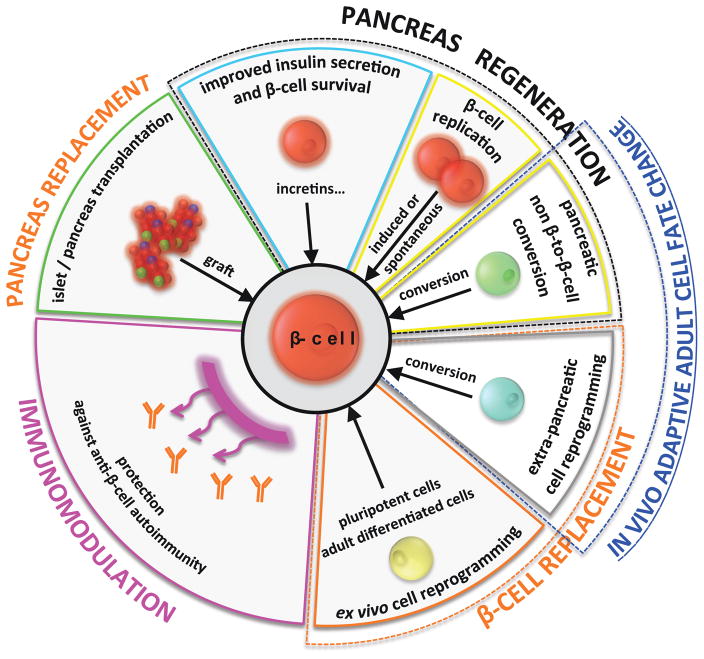
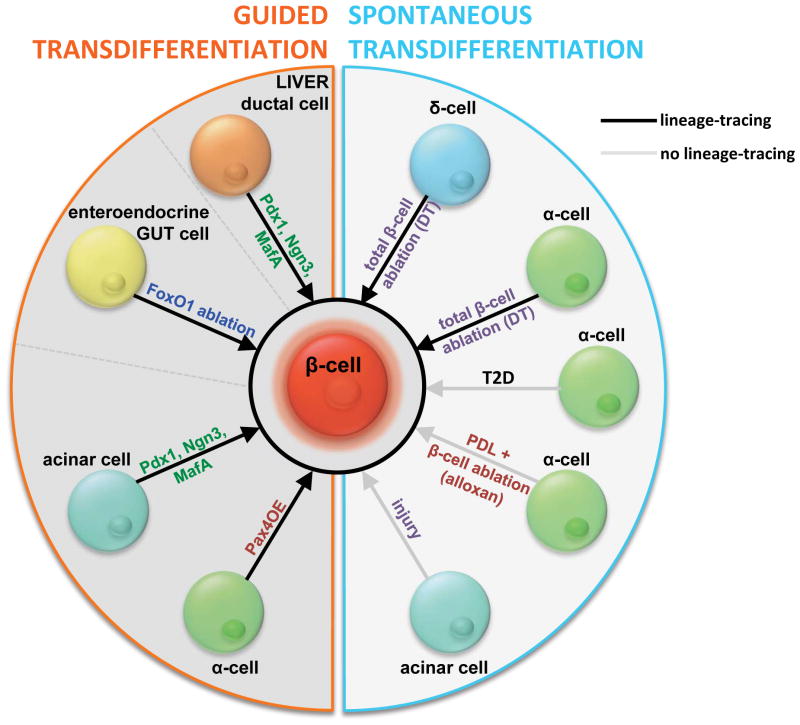
The impaired ability to produce or respond to insulin, a hormone synthetized by the pancreatic β-cells, leads to diabetes. There is an excruciating need of finding new approaches to protect or restore these cells once they are lost. Replacement and ex vivo directed reprogramming methods have an undeniable therapeutic potential, yet they exhibit crucial flaws. The in vivo conversion of adult cells to functional insulin-producing cells is a promising alternative for regenerative treatments in diabetes. The stunning natural transdifferentiation potential of the adult endocrine pancreas was recently uncovered. Modulating molecular targets involved in β-cell fate maintenance or in general differentiation mechanisms can further potentiate this intrinsic cell plasticity, which leads to insulin production reconstitution.
Copyright © 2016 Elsevier Ltd. All rights reserved.
Figures
References
-
- Pagliuca FW, et al. Generation of functional human pancreatic beta cells in vitro. Cell. 2014;159:428–439. doi: 10.1016/j.cell.2014.09.040. With an scalable suspension-based culture system, the authors generated glucose-responsive insulin-producing cells using sequential modulation of multiple signaling pathways in a three-dimensional cell culture system, without any genetic modification. These are the first surrogate differentiated glucose-responsive insulin-producing cells obtained in vitro, which function like adult human β-cells. - DOI - PMC - PubMed
Publication types
MeSH terms
Substances
Grants and funding
LinkOut - more resources
Full Text Sources
Other Literature Sources
Medical
