


Quantified degree of poultry exposure differs for human cases of avian influenza H5N1 and H7N9
- PMID: 27267621
- PMCID: PMC9150466
- DOI: 10.1017/S0950268816001035
Quantified degree of poultry exposure differs for human cases of avian influenza H5N1 and H7N9
Abstract
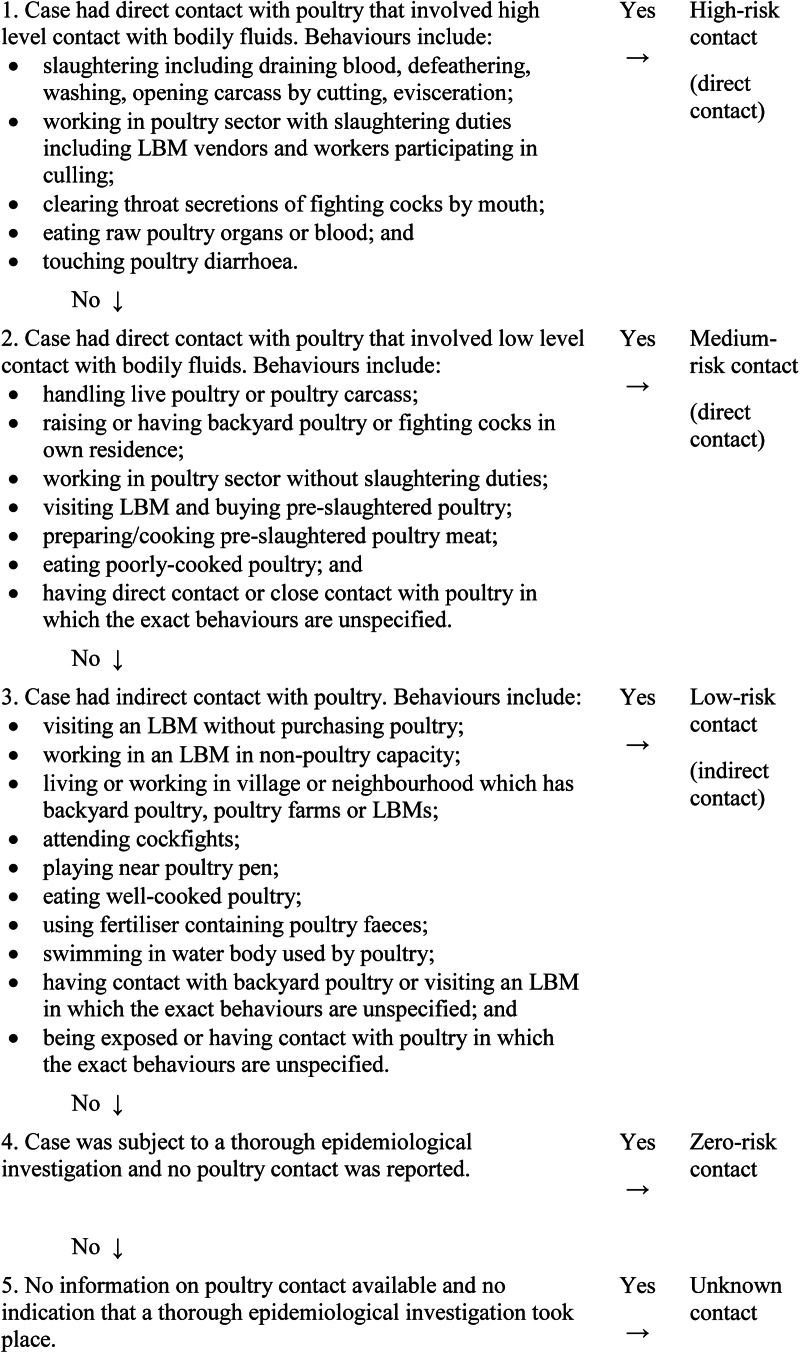
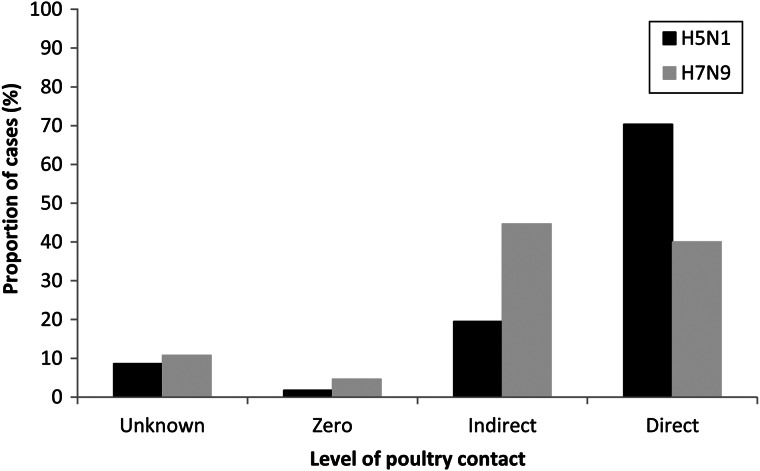
Preliminary evidence suggests that direct poultry contact may play a lesser role in transmission of avian influenza A(H7N9) than A(H5N1) to humans. To better understand differences in risk factors, we quantified the degree of poultry contact reported by H5N1 and H7N9 World Health Organization-confirmed cases. We used publicly available data to classify cases by their degree of poultry contact, including direct and indirect. To account for potential data limitations, we used two methods: (1) case population method in which all cases were classified using a range of sources; and (2) case subset method in which only cases with detailed contact information from published research literature were classified. In the case population, detailed exposure information was unavailable for a large proportion of cases (H5N1, 54%; H7N9, 86%). In the case subset, direct contact proportions were higher in H5N1 cases (70·3%) than H7N9 cases (40·0%) (χ 2 = 18·5, P < 0·001), and indirect contact proportions were higher in H7N9 cases (44·6%) than H5N1 cases (19·4%) (χ 2 = 15·5, P < 0·001). Together with emerging evidence, our descriptive analysis suggests direct poultry contact is a clearer risk factor for H5N1 than for H7N9, and that other risk factors should also be considered for H7N9.
Keywords: Avian influenza; H5N1; H7N9; epidemiology; exposure.
Figures
References
-
- World Health Organization. Global outbreak and alert response network archives (http://www.who.int/csr/don/archive/year/2014/en/).
-
- Ai J, et al. Case-control study of risk factors for human infection with influenza A(H7N9) virus in Jiangsu Province, China, 2013. Eurosurveillance 2013; 18: e20510. - PubMed
MeSH terms
LinkOut - more resources
Full Text Sources
Other Literature Sources
Medical
