


Th2 and eosinophil responses suppress inflammatory arthritis
- PMID: 27273006
- PMCID: PMC4899615
- DOI: 10.1038/ncomms11596
Th2 and eosinophil responses suppress inflammatory arthritis
Abstract
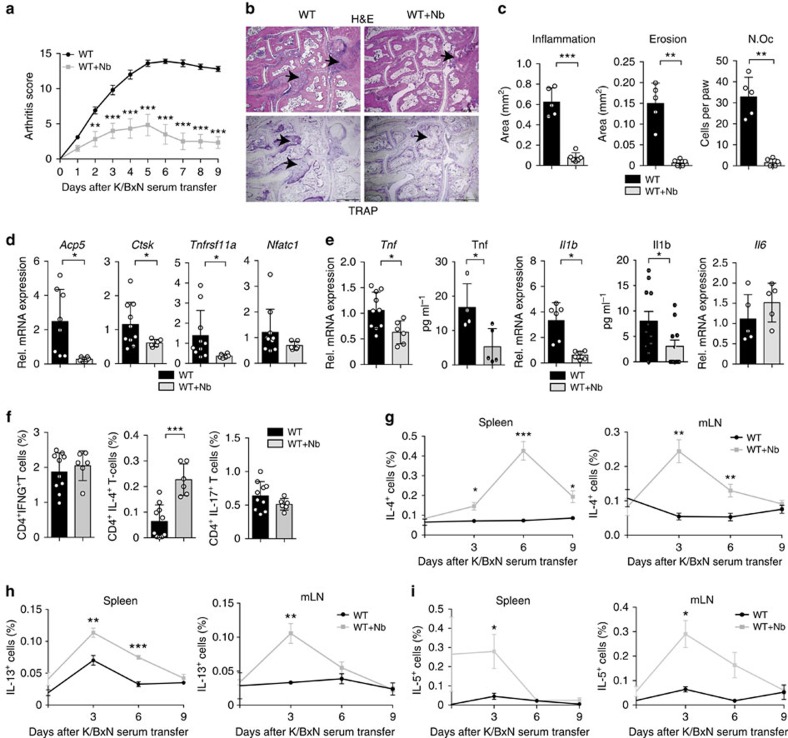
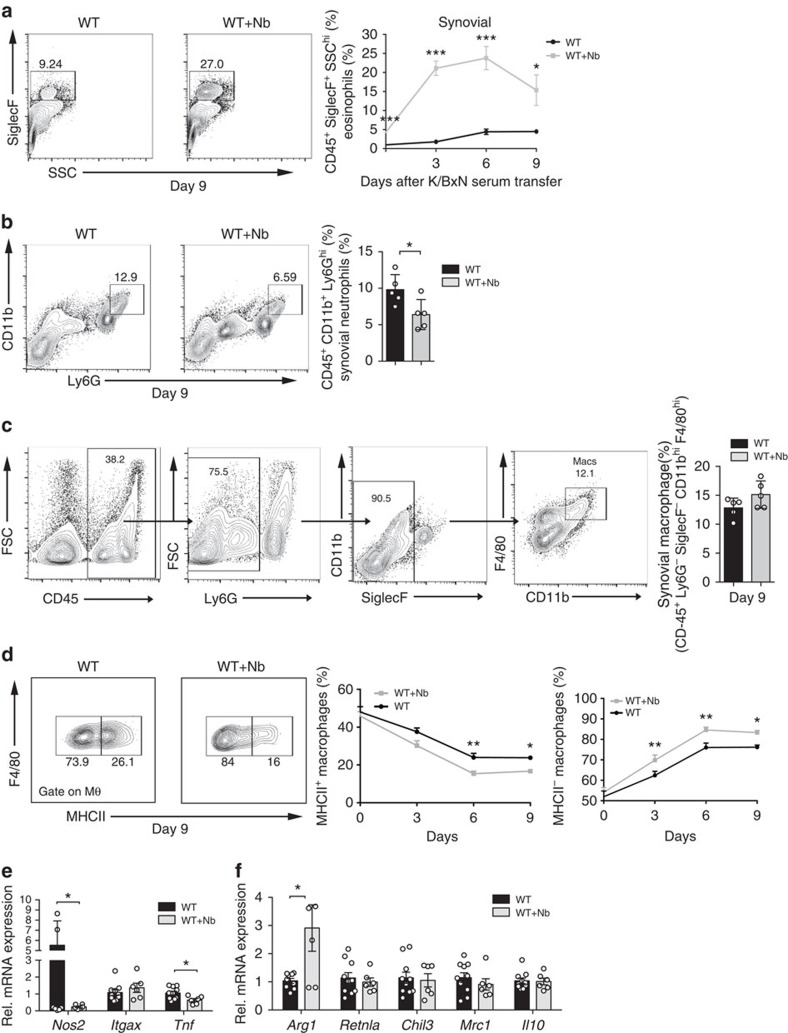
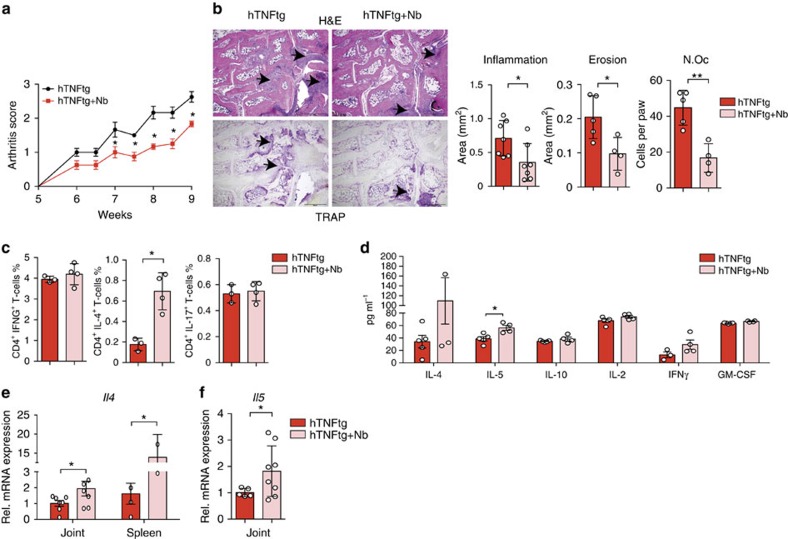
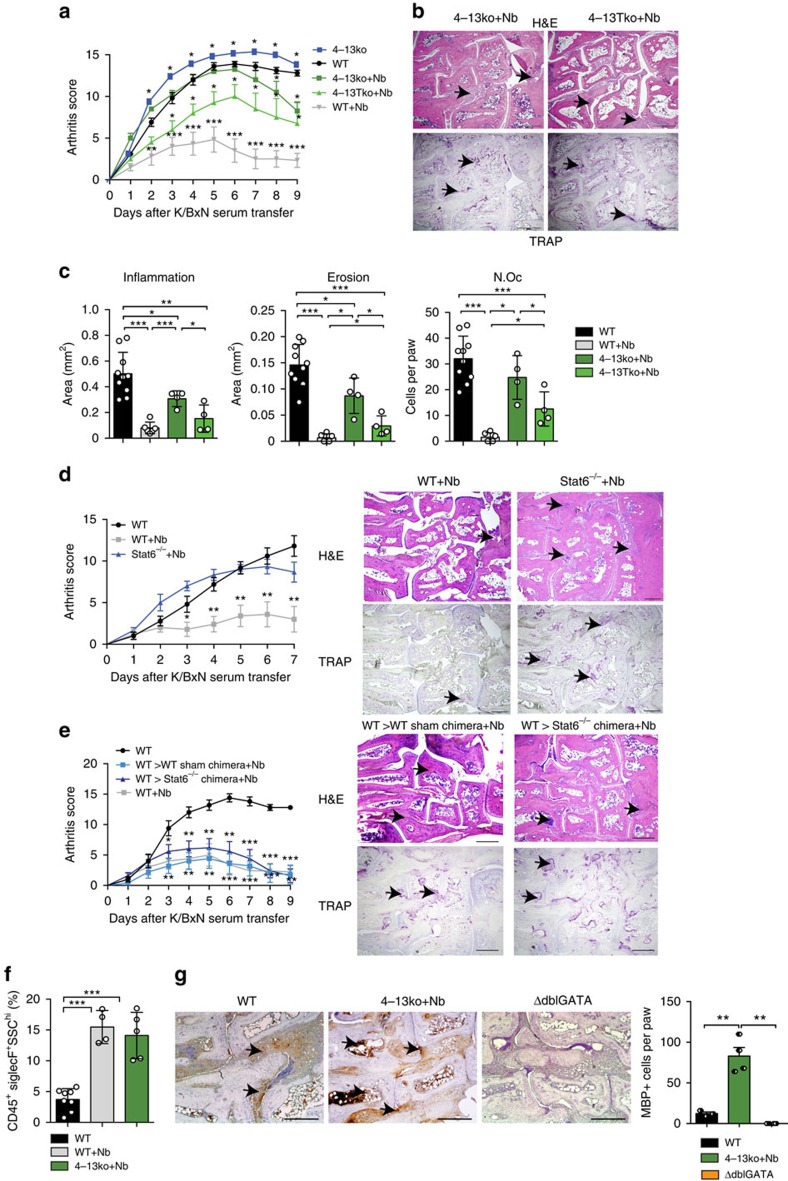
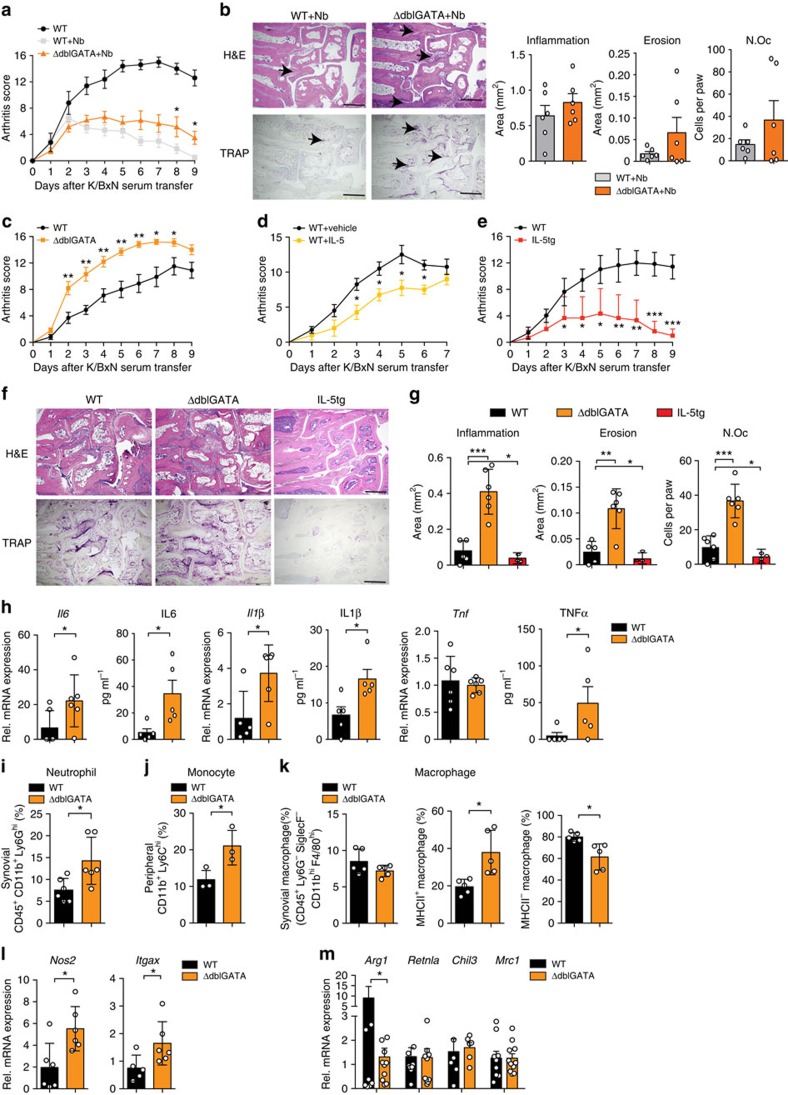
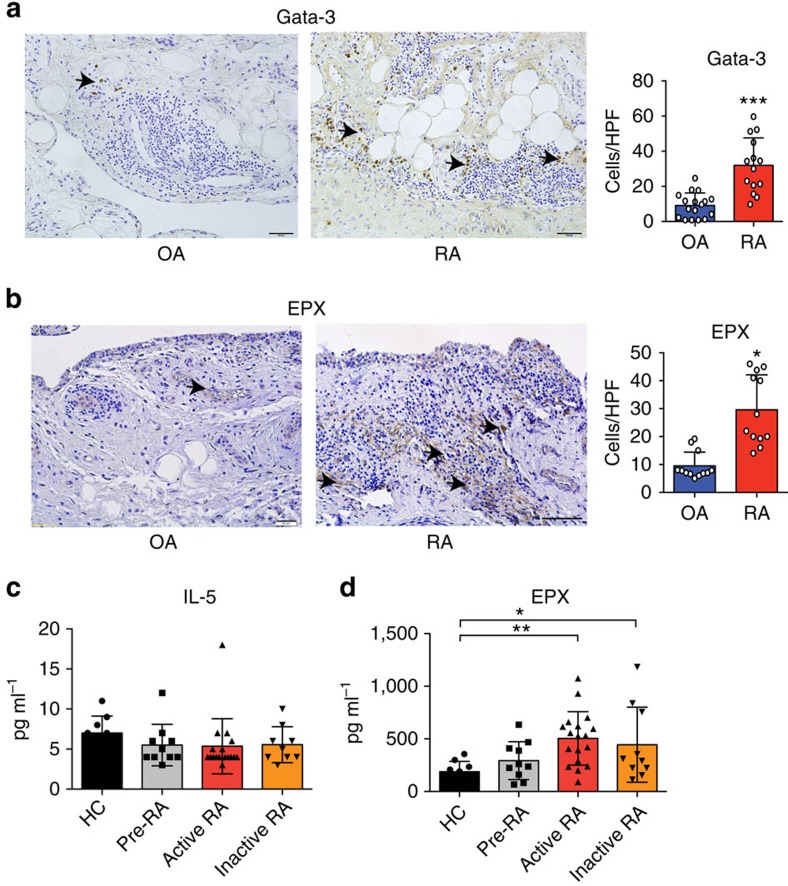
Th2-eosinophil immune responses are well known for mediating host defence against helminths. Herein we describe a function of Th2-eosinophil responses in counteracting the development of arthritis. In two independent models of arthritis, Nippostrongylus brasiliensis infection leads to Th2 and eosinophil accumulation in the joints associated with robust inhibition of arthritis and protection from bone loss. Mechanistically, this protective effect is dependent on IL-4/IL-13-induced STAT6 pathway. Furthermore, we show that eosinophils play a central role in the modulation of arthritis probably through the increase of anti-inflammatory macrophages into arthritic joints. The presence of these pathways in human disease is confirmed by detection of GATA3-positive cells and eosinophils in the joints of rheumatoid arthritis patients. Taken together, these results demonstrate that eosinophils and helminth-induced activation of the Th2 pathway axis effectively mitigate the course of inflammatory arthritis.
Figures
Comment in
-
Experimental arthritis: Helminth infection ameliorates arthritis.Nat Rev Rheumatol. 2016 Jul;12(7):373. doi: 10.1038/nrrheum.2016.95. Epub 2016 Jun 9. Nat Rev Rheumatol. 2016. PMID: 27278123 No abstract available.
References
-
- McInnes I. B. & Schett G. The pathogenesis of rheumatoid arthritis. N. Engl. J. Med. 365, 2205–2219 (2011). - PubMed
-
- McNeil K. S., Knox D. P. & Proudfoot L. Anti-inflammatory responses and oxidative stress in Nippostrongylus brasiliensis-induced pulmonary inflammation. Parasite Immunol. 24, 15–22 (2002). - PubMed
Publication types
MeSH terms
Substances
LinkOut - more resources
Full Text Sources
Other Literature Sources
Medical
Molecular Biology Databases
Research Materials
Miscellaneous
