Inter-Arm Difference in Brachial Blood Pressure in the General Population of Koreans
- PMID: 27275174
- PMCID: PMC4891602
- DOI: 10.4070/kcj.2016.46.3.374
Inter-Arm Difference in Brachial Blood Pressure in the General Population of Koreans
Abstract
Background and objectives: We investigated the inter-arm difference in blood pressure of the general Korean population to identify associated factors.
Subjects and methods: A total of 806 participants aged 30 to 64 years without history of major cardiovascular disease were analyzed in this cross-sectional study. They participated in the Cardiovascular and Metabolic Disease Etiology Research Center cohort study that began in 2013. Brachial blood pressure was measured simultaneously for both arms using an automated oscillometric device equipped with two cuffs in seated position. After five minutes of rest, systolic blood pressure (SBP) and diastolic blood pressure (DBP) were measured three times. The average of the three measurements was used for analysis. Multivariate logistic regression models were used to identify factors associated with inter-arm differences in blood pressure.
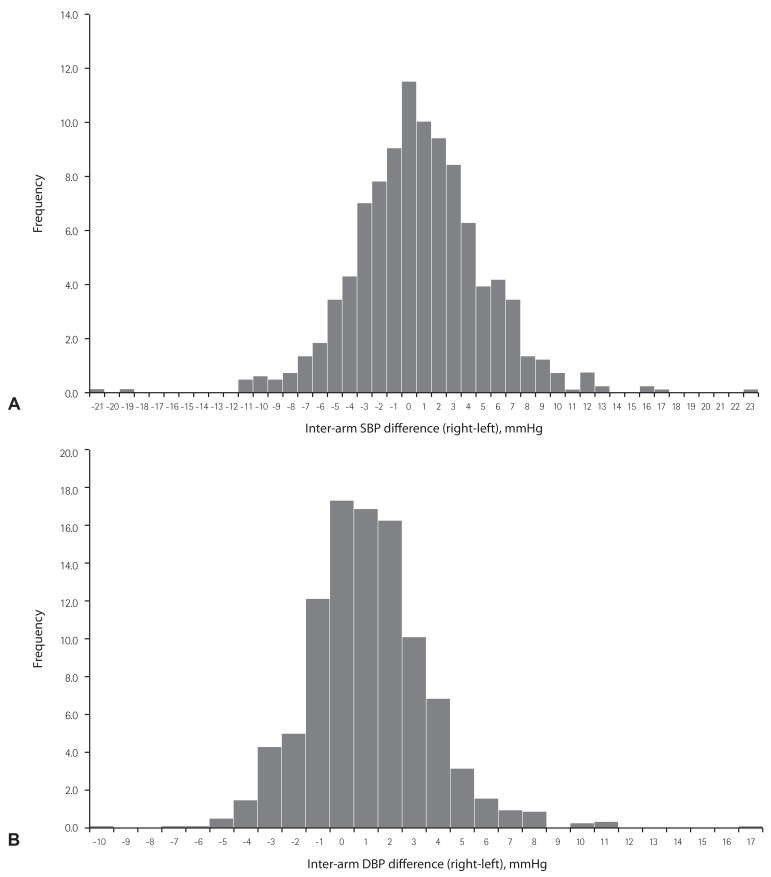
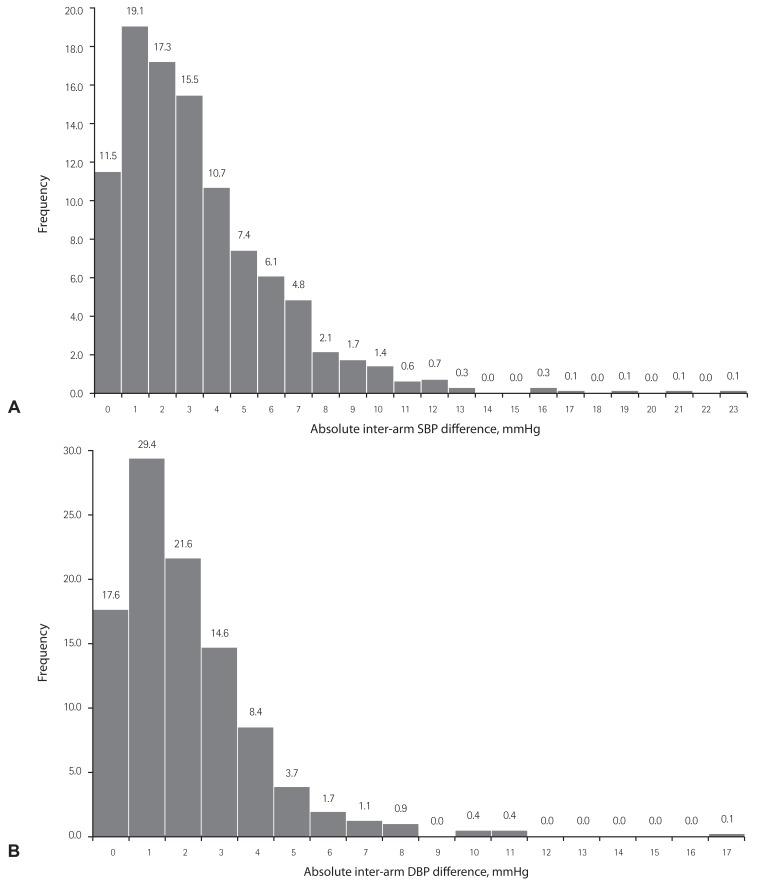
Results: The mean inter-arm difference was 3.3 mmHg for SBP and 2.0 mmHg for DBP. Large inter-arm differences (≥10 mmHg) in SBP and in DBP were found in 3.7% and 0.9% of subjects, respectively. A large inter-arm difference in SBP was associated with mean SBP (p=0.002) and C-reactive protein (p=0.014) while a large inter-arm different in DBP was only associated with body mass index (p=0.015). Sex, age, and anti-hypertensive medication use were not associated with differences in inter-arm blood pressure.
Conclusion: Large inter-arm difference in blood pressure is only present in a small portion of healthy Korean adults. Our findings suggest that high SBP, chronic inflammation, and obesity may be associated with larger difference in inter-arm blood pressure.
Keywords: Blood pressure; General population; Korean.
Figures
References
-
- Clark CE, Campbell JL, Evans PH, Millward A. Prevalence and clinical implications of the inter-arm blood pressure difference: a systematic review. J Hum Hypertens. 2006;20:923–931. - PubMed
-
- Clark CE, Taylor RS, Shore AC, Ukoumunne OC, Campbell JL. Association of a difference in systolic blood pressure between arms with vascular disease and mortality: a systematic review and meta-analysis. Lancet. 2012;379:905–914. - PubMed
-
- Tak YJ, Kim YJ, Lee SY, et al. Association of inter-arm blood pressure difference with atherosclerosis in patients without cardiovascular diseases. J Korean Soc Hypertens. 2013;19:71–80.
-
- Clark CE, Campbell JL, Powell RJ. The interarm blood pressure difference as predictor of cardiovascular events in patients with hypertension in primary care: cohort study. J Hum Hypertens. 2007;21:633–638. - PubMed
LinkOut - more resources
Full Text Sources
Other Literature Sources
Research Materials