


The prevalence of hepatitis C virus infection in Egypt 2015: implications for future policy on prevention and treatment
- PMID: 27275625
- PMCID: PMC5145777
- DOI: 10.1111/liv.13186
The prevalence of hepatitis C virus infection in Egypt 2015: implications for future policy on prevention and treatment
Abstract
Background & aims: In 2015, a national Egyptian health issue survey was conducted to describe the prevalence of hepatitis C virus (HCV) infection. In this paper, we describe the HCV burden in 2015, compare the results with the national survey conducted in 2008, and discuss the implications of the new findings on prevention of HCV in Egypt.
Methods: A multistage probability sampling approach was used, similar to the national demographic survey conducted in 2008. More than 90% of sampled individuals complied with the interview and provided blood samples.
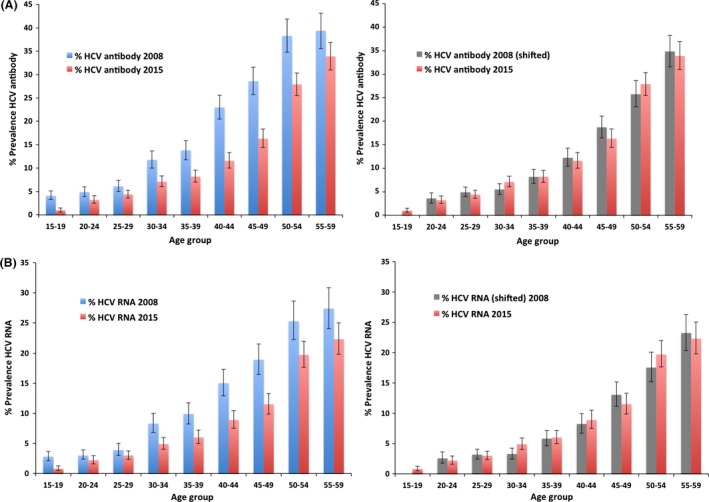
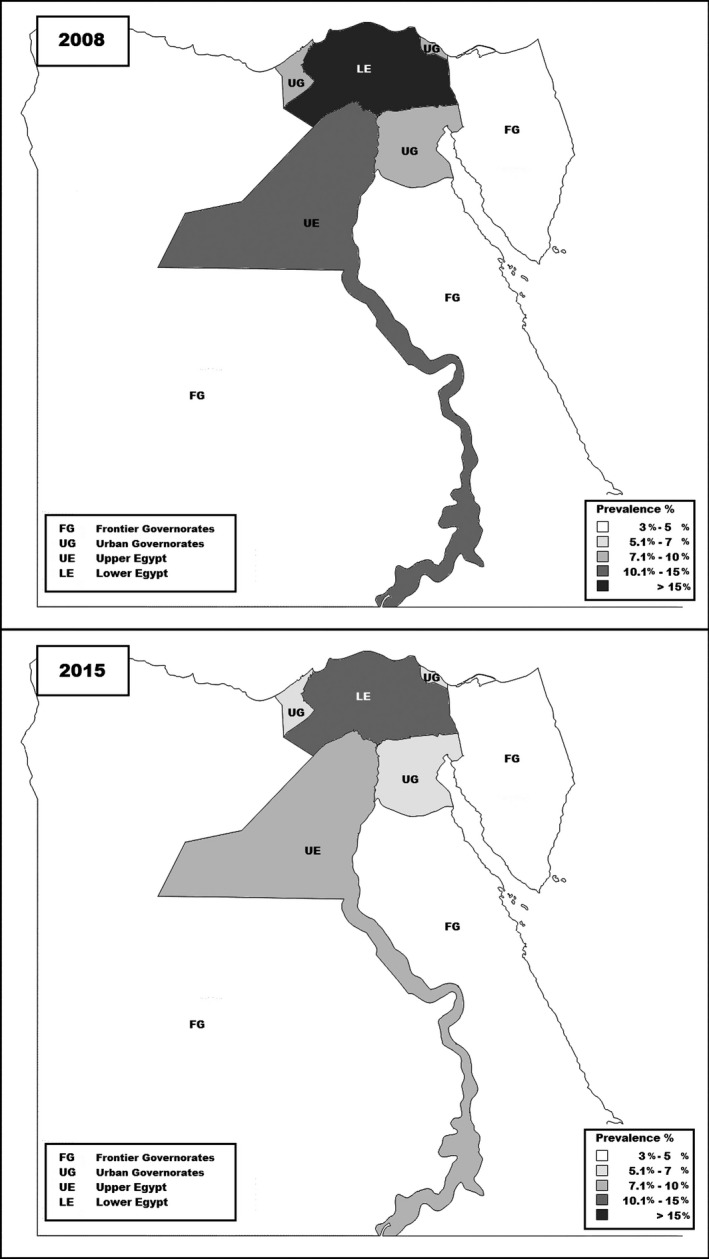
Results: In the 15-59-year age groups, the prevalence of HCV antibody was found to be 10.0% (95% CI 9.5-10.5) and that of HCV RNA to be 7.0% (95% CI 6.6-7.4). In children, 1-14 years old, the prevalence of HCV antibody and HCV RNA were 0.4% (95% CI 0.3-0.5) and 0.2% (95% CI 0.1-0.3) respectively. Approximately, 3.7 million persons have chronic HCV infection in the age group 15-59 in 2015. An estimated 29% reduction in HCV RNA prevalence has been seen since 2008, which is largely attributable to the ageing of the group infected 40-50 years ago during the mass schistosomiasis treatment campaigns. Prevention efforts may have also contributed to this decline, with an estimated 75% (95% CI 6-45) decrease in HCV incidence in the 0-19 year age groups over the past 20 years.
Conclusions: These findings can be used to shape future HCV prevention policies in Egypt.
Keywords: hepatitis C Egypt; incidence HCV; nation-wide surveys; prevalence HCV.
© 2016 The Authors. Liver International Published by John Wiley & Sons Ltd.
Conflict of interest statement
The authors do not have any disclosures to report.
Figures
References
-
- Gower E, Estes C, Blach S, Razavi‐Shearer K, Razavi H. Global epidemiology and genotype distribution of the hepatitis C virus infection. J Hepatol 2014; 61: S45–57. - PubMed
-
- Mohd Hanafiah K, Groeger J, Flaxman AD, Wiersma ST. Global epidemiology of hepatitis C virus infection: new estimates of age‐specific antibody to HCV seroprevalence. Hepatology 2013; 57: 1333–42. - PubMed
-
- Perz JF, Armstrong GL, Farrington LA, Hutin YJ, Bell BP. The contributions of hepatitis B virus and hepatitis C virus infections to cirrhosis and primary liver cancer worldwide. J Hepatol 2006; 45: 529–38. - PubMed
-
- El‐Zanaty F, Way A. (2009). Egypt Demographic and Health Survey 2008. Cairo, Egypt: Ministry of Health,El‐Zanaty and Associates, and Macro International.
-
- Ministry of Health, Egypt , El‐Zanaty and Associates , Egypt and ICF International . (2015). Egypt Health Issues Survey 2015. Cairo, Egypt and Rockville, MD: Ministry of Health and ICF International.
MeSH terms
Substances
Grants and funding
LinkOut - more resources
Full Text Sources
Other Literature Sources
Medical
Miscellaneous
