. 2016 Jun 8;11(6):e0157086.
doi: 10.1371/journal.pone.0157086. eCollection 2016.

Functional Characterization of Schizophrenia-Associated Variation in CACNA1C

Affiliations

Functional Characterization of Schizophrenia-Associated Variation in CACNA1C

Nicole Eckart et al. PLoS One. .

Abstract

Calcium channel subunits, including CACNA1C, have been associated with multiple psychiatric disorders. Specifically, genome wide association studies (GWAS) have repeatedly identified the single nucleotide polymorphism (SNP) rs1006737 in intron 3 of CACNA1C to be strongly associated with schizophrenia and bipolar disorder. Here, we show that rs1006737 marks a quantitative trait locus for CACNA1C transcript levels. We test 16 SNPs in high linkage disequilibrium with rs1007637 and find one, rs4765905, consistently showing allele-dependent regulatory function in reporter assays. We find allele-specific protein binding for 13 SNPs including rs4765905. Using protein microarrays, we identify several proteins binding ≥3 SNPs, but not control sequences, suggesting possible functional interactions and combinatorial haplotype effects. Finally, using circular chromatin conformation capture, we show interaction of the disease-associated region including the 16 SNPs with the CACNA1C promoter and other potential regulatory regions. Our results elucidate the pathogenic relevance of one of the best-supported risk loci for schizophrenia and bipolar disorder.


Conflict of interest statement

Competing Interests: Dr. Avramopoulos is a paid consultant for the pharmaceutical company Ono Pharma USA Inc. This does not alter the authors' adherence to PLOS ONE policies on sharing data and materials. There are no other conflicts of interest.

Figures

Fig 1
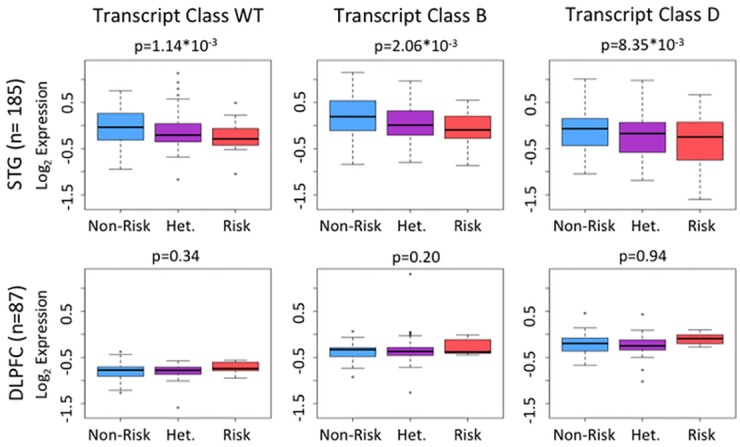
Fig 1. Log transformed expression of the three CACNA1C transcript classes.
CACNA1C transcripts are measured by qPCR and grouped by genotype at rs1006737. Samples homozygous for the non-risk allele (GG) are shown in blue, heterozygous (GA) in purple, and homozygous for the risk allele (AA) in red. Samples from the STG in the top row, and DLPFC in the bottom row. Regression p-values for effects of genotype are shown over each graph.
Fig 2
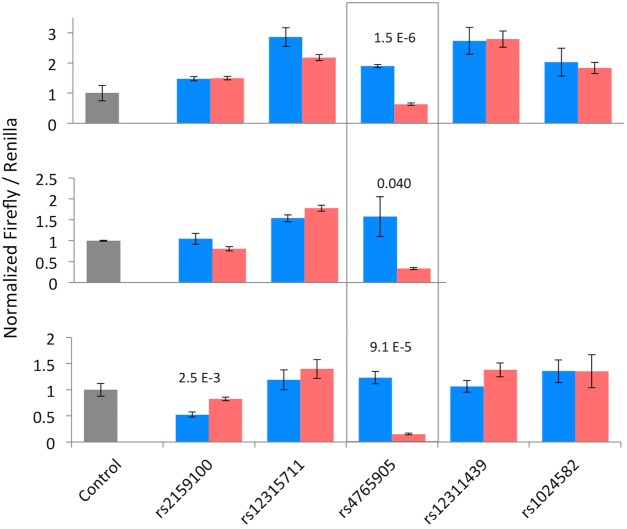
Fig 2. A subset of DLR constructs transfected in SK-N-SH cells.
The top panel shows the same data from S2 Fig, and each successive panel shows data from replicate experiments. Relative firefly luciferase activity is shown as an average of four independent DNA extractions for each allele. Error bars represent standard error. Non-risk allele is shown in blue, risk allele is in red. Significant differences between the two alleles of a construct are indicated as p-values above the pair.
Fig 3
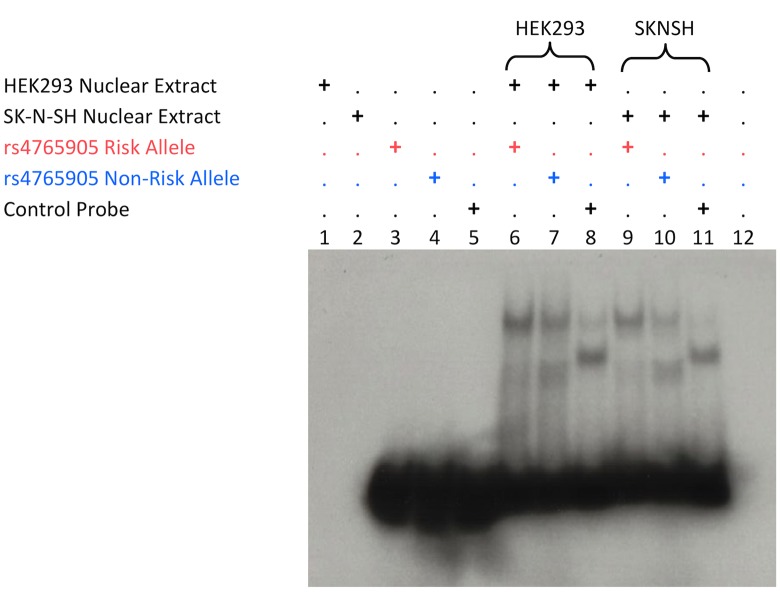
Fig 3. EMSA for rs4765905 with HEK293 and SK-N-SH nuclear extracts.
Nuclear extracts plus buffer are run in lanes 1 and 2. Probes plus buffer are run in lanes 3–5. Probes are incubated with nuclear extract as indicated by the “+” above the lane number in lanes 6–11. Lane 12 is buffer alone. Control allele is a positive control for the assay from an unrelated variant.
Fig 4
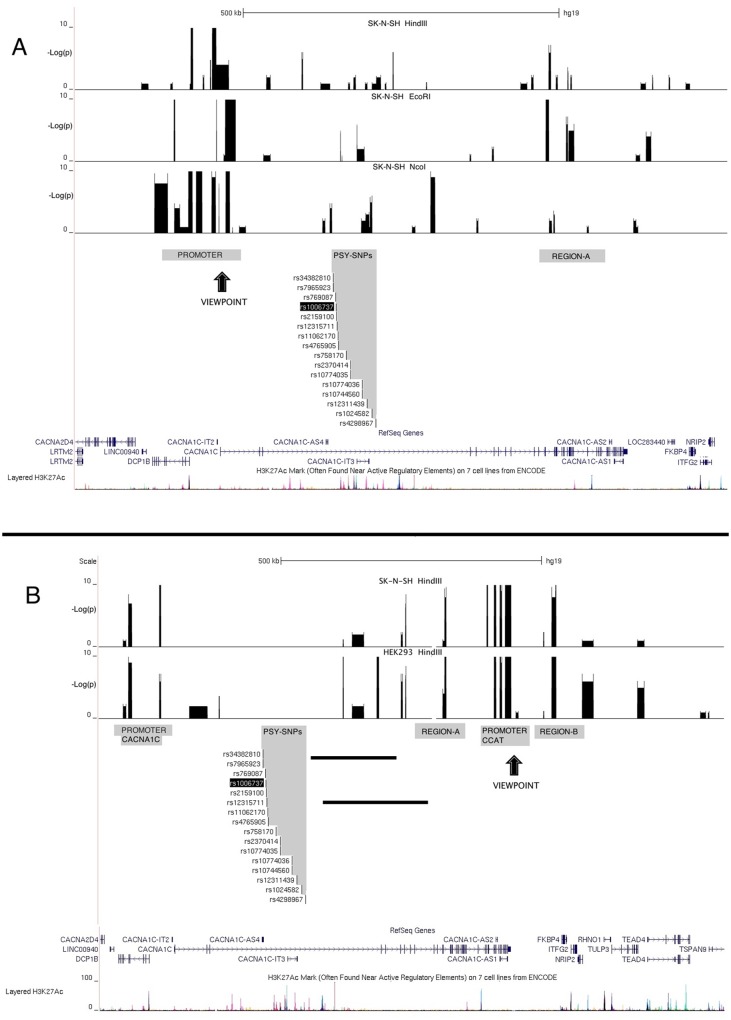
Fig 4. 4C-seq results.
(A) Results from the CACNA1C promoter viewpoint. (B) Results from the CCAT promoter. Arrows indicate the viewpoints. Bars indicate -log(p-values) for excessive read counts suggesting interaction with the viewpoint. Four regions with high densities of interactions, other than the viewpoint itself, are indicated by shading: The disease-associated SNPs in intron 3 of CACNA1C (labeled PSY-SNPs) and REGION A at the 3’ end of CACNA1C interacting with the CACNA1C promoter in Fig 4A, and the CACNA1C promoter, REGION A and REGION B downstream of CACNA1C interacting with the CCAT promoter in Fig 4B.

References

    1. Sullivan PF, Kendler KS, Neale MC. Schizophrenia as a complex trait: evidence from a meta-analysis of twin studies. Arch Gen Psychiatry. 2003. December;60(12):1187–92. - PubMed
    1. Owen MJ, Sawa A, Mortensen PB. Schizophrenia. Lancet Lond Engl. 2016. January 14; - PMC - PubMed
    1. Schizophrenia Working Group of the Psychiatric Genomics Consortium. Biological insights from 108 schizophrenia-associated genetic loci. Nature. 2014. July 24;511(7510):421–7. 10.1038/nature13595 - DOI - PMC - PubMed
    1. Pers TH, Timshel P, Ripke S, Lent S, Schizophrenia Working Group of the Psychiatric Genomics Consortium, Sullivan PF, et al. Comprehensive analysis of schizophrenia-associated loci highlights ion channel pathways and biologically plausible candidate causal genes. Hum Mol Genet. 2016. January 10; - PMC - PubMed
    1. Williams HJ, Craddock N, Russo G, Hamshere ML, Moskvina V, Dwyer S, et al. Most genome-wide significant susceptibility loci for schizophrenia and bipolar disorder reported to date cross-traditional diagnostic boundaries. Hum Mol Genet. 2011. January 15;20(2):387–91. 10.1093/hmg/ddq471 - DOI - PubMed

Substances