


The Drosophila ETV5 Homologue Ets96B: Molecular Link between Obesity and Bipolar Disorder
- PMID: 27280443
- PMCID: PMC4900636
- DOI: 10.1371/journal.pgen.1006104
The Drosophila ETV5 Homologue Ets96B: Molecular Link between Obesity and Bipolar Disorder
Abstract
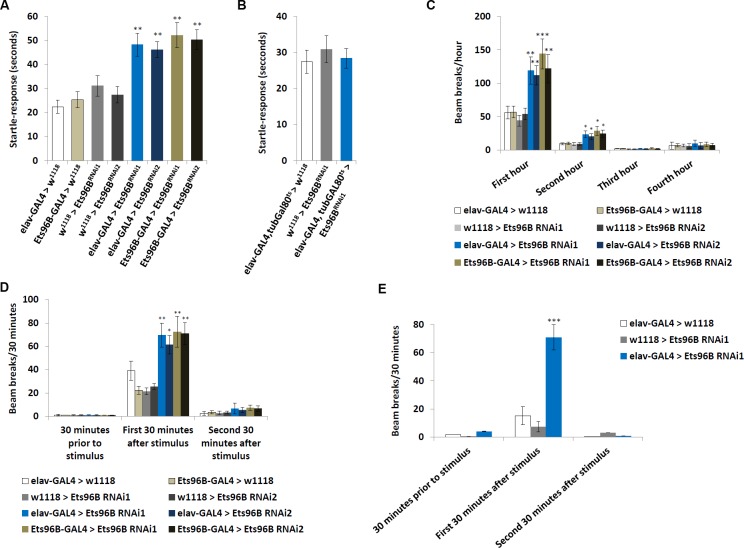
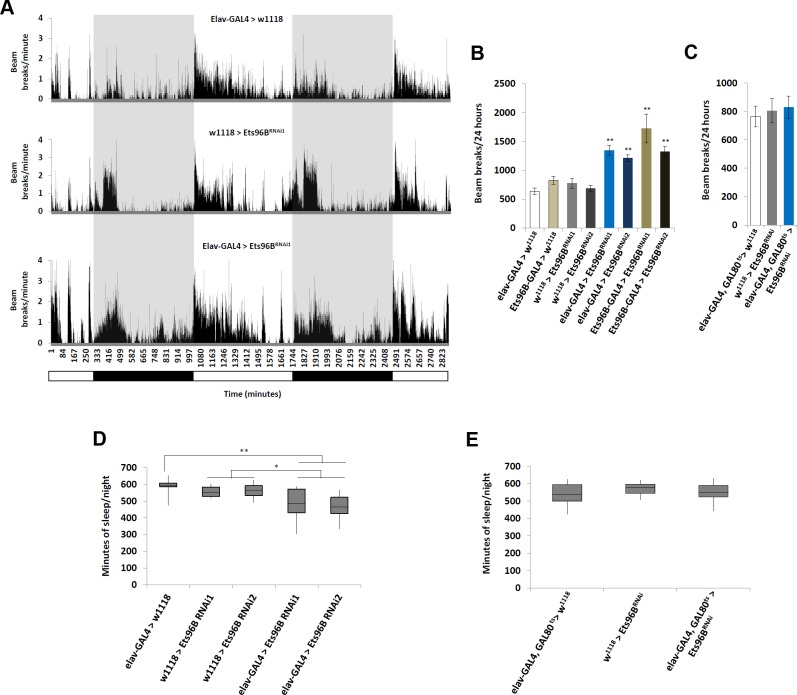
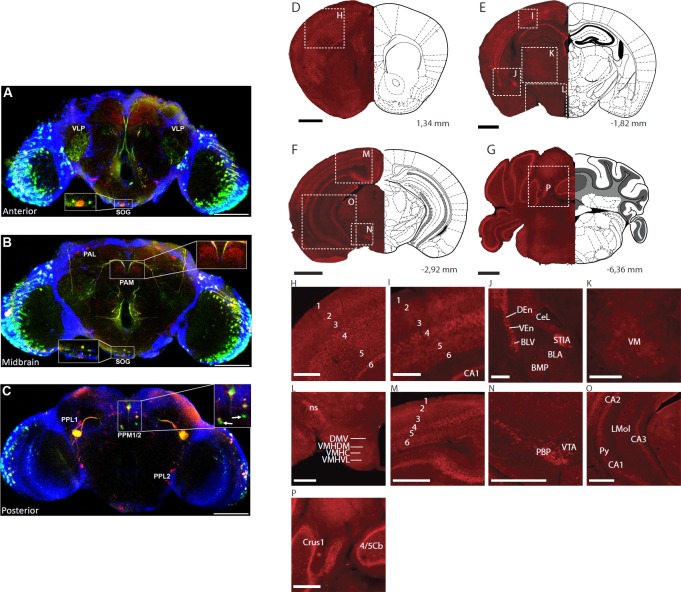
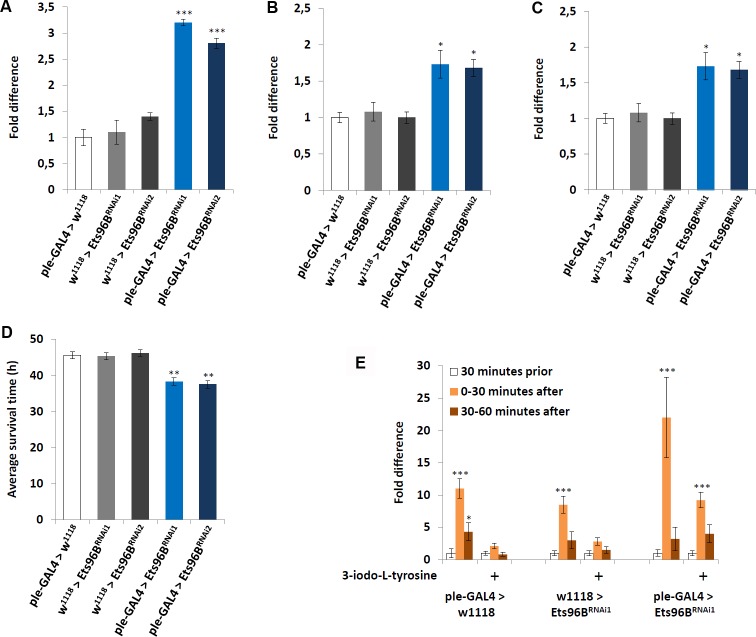
Several reports suggest obesity and bipolar disorder (BD) share some physiological and behavioural similarities. For instance, obese individuals are more impulsive and have heightened reward responsiveness, phenotypes associated with BD, while bipolar patients become obese at a higher rate and earlier age than people without BD; however, the molecular mechanisms of such an association remain obscure. Here we demonstrate, using whole transcriptome analysis, that Drosophila Ets96B, homologue of obesity-linked gene ETV5, regulates cellular systems associated with obesity and BD. Consistent with a role in obesity and BD, loss of nervous system Ets96B during development increases triacylglyceride concentration, while inducing a heightened startle-response, as well as increasing hyperactivity and reducing sleep. Of notable interest, mouse Etv5 and Drosophila Ets96B are expressed in dopaminergic-rich regions, and loss of Ets96B specifically in dopaminergic neurons recapitulates the metabolic and behavioural phenotypes. Moreover, our data indicate Ets96B inhibits dopaminergic-specific neuroprotective systems. Additionally, we reveal that multiple SNPs in human ETV5 link to body mass index (BMI) and BD, providing further evidence for ETV5 as an important and novel molecular intermediate between obesity and BD. We identify a novel molecular link between obesity and bipolar disorder. The Drosophila ETV5 homologue Ets96B regulates the expression of cellular systems with links to obesity and behaviour, including the expression of a conserved endoplasmic reticulum molecular chaperone complex known to be neuroprotective. Finally, a connection between the obesity-linked gene ETV5 and bipolar disorder emphasizes a functional relationship between obesity and BD at the molecular level.
Conflict of interest statement
The authors have declared that no competing interests exist.
Figures
References
-
- Houben K, Nederkoorn C, Jansen A. Eating on impulse: the relation between overweight and food-specific inhibitory control. Obesity. 2014;22:6–8. - PubMed
-
- Osby U, Brandt L, Correia N, Ekbom A, Sparen P. Excess mortality in bipolar and unipolar disorder in Sweden. Arch Gen Psychiatry. 2001;58:844–850. - PubMed
-
- Keck PE, McElroy SL. Bipolar disorder, obesity, and pharmacotherapy-associated weight gain. J Clin Psychiatry. 2003;64:1426–1435. - PubMed
Publication types
MeSH terms
Substances
LinkOut - more resources
Full Text Sources
Other Literature Sources
Medical
Molecular Biology Databases
