Multicenter Study
. 2016 Jun 9;11(6):e0156652.
doi: 10.1371/journal.pone.0156652. eCollection 2016.

Adequacy of Mental Health Services for HIV-Positive Patients with Depression: Ontario HIV Treatment Network Cohort Study

Affiliations
Multicenter Study

Adequacy of Mental Health Services for HIV-Positive Patients with Depression: Ontario HIV Treatment Network Cohort Study

Stephanie K Y Choi et al. PLoS One. .

Abstract

Background: Major depression can profoundly impact clinical and quality-of-life outcomes of people living with HIV, and this disease is underdiagnosed and undertreated in many HIV-positive individuals. Here, we describe the prevalence of publicly funded primary and secondary mental health service use and antidepressant use, as well as mental health care for depression in accordance with existing Canadian guidelines for HIV-positive patients with depression in Ontario, Canada.

Methods: We conducted a prospective cohort study linking data from the Ontario HIV Treatment Network Cohort Study with administrative health databases in the province of Ontario, Canada. Current depression was assessed using the Center for Epidemiologic Depression Scale or the Kessler Psychological Distress Scale. Multivariable regressions were used to characterize prevalence outcomes.

Results: Of 990 HIV-positive patients with depression, 493 (50%) patients used mental health services; 182 (18%) used primary services (general practitioners); 176 (18%) used secondary services (psychiatrists); and 135 (14%) used both. Antidepressants were used by 407 (39%) patients. Patients who identified as gay, lesbian, or bisexual, as having low income or educational attainment, or as non-native English speakers or immigrants to Canada were less likely to obtain care. Of 493 patients using mental health services, 250 (51%) received mental health care for depression in accordance with existing Canadian guidelines.

Conclusions: Our results showed gaps in delivering publicly funded mental health services to depressed HIV-positive patients and identified unequal access to these services, particularly among vulnerable groups. More effective mental health policies and better access to mental health services are required to address HIV-positive patient needs and reduce depression's impact on their lives.


Conflict of interest statement

Competing Interests: The authors have declared that no completing interests exist.

Figures

Fig 1
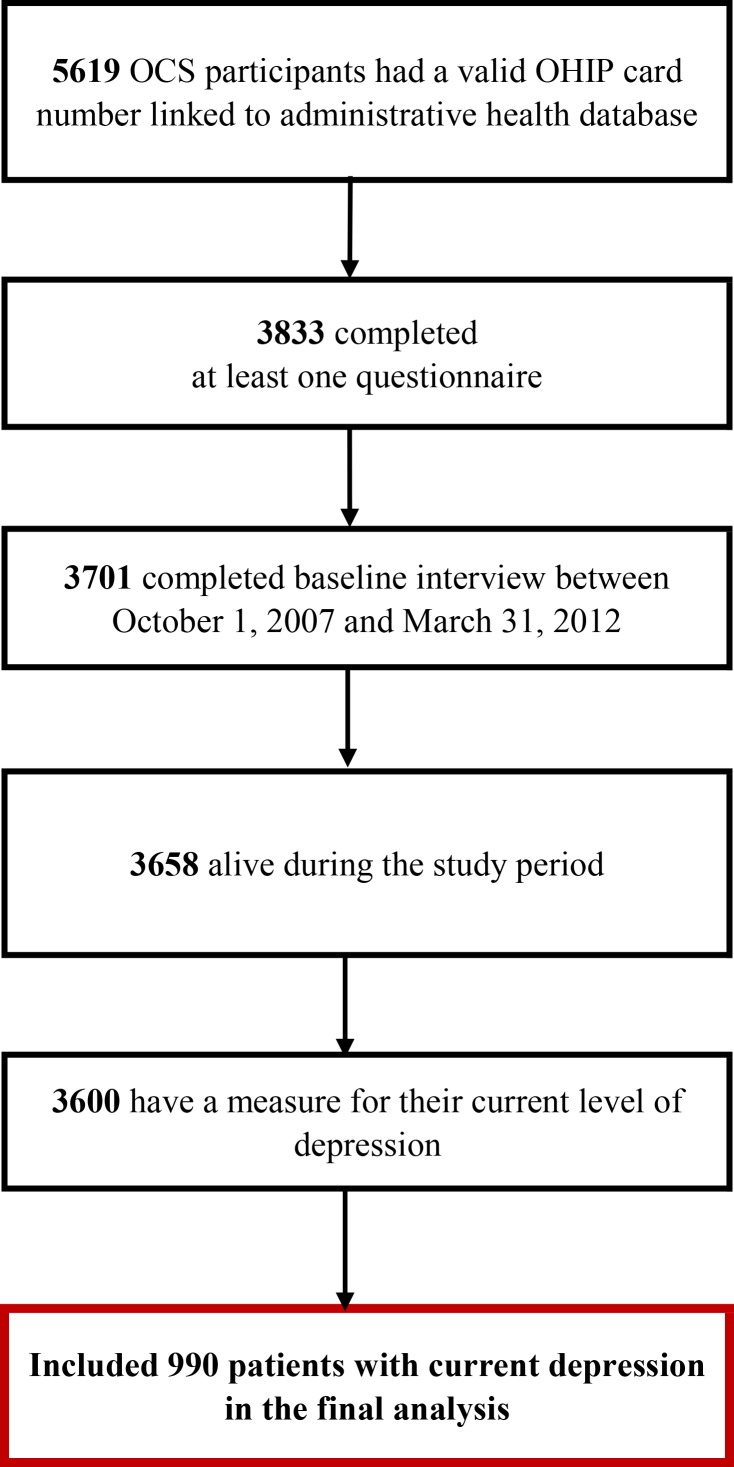
Fig 1. Patient Flow Chart for Development of Prevalence, Persistence and Incidence Cohort.
Fig 2
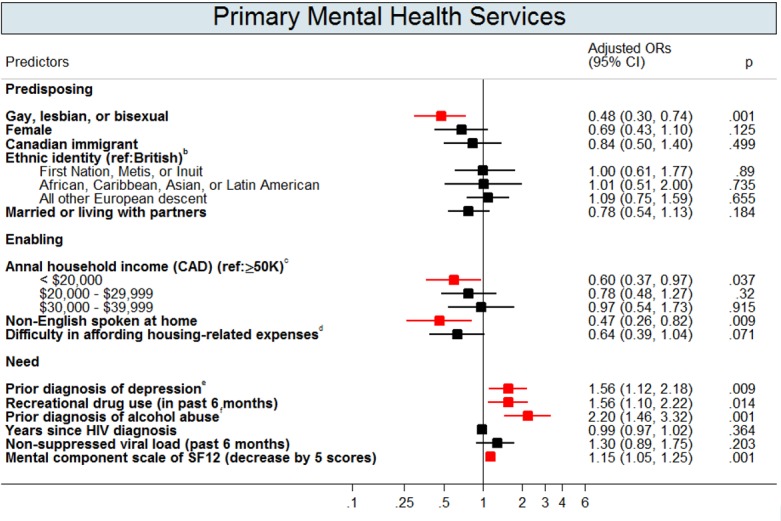
Fig 2. Adjusted Odds Ratios (OR) with 95% Confidence Intervals (CIs) for the Predictors of Primary Mental Health Services Utilizationa.
Footnotes: This graph contains the final set of covariates retained in the multivariable logistic regression model for primary mental health services use outcome. A red colour dot indicates an adjusted odds ratio with a p-value < 0.05; a black color dot indicates an adjusted odds ratios with a p-value ≥ 0.05. a Primary mental health services (provided by general or family physicians) were defined by a validation algorithm (Steele et al., 2004) using mental health service codes and a mental disorder diagnostic code from Ontario Health Insurance Program (OHIP) database. b Aboriginals were participants who self-reported as Aboriginals, North American Indian, Firsts Nations, Metis, or Inuit. African, Caribbean, Asian, or Latin American were participants who self-reported as African, Caribbean, Chinese, South Asian, or Latin American. English were participants who were self-reported as English, Sottish, Irish, or Welsh. All other European descent were participants who self-reported as Polish, French, Portuguese, German, Norweigan, Italian, Swedish, Ukranian, Dutch, or Jewish. c Gross income before taxes and benefits. d Difficulty in affording house-related expenses was defined as when the patients self-reported as being very difficult or fairly difficult to meet their monthly housing-related costs (includes rent/mortgage, property taxes and utilities only). e Past depression diagnoses were defined as having a past depression-related diagnosis identified in OHIP records (OHIP ICD-9: 296 and 311), from the earliest available records to a year before the baseline. fAddiction to alcohol was defined as whether patients had a diagnostic code of alcohol dependence/abuse in OHIP (ICD-9: 303) or in main diagnosis of DAD and NACRS (ICD-9-CM: 303; ICD-10-CA: F10), from the earliest available records in these databases to a day before the baseline.
Fig 3
Fig 3. Adjusted Odds Ratios (OR) with 95% Confidence Intervals (CIs) for the Predictors of Secondary Mental Health Services Utilizationa.
Footnotes: This graph contains the final set of covariates retained in the multivariable logistic regression model for secondary mental health services use outcome. A red colour dot indicates an adjusted odds ratio with a p-value < 0.05; a black color dot indicates an adjusted odds ratios with a p-value ≥ 0.05. a Secondary mental health services (provided by psychiatrists) were identified by a specialty code of 19 from OHIP database. b Gross income before taxes and benefits. c Difficulty in affording house-related expenses was defined as when the patients self-reported as being very difficult or fairly difficult to meet their monthly housing-related costs (includes rent/mortgage, property taxes and utilities only). d Past depression diagnoses were defined as having a past depression-related diagnosis identified in OHIP records (OHIP ICD-9: 296 and 311), from the earliest available records to a year before the baseline. e Addiction to alcohol was defined as whether patients had a diagnostic code of alcohol dependence/abuse in OHIP (ICD-9: 303) or in main diagnosis of DAD and NACRS (ICD-9-CM: 303; ICD-10-CA: F10), from the earliest available records in these databases to a day before the baseline.
Fig 4
Fig 4. Adjusted Odds Ratios (OR) with 95% Confidence Intervals (CIs) for the Predictors of Antidepressant Useb.
Footnotes: This graph contains the final set of covariates retained in the multivariable logistic regression model for antidepressant use outcome. A red colour dot indicates an adjusted odds ratio with a p-value < 0.05; a black color dot indicates an adjusted odds ratios with a p-value ≥ 0.05. a Antidepressant use was based on the first line of antidepressants for managing depression in adults recommended by the Canadian Network for Mood and Anxiety Treatments (CANMAT) Clinical guidelines (Lam et al., 2009): (a) selective serotonin reuptake inhibitors, including fluovoxamine, citalopram, escitalopram, sertraline, fluoxetine, and paroxetine; (b) serotonin and norepinephrine reuptake inhibitors, including venlafaxine, duloxetine, desvenlafaxine, and milnacipran; and (c) noradrenergic and specific serotonergic antidepressants, including mirtazapine and mianserin; (d) other first-line antidepressants, including agomelatine, bupropion, moclobemide, reboxetine, and tianeptine. b Aboriginals were participants who self-reported as Aboriginals, North American Indian, Firsts Nations, Metis, or Inuit. African, Caribbean, Asian, or Latin American were participants who self-reported as African, Caribbean, Chinese, South Asian, or Latin American. English were participants who were self-reported as English, Sottish, Irish, or Welsh. All other European descent were participants who self-reported as Polish, French, Portuguese, German, Norweigan, Italian, Swedish, Ukranian, Dutch, or Jewish. c Gross income before taxes and benefits. d Past depression diagnoses were defined as having a past depression-related diagnosis identified in OHIP records (OHIP ICD-9: 296 and 311), from the earliest available records to a year before the baseline.
Fig 5
Fig 5. Adjusted Odds Ratios (OR) with 95% Confidence Intervals (CIs) for the Predictors of Receipt of Mental Health Care for Depression in Accordance with Existing Canadian Guidelinesd.
Footnotes: This graph contains the final set of covariates retained in the multivariable logistic regression model for the use of mental health care for depression in accordance with existing Canadian guidelines. We conducted the analysis only among those individuals who had at least one visit with primary or secondary mental health care providers. A red colour dot indicates an adjusted odds ratio with a p-value < 0.05; a black color dot indicates an adjusted odds ratios with a p-value ≥ 0.05. a Mental health care for depression in accordance with existing Canadian guidelines was based on two definitions according to Canadian guidelines: (i) at least two months of antidepressants use plus at least four visits to primary or secondary mental health services, OR (ii) at least eight visits to primary or secondary mental health services with patients spending at least 20 minutes with the GP/FP or psychiatrists (Canadian Network for Mood and Anxiety Treatments, 2001; Pattern et al., 2009; Ramasubbu et al., 2012). b Aboriginals were participants who self-reported as Aboriginals, North American Indian, Firsts Nations, Metis, or Inuit. African, Caribbean, Asian, or Latin American were participants who self-reported as African, Caribbean, Chinese, South Asian, or Latin American. English were participants who were self-reported as English, Sottish, Irish, or Welsh. All other European descent were participants who self-reported as Polish, French, Portuguese, German, Norweigan, Italian, Swedish, Ukranian, Dutch, or Jewish. c Gross income before taxes and benefits. d Past depression diagnoses were defined as having a past depression-related diagnosis identified in OHIP records (OHIP ICD-9: 296 and 311), from the earliest available records to a year before the baseline. e Addiction to alcohol was defined as whether patients had a diagnostic code of alcohol dependence/abuse in OHIP (ICD-9: 303) or in main diagnosis of DAD and NACRS (ICD-9-CM: 303; ICD-10-CA: F10), from the earliest available records in these databases to a day before the baseline. f Multi-morbidity was measured by Charlson-Deyo comorbidity index identified by inpatient discharge records over past five years before baseline (Deyo, Cherkin & Ciol, 1992). A score of greater than 1 indicates the presence of comorbidities; a score of zero indicates no comorbidities.

References

    1. Asch SM, Kilbourne AM, Gifford AL, Burnam MA, Turner B, Shapiro MF, et al. Underdiagnosis of depression in HIV: who are we missing? J. Gen. Intern. Med. 2003;18:450–60. - PMC - PubMed
    1. Bess KD, Adams J, Watt MH, O’Donnell JK, Gaynes BN, Thielman NM, et al. Providers’ attitudes towards treating depression and self-reported depression treatment practices in HIV outpatient care. AIDS Patient Care STDS. 2013;27:171–80. 10.1089/apc.2012.0406 - DOI - PMC - PubMed
    1. Cook JA, Burke-Miller JK, Grey DD, Cocohoba J, Liu C, Schwartz RM, et al. Do HIV-positive women receive depression treatment that meets best practice guidelines? AIDS Behav. 2014;18:1094–102. 10.1007/s10461-013-0679-6 - DOI - PMC - PubMed
    1. Katz MH, Douglas JMJ, Bolan GA, Marx R, Sweat M, Park M- SS, et al. Depression and use of mental health services among HIV-infected men. AIDS Care. 1996;8:433–42. - PubMed
    1. Taylor SL, Burnam AM, Sherbourne CD, Andersen R, Cunningham WE. The Relationship Between Type of Mental Health Provider and Met and Unmet Mental Health Needs in a Nationally Representative Sample of HIV-positive Patients. J. Behav. Health Serv. Res. 2004;31:149–63. - PubMed

Publication types

MeSH terms

Substances