


Antiinflammatory Effects of Budesonide in Human Fetal Lung
- PMID: 27281349
- PMCID: PMC5105184
- DOI: 10.1165/rcmb.2016-0068OC
Antiinflammatory Effects of Budesonide in Human Fetal Lung
Abstract
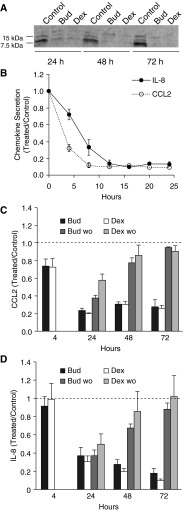
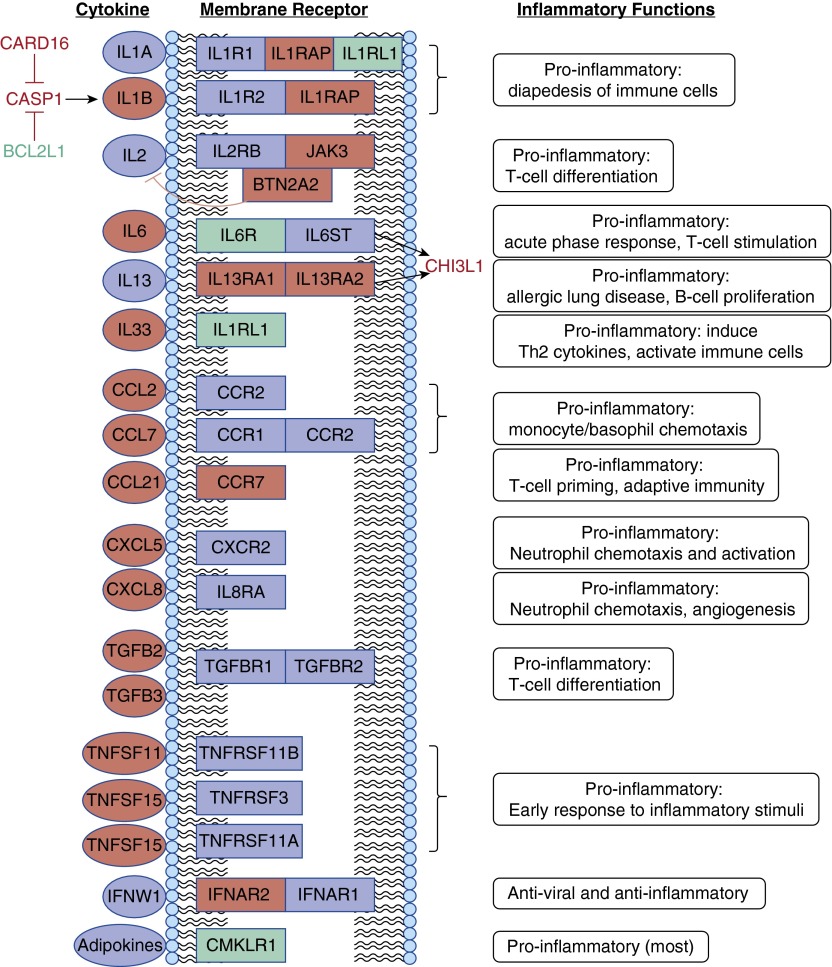
Lung inflammation in premature infants contributes to the development of bronchopulmonary dysplasia (BPD), a chronic lung disease with long-term sequelae. Pilot studies administering budesonide suspended in surfactant have found reduced BPD without the apparent adverse effects that occur with systemic dexamethasone therapy. Our objective was to determine budesonide potency, stability, and antiinflammatory effects in human fetal lung. We cultured explants of second-trimester fetal lung with budesonide or dexamethasone and used microscopy, immunoassays, RNA sequencing, liquid chromatography/tandem mass spectrometry, and pulsating bubble surfactometry. Budesonide suppressed secreted chemokines IL-8 and CCL2 (MCP-1) within 4 hours, reaching a 90% decrease at 12 hours, which was fully reversed 72 hours after removal of the steroid. Half-maximal effects occurred at 0.04-0.05 nM, representing a fivefold greater potency than for dexamethasone. Budesonide significantly induced 3.6% and repressed 2.8% of 14,500 sequenced mRNAs by 1.6- to 95-fold, including 119 genes that contribute to the glucocorticoid inflammatory transcriptome; some are known targets of nuclear factor-κB. By global proteomics, 22 secreted inflammatory proteins were hormonally regulated. Two glucocorticoid-regulated genes of interest because of their association with lung disease are CHI3L1 and IL1RL1. Budesonide retained activity in the presence of surfactant and did not alter its surface properties. There was some formation of palmitate-budesonide in lung tissue but no detectable metabolism to inactive 16α-hydroxy prednisolone. We concluded that budesonide is a potent and stable antiinflammatory glucocorticoid in human fetal lung in vitro, supporting a beneficial antiinflammatory response to lung-targeted budesonide:surfactant treatment of infants for the prevention of BPD.
Keywords: RNA sequencing; chemokines; inflammatory; proteomics; surfactant.
Figures
References
-
- Ehrenkranz RA, Walsh MC, Vohr BR, Jobe AH, Wright LL, Fanaroff AA, Wrage LA, Poole K National Institutes of Child Health and Human Development Neonatal Research Network. Validation of the National Institutes of Health consensus definition of bronchopulmonary dysplasia. Pediatrics. 2005;116:1353–1360. - PubMed
-
- Doyle LW, Ehrenkranz RA, Halliday HL. Dexamethasone treatment in the first week of life for preventing bronchopulmonary dysplasia in preterm infants: a systematic review. Neonatology. 2010;98:217–224. - PubMed
-
- Doyle LW, Ehrenkranz RA, Halliday HL. Dexamethasone treatment after the first week of life for bronchopulmonary dysplasia in preterm infants: a systematic review. Neonatology. 2010;98:289–296. - PubMed
MeSH terms
Substances
Grants and funding
LinkOut - more resources
Full Text Sources
Other Literature Sources
Medical
Molecular Biology Databases
Miscellaneous
