Review
. 2016 Jul;41(7):578-594.
doi: 10.1016/j.tibs.2016.05.001. Epub 2016 Jun 6.

The APOBEC Protein Family: United by Structure, Divergent in Function

Affiliations
Review

The APOBEC Protein Family: United by Structure, Divergent in Function

Jason D Salter et al. Trends Biochem Sci. 2016 Jul.

Abstract

The APOBEC (apolipoprotein B mRNA editing catalytic polypeptide-like) family of proteins have diverse and important functions in human health and disease. These proteins have an intrinsic ability to bind to both RNA and single-stranded (ss) DNA. Both function and tissue-specific expression varies widely for each APOBEC protein. We are beginning to understand that the activity of APOBEC proteins is regulated through genetic alterations, changes in their transcription and mRNA processing, and through their interactions with other macromolecules in the cell. Loss of cellular control of APOBEC activities leads to DNA hypermutation and promiscuous RNA editing associated with the development of cancer or viral drug resistance, underscoring the importance of understanding how APOBEC proteins are regulated.

Keywords: APOBEC; DNA mutation; RNA editing; cytidine deaminase; disease mechanisms; epigenetics.


Conflict of interest statement

Conflict of interest statement: Dr. HC Smith is a full-time tenured professor at the University of Rochester School of Medicine and Dentistry. He is also the founder and CEO of the University of Rochester spinout company OyaGen, Inc. The company has a financial interest in the development of antiviral and anti-cancer drugs based on APOBEC technology. Drs. JD Salter and RP Bennett are employees of OyaGen, Inc.

Figures

Figure 1
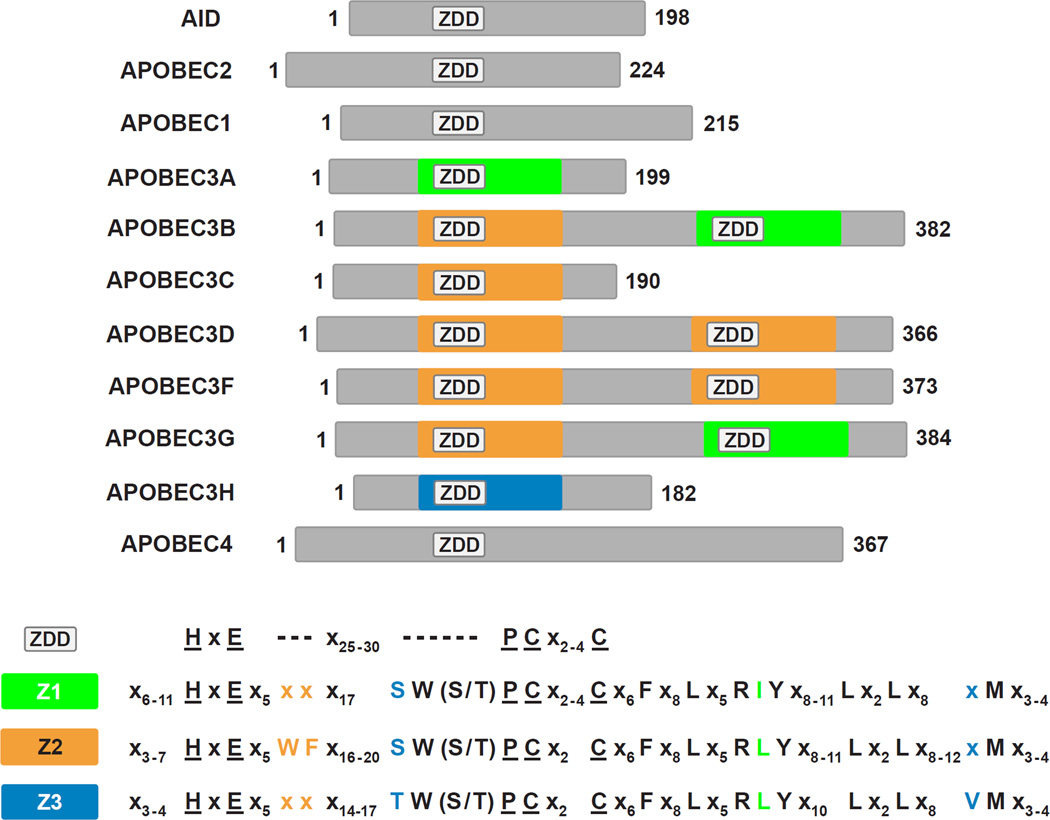
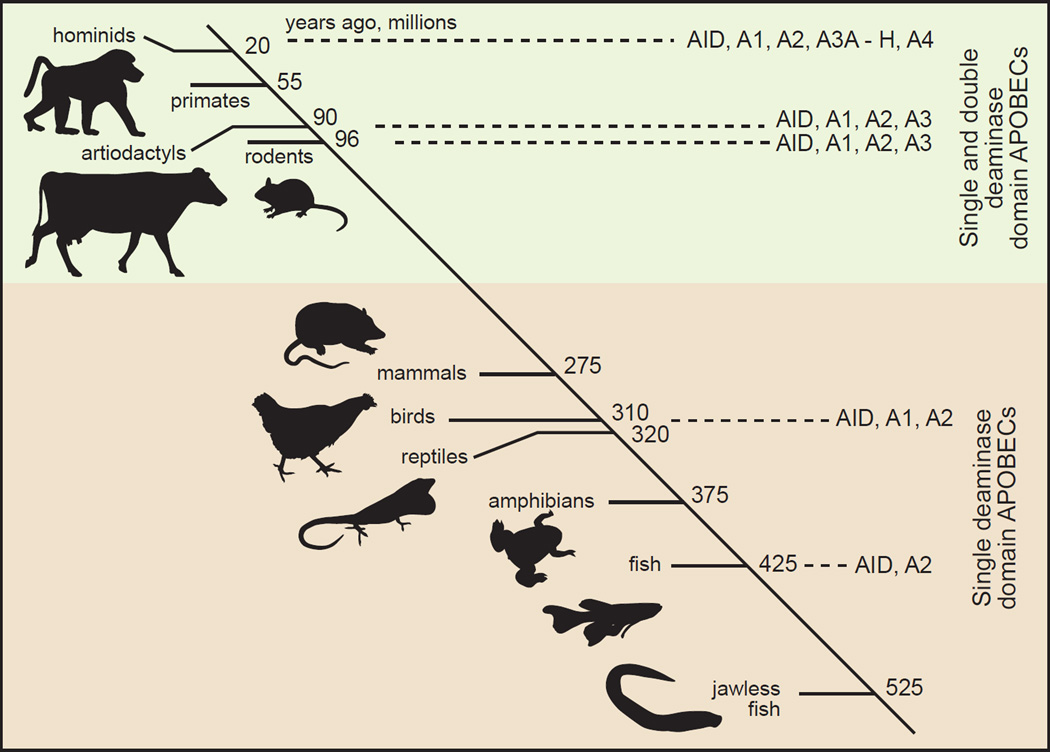
Figure 1. Alignment of members of the APOBEC family and their predicted phylogeny
(A) The APOBEC proteins expressed in humans are AID, A2, A1, A3A through A3H and A4. Cartoons of the proteins are shown emphasizing gene duplication and likely divergence from the perspective of cytidine deaminase domain paralogs [Z1 (green), Z2 (orange) and Z3 (blue)] of the ZDD motif. APOBEC protein lengths (amino acid) are depicted to scale with the total length shown at the C terminus and with proteins aligned to the (first) ZDD motif. The canonical amino acid motif of the ZDD and of Z1-, Z2- and Z3-type cytidine deaminase domains are shown at the bottom of the panel. (B) A cartoon depicting the hypothesis for APOBEC paralog evolution. Phylogenetic relationships between several vertebrates and the emergence of APOBEC family members are shown on a timeline in millions of years that is not drawn to scale. AID and A2 are predicted to have emerged in jawless fish whereas A1 may have first appeared in ancestors of reptiles and amphibians. The timing of gene duplications and diversification events that led to the A3 subgroup (brown to green transition) is unclear, but likely occurred around 200 MYA. Humans and other primates express the largest diversity of A3 proteins. The phylogenetic relationship of A4 to other APOBECs is unclear. Though A4 is present in mammals, chickens and frogs, it is absent in fish [35].
Figure 1
Figure 1. Alignment of members of the APOBEC family and their predicted phylogeny
(A) The APOBEC proteins expressed in humans are AID, A2, A1, A3A through A3H and A4. Cartoons of the proteins are shown emphasizing gene duplication and likely divergence from the perspective of cytidine deaminase domain paralogs [Z1 (green), Z2 (orange) and Z3 (blue)] of the ZDD motif. APOBEC protein lengths (amino acid) are depicted to scale with the total length shown at the C terminus and with proteins aligned to the (first) ZDD motif. The canonical amino acid motif of the ZDD and of Z1-, Z2- and Z3-type cytidine deaminase domains are shown at the bottom of the panel. (B) A cartoon depicting the hypothesis for APOBEC paralog evolution. Phylogenetic relationships between several vertebrates and the emergence of APOBEC family members are shown on a timeline in millions of years that is not drawn to scale. AID and A2 are predicted to have emerged in jawless fish whereas A1 may have first appeared in ancestors of reptiles and amphibians. The timing of gene duplications and diversification events that led to the A3 subgroup (brown to green transition) is unclear, but likely occurred around 200 MYA. Humans and other primates express the largest diversity of A3 proteins. The phylogenetic relationship of A4 to other APOBECs is unclear. Though A4 is present in mammals, chickens and frogs, it is absent in fish [35].
Figure 2, Key Figure
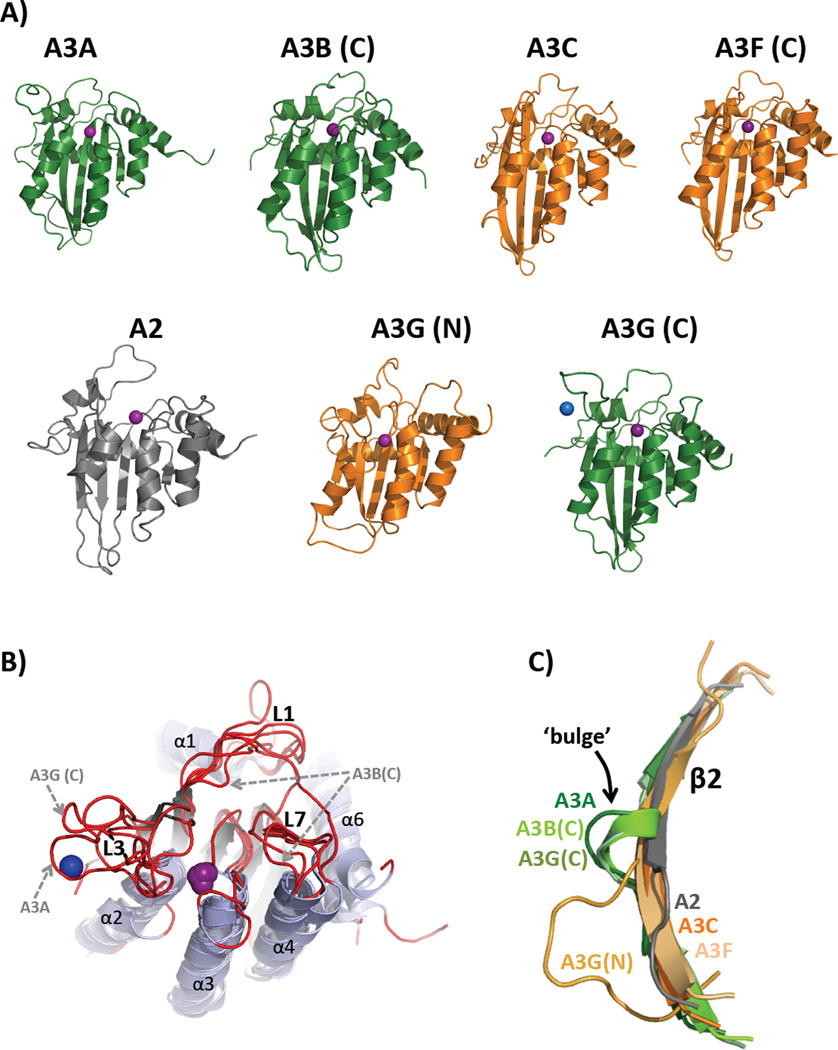
Figure 2, Key Figure. Structural similarities and differences of the APOBEC family of Proteins
(A) Cartoon representation of the solution NMR structures of A2Δ40 (PDB 2RPZ) [96], A3A (PDB 2M65) [100], and A3G (N-terminal half, PDB 2MZZ [101]) and X-ray crystal structures of A3B (C-terminal half, PDB 5CQI [106]), A3C (PDB 3VOW) [102], A3F (C-terminal half, PDB 4J4J [108]) and A3G (C-terminal half, PDB 3IR2 [104]) are depicted in the same orientation as that shown in [Text Box 4]. A3 Z1-type CDA domains are green and Z2-types are orange. The catalytic zinc ion (or pseudo-catalytic for A3G(N)) is shown as a purple sphere while the blue sphere represents an intermolecular structural zinc ion that is coordinated by two residues from each of the A3G proteins in the asymmetric unit of the crystal mediating a potential zinc-dependent A3G C-terminal oligomeric interface involving loop 3, α2 helix and the β2-bulge-β2’ feature. (B) Alignment of APOBEC structures shown in (A) with a perspective that shows the structural differences among loops 1, 3, and 7 (red), which are predicted to be important for nucleic acid binding, substrate sequence preference and to control access of substrates to the catalytic pocket containing zinc (purple). Variations in loop sequence and structure have been proposed as determinants of ssDNA binding, catalysis and sequence specificity differences among APOBECs. The L3s of A3A and A3G C-term are both significantly longer than those of A2 and the Z2 A3C, A3F C-term and A3G N-term and both bind a secondary zinc ion (shown for A3G C-term structure as a blue sphere) that may allosterically regulate catalysis [114]. L3 of A3B C-term, the other Z1-type CDA domain, was deleted from the construct to facilitate crystallization [104]. L1 and L7 of A3B C-term are significantly shifted toward the catalytic zinc ion that is predicted to block access to the catalytic pocket; suggesting that this structure is a closed conformation (catalytically inactive) of what is known to be a catalytically active CDA domain. (C) Structural alignment of the β2 strands from APOBEC structures in (A) depicting the β2-bulge presence in Z1-type A3s (A3A, A3B C-term and A3G C-term) or absence in A2 and Z2-type A3s (A3C, A3F and A3G N-term).

References

    1. Smith HC. RNA and DNA Editing. Hoboken, New Jersey: John Wiley & Sons Inc.; 2008. p. 426.
    1. Chen SH, et al. Apolipoprotein B-48 is the product of a messenger RNA with an organ-specific in-frame stop codon. Science. 1987;238(4825):363–366. - PubMed
    1. Powell LM, et al. A novel form of tissue-specific RNA processing produces apolipoprotein-B48 in intestine. Cell. 1987;50(6):831–840. - PubMed
    1. Rogozin IB, et al. Evolution and diversification of lamprey antigen receptors: evidence for involvement of an AID-APOBEC family cytosine deaminase. Nat Immunol. 2007;8(6):647–656. - PubMed
    1. Conticello SG. The AID/APOBEC family of nucleic acid mutators. Genome Biol. 2008;9(6):229. - PMC - PubMed

Publication types

Substances