


Ocular injuries from fireworks: the 11-year experience of a US level I trauma center
- PMID: 27285323
- PMCID: PMC5129850
- DOI: 10.1038/eye.2016.104
Ocular injuries from fireworks: the 11-year experience of a US level I trauma center
Abstract
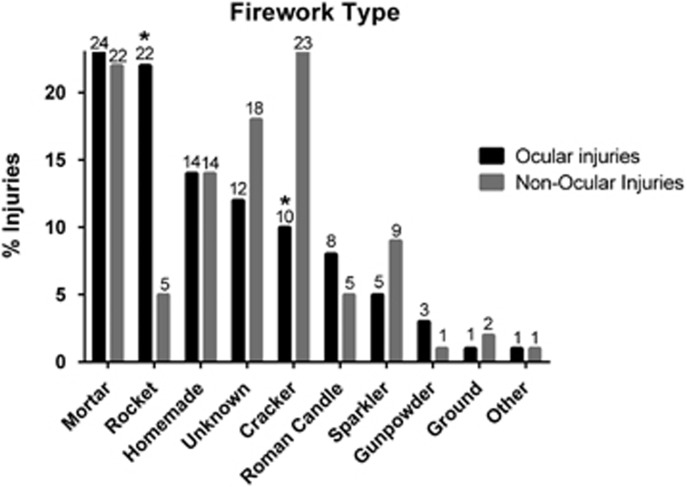
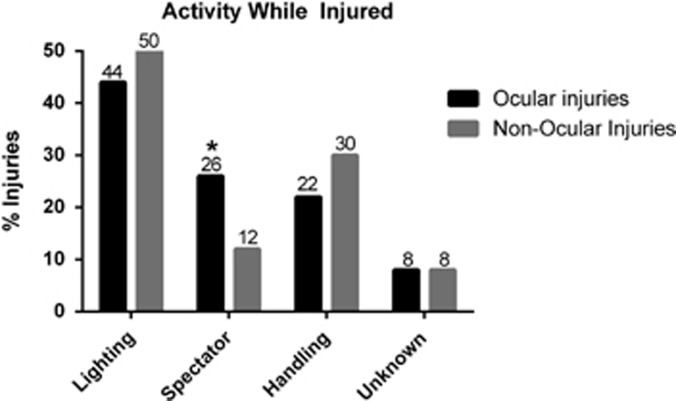
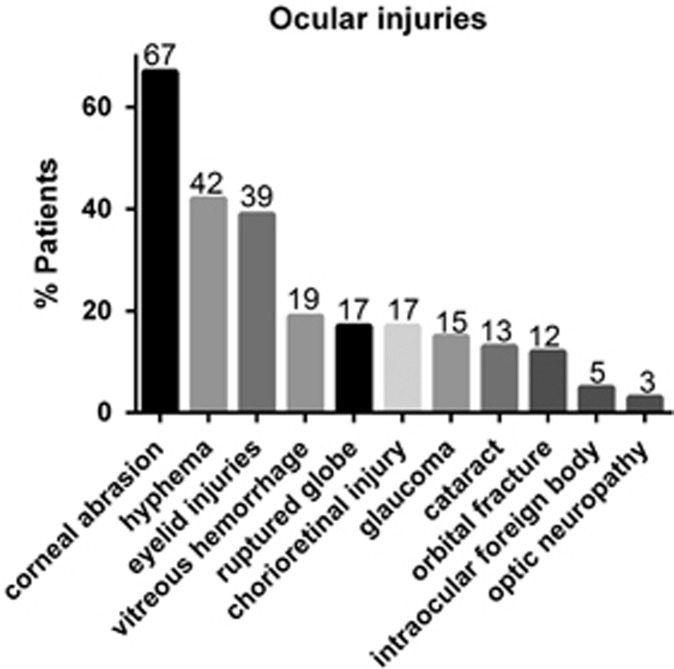
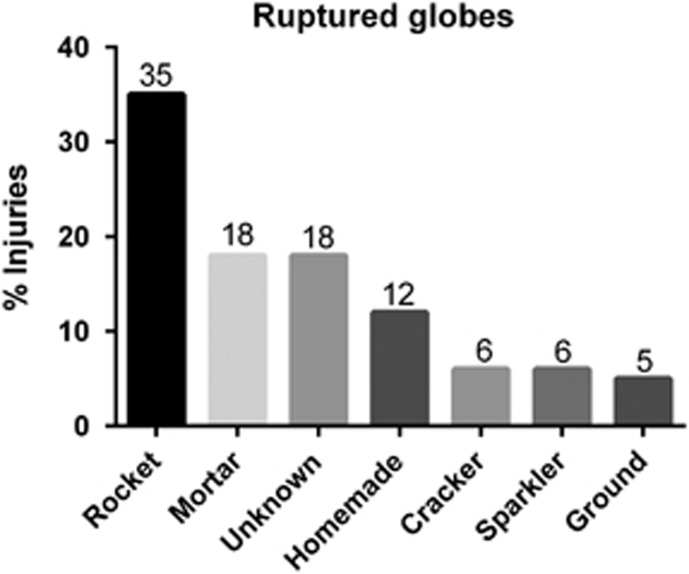
PurposeCharacterize ocular trauma and visual outcomes from firework injuries at a level I trauma center.MethodsRetrospective review of all firework injuries at Harborview Medical Center between 2003 and 2013.ResultsThree hundred and twenty-seven patients sustained firework injuries, of which 100 (31%) sustained ocular injuries. The average age of all patients who sustained fireworks injuries was 24.2 years, 89% were male and 54% of injuries occurred within 48 h of 4 July. Ocular injuries were most commonly caused by mortars (24%) and rockets (22%). Rockets were associated with four times the frequency of ocular injuries as compared with non-ocular injuries (P<0.001). Spectators were more likely to sustain ocular injuries than non-ocular injuries (P=0.001). The most common injuries sustained were corneal abrasions (67%), hyphemas (42%), eyelid injuries (39%), and ruptured globes (17%). Twenty-eight percent of patients with ocular injuries required surgical intervention. Ruptured globes occurred in 17% of patients, with the majority being complex corneoscleral lacerations. Fifty-eight percent of patients who sustained ruptured globes were left with no light perception in the affected eye. Average follow-up was 188 days. Average visual acuity significantly improved from logMAR 1.8±1.6 at presentation to logMAR 1.3±1.8 at last follow-up.ConclusionsFirework-related ocular trauma frequently results in vision-threatening pathology. Prompt referral to and treatment by ophthalmologists is critical. This study documents the dangers inherent in the personal use of fireworks and provides data that may help guide public policy to decrease the frequency of these devastating injuries.
Figures
References
-
- Tu Y, Granados DV. 2013 Fireworks Annual Report. Fireworks-Related Deaths, Emergency Department-Treated Injuries, and Enforcement Activities during 2013. Available at https://www.cpsc.gov//Global/Research-and-Statistics/Injury-Statistics/F.... accessed 8 February 2015.
-
- Tavakoli H, Khashayar P, Amoli HA, Esfandiari K, Ashegh H, Rezaii J et al. Firework-related injuries in Tehran's Persian Wednesday Eve Festival (Chaharshanbe Soori). J Emerg Med 2011; 40: 340–345. - PubMed
-
- Fireworks Related Injuries— Marion County, Indiana, 1986–1991. 1992. Available at http://www.cdc.gov/mmwr/preview/mmwrhtml/00017026.htm. (accessed 8 February 2015). - PubMed
-
- See LC, Lo SK. Epidemiology of fireworks injuries: the National Electronic Injury Surveillance System, 1980–1989. Ann Emerg Med 1994; 24: 46–50. - PubMed
-
- Wisse RP, Bijlsma WR, Stilma JS. Ocular firework trauma: a systematic review on incidence, severity, outcome and prevention. Br J Ophthalmol 2010; 94: 1586–1591. - PubMed
MeSH terms
Substances
LinkOut - more resources
Full Text Sources
Other Literature Sources
Medical
